Local detail
The Common Mistake
The common mistake around here is treating a sagging or noisy door like a universal problem and reaching for a generic fix - a can of spray lube, a tightened bolt, a YouTube video shot in some other climate. San Dimas housing runs mostly 1960s-70s, with the broader stock dating 1943 to 1987 and a median build year of 1963. That means a lot of the doors on these houses were installed, or replaced once, before anyone was thinking about insulation standards for garage doors at all. A hollow single-layer steel door hung on original hardware doesn't behave like a modern insulated sandwich-panel door, and fixing it like one usually just masks the real issue for a month or two. The track alignment, the spring weight, the way the panel flexes - all of it was engineered to a different set of assumptions than what's sold today. If your house falls in that 1960s-70s band, which most of this area does, start by figuring out whether you're looking at original-era hardware before you touch anything.
The area
The Situation
Walk through the 27 named areas in this part of the service territory and you'll find the same pattern: houses built close together in time, doors replaced on different timelines, and very few records of what's actually behind the panel. A door installed in 1975 on a house built in 1963 is a different animal from a door swapped out five years ago on that same house. Because the median build year sits at 1963, a large share of garages here were framed for doors on houses built before insulation rules existed - meaning the opening itself, the header, the way the track bolts to the jamb, may never have accounted for a thicker, heavier insulated door. That's not a flaw, it's just the era. It becomes a problem when someone buys a modern door off a shelf and expects it to hang the same way on 1960s framing without any adjustment.
What we find
What the Weather Here Does to It
This area sits in a moderate heat climate band, not the kind of punishing desert heat that cracks panels outright, but steady warm stretches that still take a toll over fifty-plus years. Steel expands and contracts, lubricant dries out faster than people expect, and nylon rollers on original hardware get brittle sitting in a hot garage for decades. On a door built before insulation rules, there's also no thermal break to slow that heat transfer, so the garage itself runs hotter than it would with a modern door - which matters if anyone's using that space for anything beyond parking a car. None of this is dramatic. It's slow wear, the kind that adds up over the same decades this housing stock has been standing, and it's why doors from the 1960s-70s era tend to show their age in the hardware before they show it in the panel.
How we work
What to Look At First
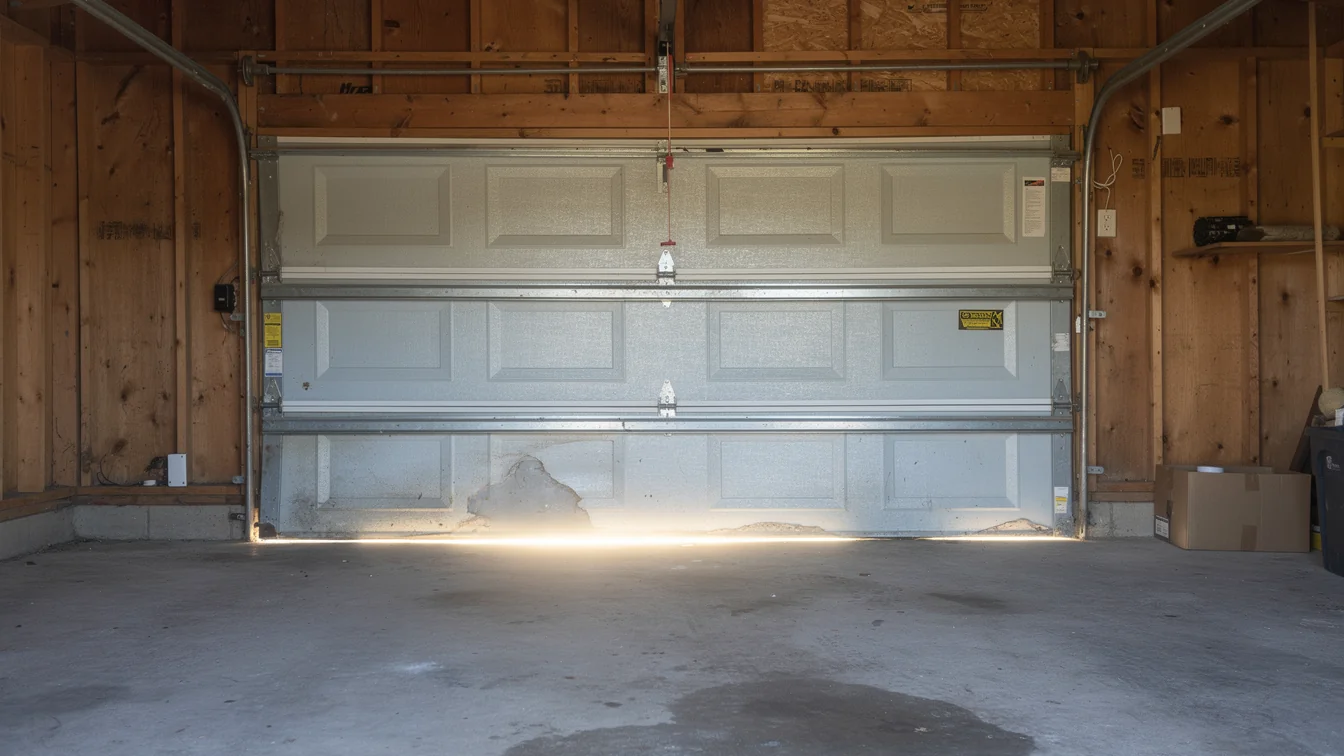
Start with the springs and the track mounting, not the panel. On a door this old, the panel is usually the last thing to fail - it's the hardware underneath that was never built to insulation-era weight specs. Check whether the torsion spring looks original or has clearly been replaced; a spring sized for a lighter, uninsulated door will wear out fast if someone ever swapped in a heavier replacement door without upgrading it to match. Look at the rollers for brittleness, not just rust. And if you're planning a replacement rather than a repair, know that upgrading to a modern insulated door on a house built before insulation rules sometimes means adjusting the opening or header, not just swapping the slab. I won't pretend every repair is worth doing - if the track, spring, and opener are all original and all failing around the same time, replacement is usually the honest answer over patching three separate problems.
Talk to a local pro
Garage door trouble in San Dimas?
Same-day service with honest, upfront quotes.