Local detail
The Common Mistake
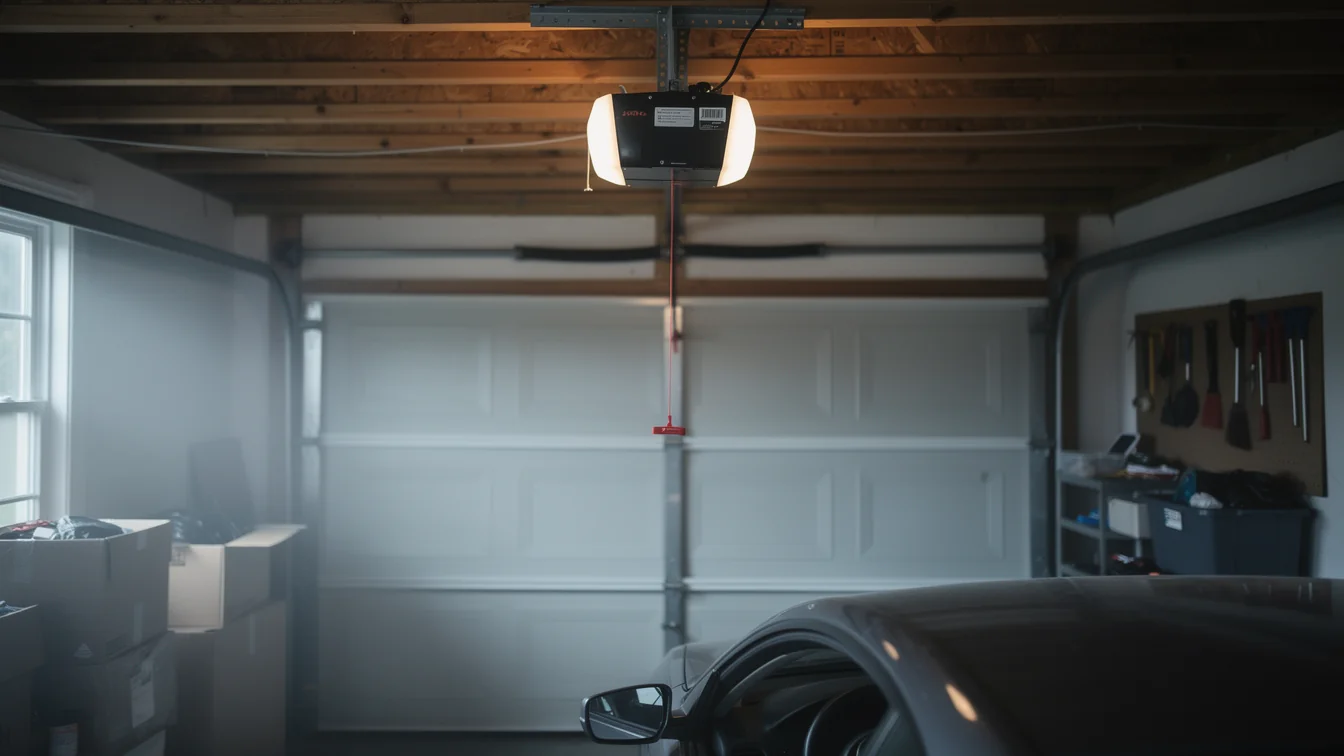
Most homeowners treat every garage door noise the same way: a squirt of whatever lubricant is in the garage and hope it goes away. That works sometimes, and it fails just as often, because a squeal, a grind, and a bang are three different problems with three different causes. In a neighborhood where the houses went up between 1943 and 1987 - with most of San Dimas landing in that 1960s-and-70s wave - the noise is often original hardware telling you it's sixty years past its warranty, not a part that just needs oil.
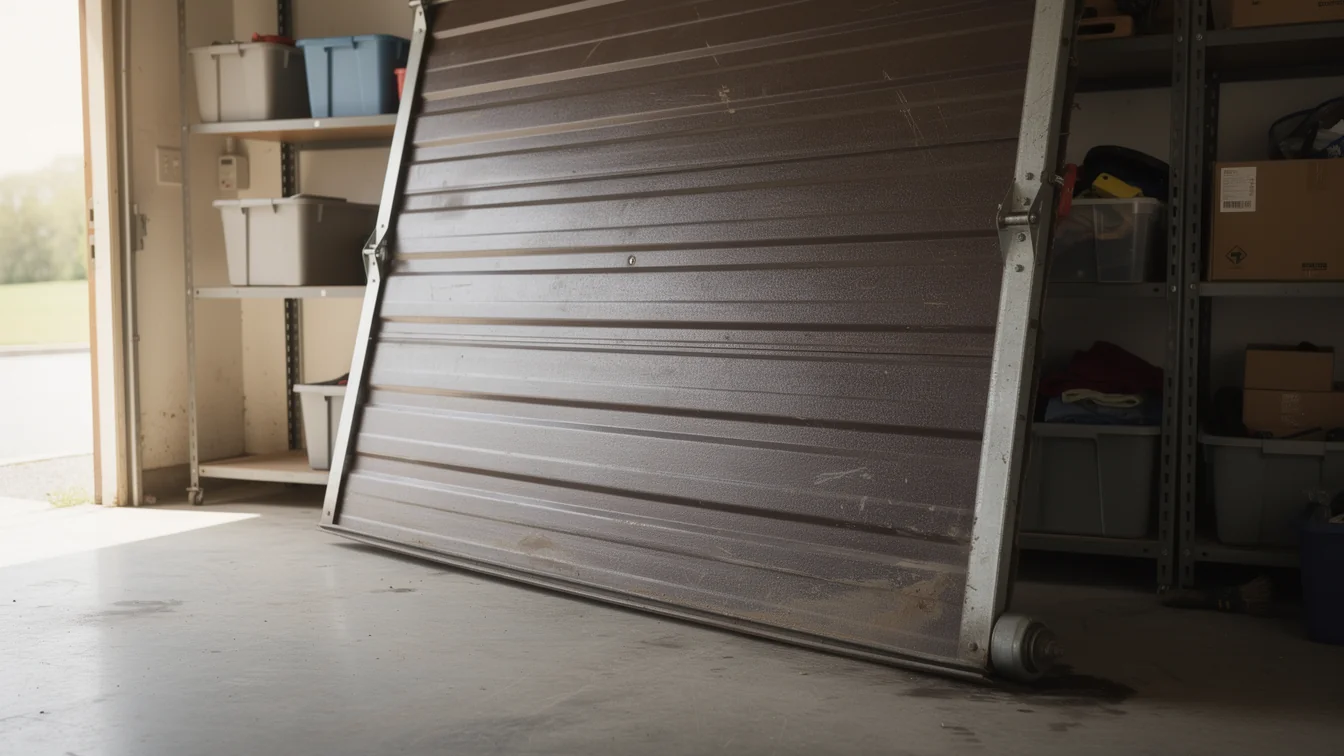
The second mistake is assuming the door is fine as long as it still opens. A door that opens but grinds on the way up is usually running on a bent track or a roller that's worn its bearing out. It'll keep opening right up until the day it doesn't, and that day tends to be inconvenient. Noise is the door's only way of flagging a problem before it becomes a stuck door or a snapped cable. Listening to it instead of lubricating past it saves you a same-day call later.
The area
The Situation
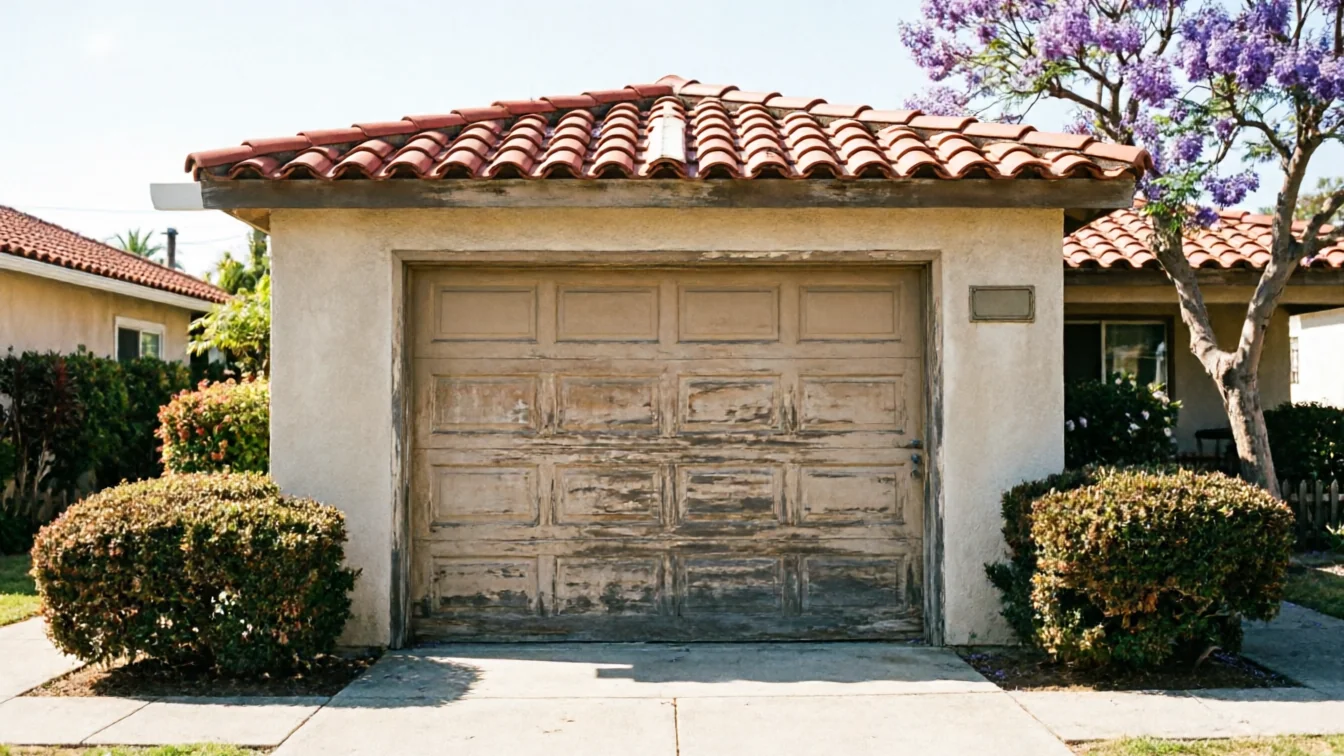
San Dimas housing stock sits mostly in that 1943-1987 build range, with a median year around 1963, which means a large share of the garage doors in town are either original equipment from that era or a direct replacement installed on original track and hardware decades ago. That matters because torsion spring systems, roller styles, and track gauges from the 1960s and 70s aren't what gets installed today. A noise that would be a five-minute fix on a newer door can mean sourcing a part that isn't the current standard.
Across this stretch of the San Gabriel Valley - La Verne two miles over, Claremont and Walnut a few miles further - the housing wave is similar enough that a lot of these same-era doors are groaning through the same symptoms at the same time. It's not a coincidence when three houses on a block all start making the same clunk in the same season; it's the same hardware, installed the same decade, wearing out together.
What we find
What the Weather Here Does to It
The climate here runs in the moderate-heat band, not the extreme swings you'd get further inland, but moderate heat still does steady work on old steel. Track bolts and spring coils expand and contract through the daily heat cycle, and on hardware that's forty or fifty years old, that cycling loosens what was once a tight fit. A track mounting bracket that was snug in 1965 can be a quarter-inch off true by now, and that's what you're hearing when a door rattles on its way up rather than moving cleanly.
Grease and lubricant dry out faster under sustained heat too, which is part of why the grinding tends to show up gradually rather than all at once - you don't usually wake up to a new noise, you notice one getting louder over a few weeks. Heat isn't the whole story on an older door, but on hardware this age, it's the thing pushing marginal wear into audible wear.
How we work
What to Look At First
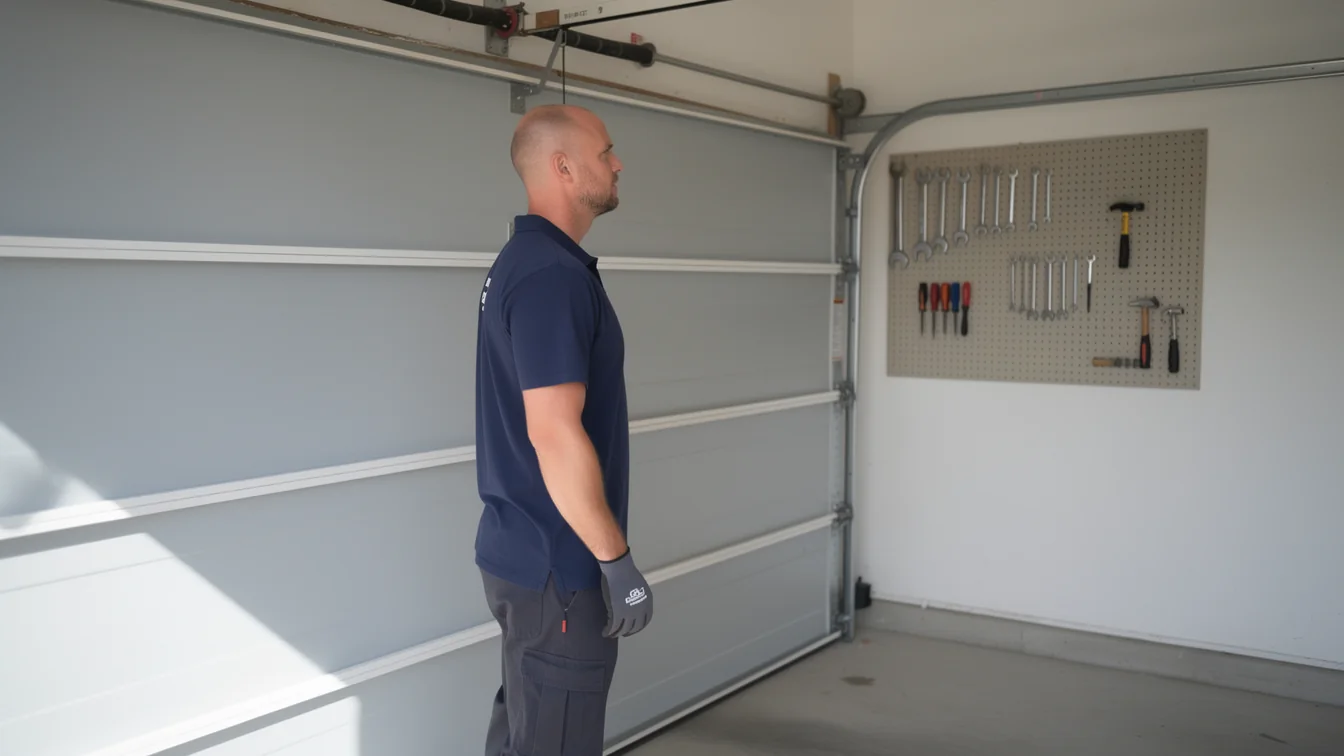
Start at the rollers. On a door this old, nylon rollers have usually been swapped at least once, but steel rollers on their original bearings are a common holdover and they're often the source of a steady grinding sound rather than a squeal. Next, run your hand along the track - not while the door is moving - and feel for a seam or a lip where two sections meet unevenly. That's a common cause of a thump at the same point in the cycle every time.
If the noise is a sharp bang rather than a grind, don't keep opening the door. That's often a spring or cable under tension doing something it shouldn't, and on an original torsion spring that's been under load since the 1960s or 70s, it can fail without much more warning than that one bang. We don't recommend touching a torsion spring yourself - the tension involved can cause real injury, and that's one job worth a call rather than a weekend project.
Talk to a local pro
Garage door trouble in San Dimas?
Same-day service with honest, upfront quotes.