The Symptom
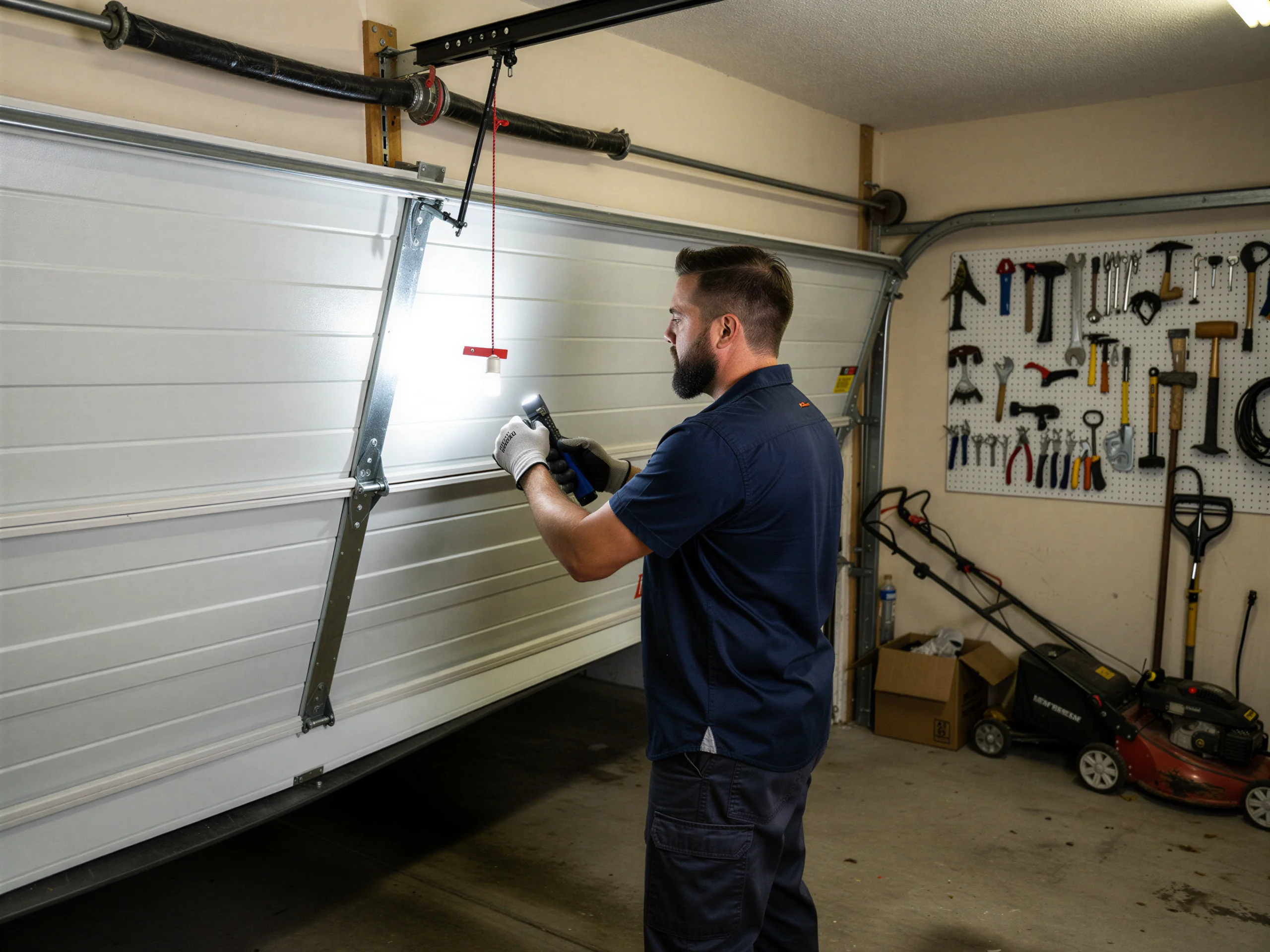
The classic sign is a door that drops hard on one side or won't lift evenly - one bottom corner sags toward the floor while the other stays level, because one cable has slackened or let go.
Bang from parting cable
You might hear a loud bang or pop first, usually when the door is most of the way down and the cable finally parts under load. Sometimes it's quieter: the door starts running rough, catching partway through the cycle, with a faint scraping or ticking sound as a frayed strand drags against the track or the drum.
Heavy one-sided lift
If you disconnect the opener and try to lift the door by hand and it feels heavy on one side or refuses to move smoothly, that's consistent with a cable off the drum, not a spring that's lost tension (though a bad cable will eventually take a spring down with it if the door's left running).
Stuck or dropped door
A door that's stuck halfway open, tilted, or that dropped suddenly when nobody touched it - don't force it. That's the door telling you a cable gave out.
How We Fix It
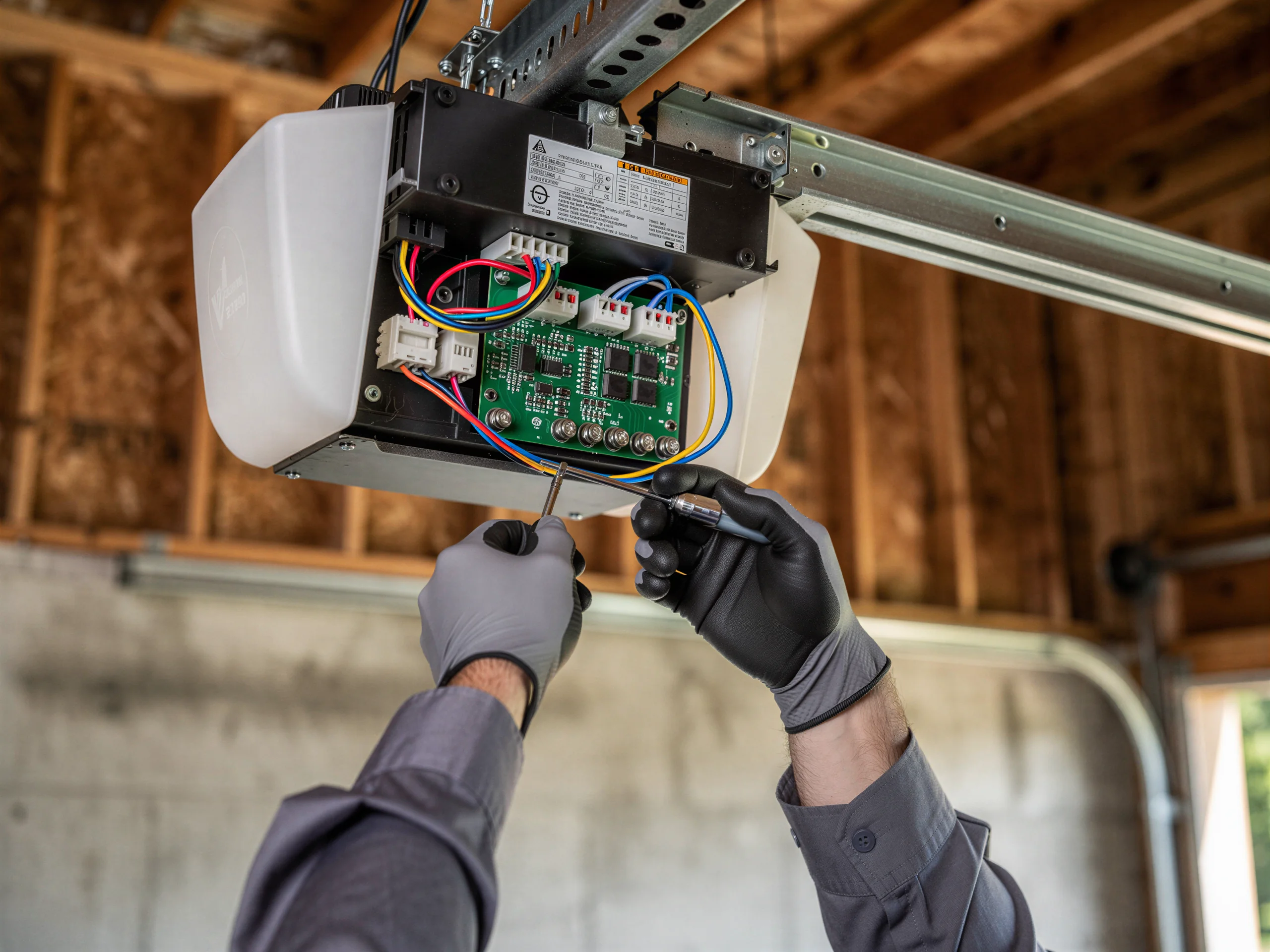
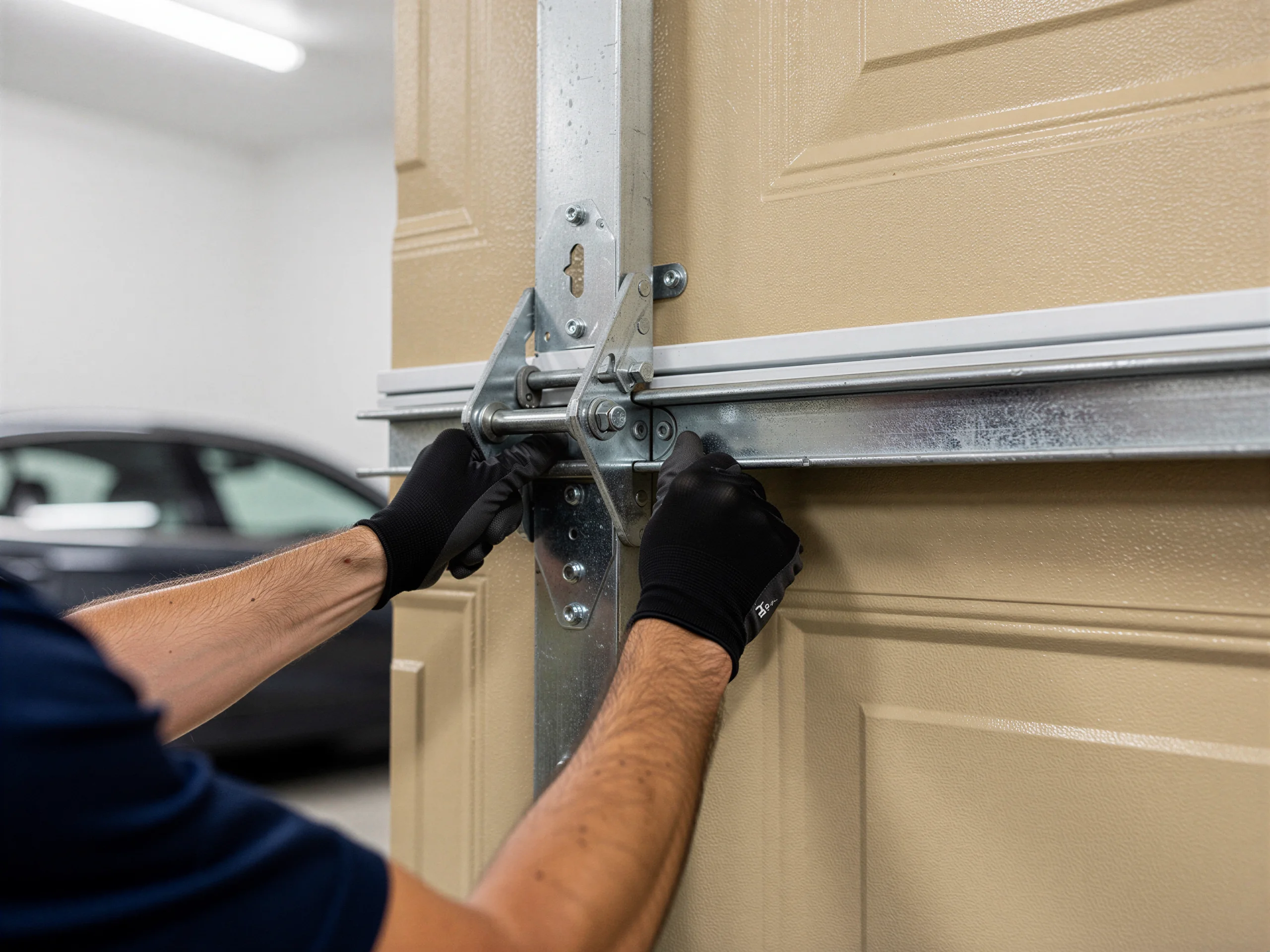
We start by locking the torsion shaft and releasing spring tension safely before touching anything on the drum side - that step is non-negotiable and it's the part that makes this a call-a-pro job rather than a weekend project.
Replace cables as pair
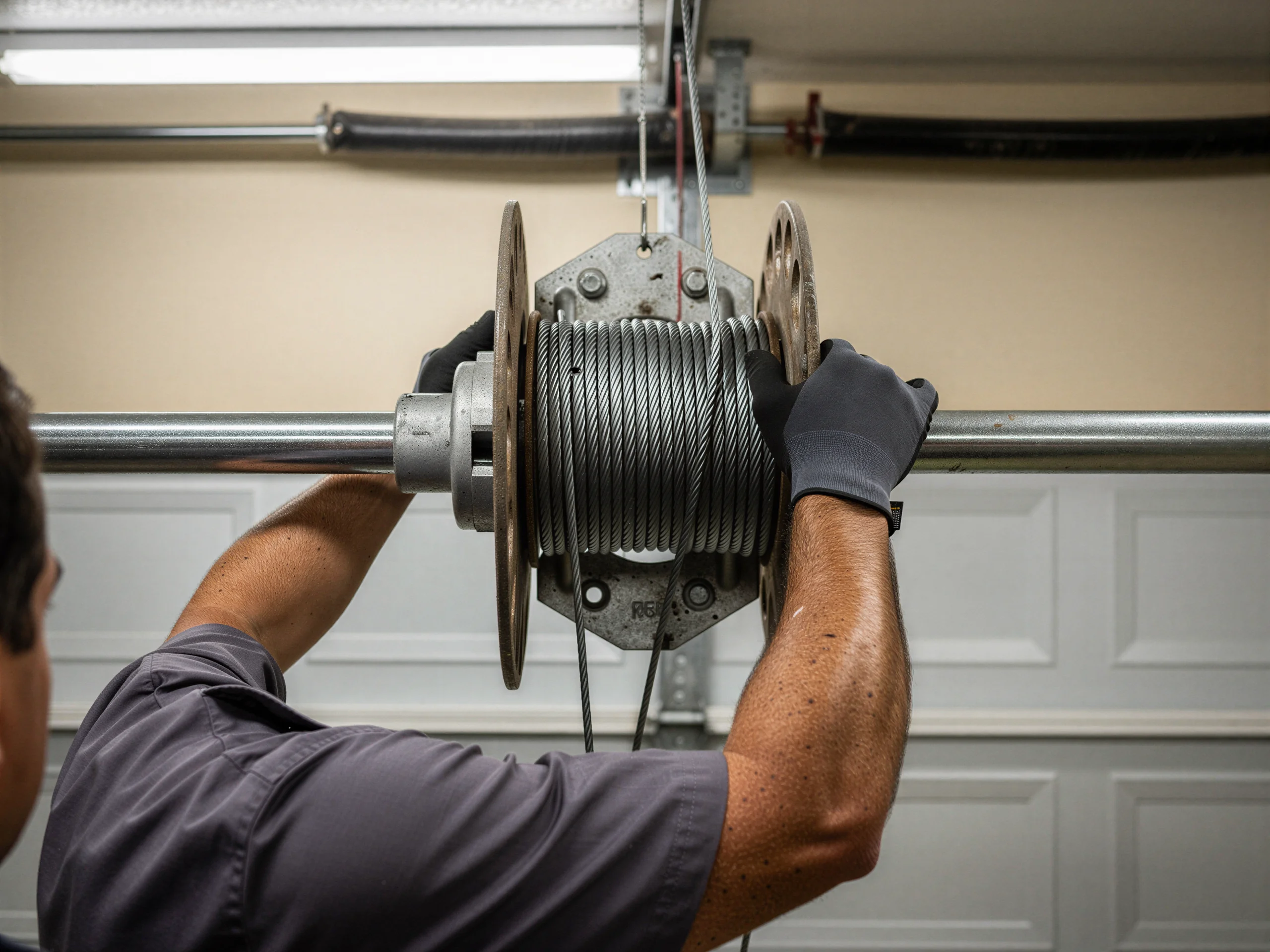
From there we pull the worn cable, check the drum groove for wear grooves or rust pitting (common on the older hardware still running in houses from the 1960s and '70s stock around here), and replace both cables as a pair even if only one has failed, since the other is usually close behind on the same age and cycle count.
Drum sourcing delays
If the drum itself is worn or an odd size that doesn't match current stock, that part can take a day or two to source - we'll tell you straight if that's the case rather than jamming in a close-enough fit.
Re-tension and balance test
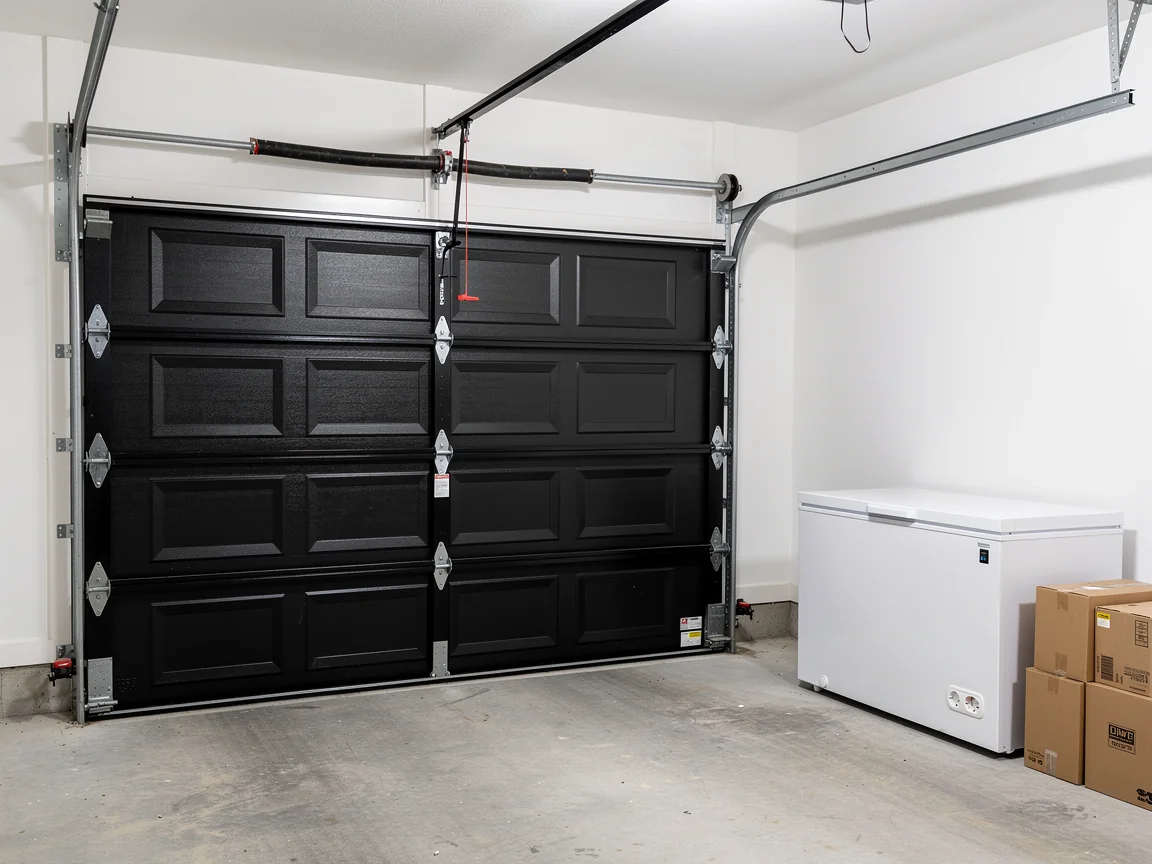
Once the new cable's seated and tracking true, we re-tension the spring, run the door through a full cycle, and check balance by hand before we call it done. We cover the service area out from San Dimas, with the parts and drum sizes we carry built around the housing stock common to this side of the valley.
Doing It Yourself
A garage door cable looks like a simple fix - it's a steel line running from the bottom bracket up to a drum at the top of the track.
Spring stored danger
But that cable is holding back a door that can weigh over 150 pounds, and it's working against a torsion spring wound tight enough to snap a wrist. If one cable has already frayed or popped, the spring side is still loaded, and pulling the wrong panel or reaching for the drum without locking the shaft is how people end up in the ER.
Visual cable check
What you can safely check yourself: look at the cable where it wraps the drum at the top corners of the door. If you see thin wire strands sticking out like a frayed shoelace, or the cable has come off the drum groove entirely, stop opening and closing the door.
Hands off re-seating
Don't try to re-seat it by hand. If the door is sitting crooked, hanging lower on one side, or won't move at all with the opener disconnected, that's a cable problem, not an opener problem, and it's not a DIY repair. The spring tension involved is the reason we don't walk people through this over the phone.
Why It Happens Here
Most of the houses we work on in San Dimas were built between 1943 and 1987, with the bulk of that stock going up in the 1960s and '70s - original construction median lands right around 1963. That matters for cables specifically: doors from that era were set up with galvanized steel cable on steel drums, and a lot of those original drum-and-track assemblies are still in place, just with newer springs or openers bolted on over the decades. Cable doesn't fail on a schedule; it fails from cycling and from rub.
The heat band here is moderate, not extreme, but attached garages in this area still swing well above outdoor temperature on summer afternoons, and that heat-cool cycling dries out the light grease most cables were packed with originally. Add a drum that's worn a groove over 50-plus years of use, and the cable starts riding slightly off-track, fraying against the edge instead of wrapping clean. On older one-piece and sectional doors with the original hardware, that's the single most common cable failure we see - not a bad cable, but a worn drum making a good cable go bad.
Talk to a local pro
Garage door service in San Dimas?
Same-day service with honest, upfront quotes.