Local detail
The Common Mistake
The call we get most after a power cut isn't about a broken spring or a bent track. It's someone who thinks the whole door died because the opener won't respond. Nine times out of ten the door is fine. The opener lost power, and whoever owns the house doesn't know where the manual release cord is or is afraid to pull it.
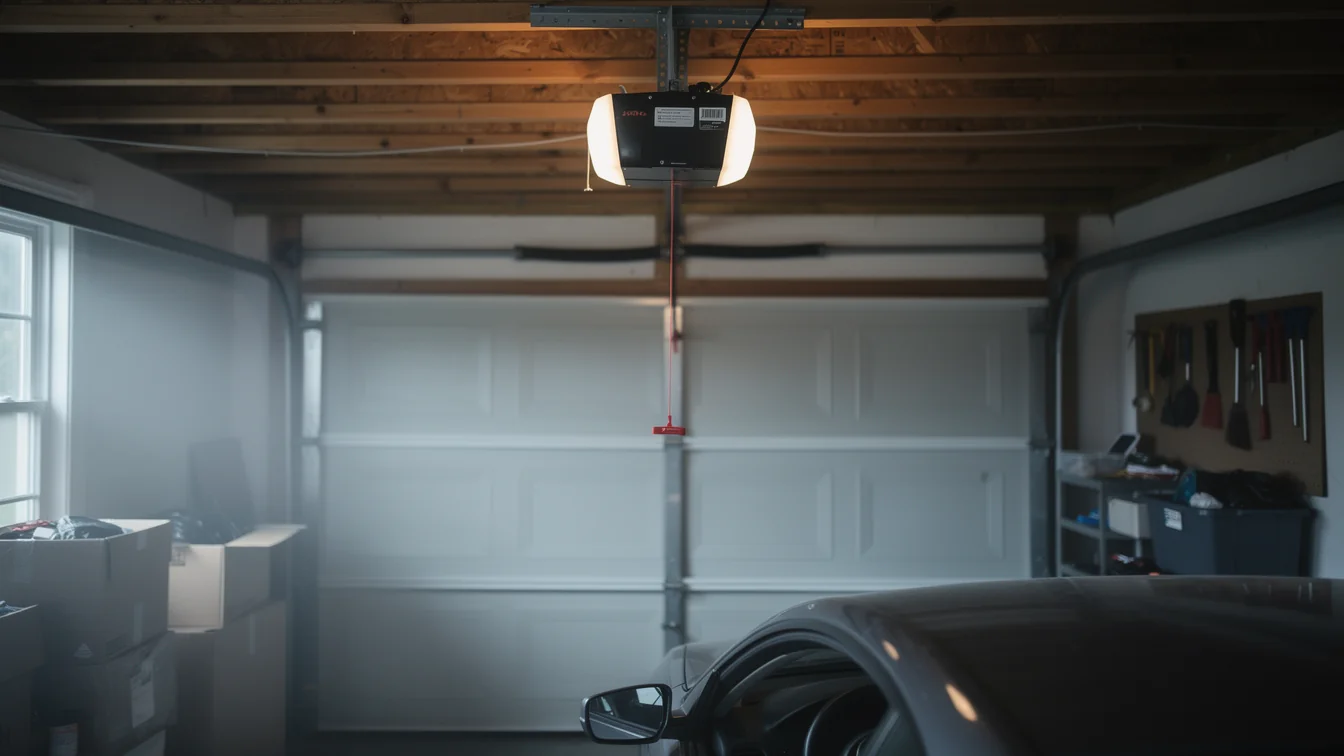
That's an easy mistake to make once, and it's an expensive one if it turns into a service call for something that takes thirty seconds to fix yourself. The red cord hanging from the trolley disconnects the carriage from the opener arm so you can lift the door by hand. Every automatic door has one. If your house was built in the 1960s like most of the stock around here, there's a decent chance the opener was added well after the door itself, which means the release mechanism may not be where you'd expect, or may have been installed without much thought for how a homeowner finds it in the dark during an outage. Check it now, not during the next one.
The area
The Situation
San Dimas housing runs mostly 1943 to 1987, with the median build year sitting around 1963. That matters here because garage door openers weren't standard equipment on a lot of these houses when they went up. They got added later, sometimes by a previous owner, sometimes by whoever sold the house its last remodel. The result is a lot of openers that don't match the door hardware they're driving, or wiring runs that were never updated when the opener itself was swapped out.
Across the service area, with 83,946 owner-occupied houses out of 161,556 households, median income sits at $104,565, which tells you something: people here can afford to replace an opener when it fails, and a lot do, rather than troubleshoot it. That's fine for solving today's problem, but it means the opener and the thirty-year-old torsion hardware above it are now two different generations of equipment trying to work together, and a power event is often what exposes the mismatch.
What we find
What the Weather Here Does to It
San Dimas sits in a moderate heat climate band, which doesn't sound dramatic, but it means the summer months bring stretches of sustained high heat rather than a handful of spike days. That's exactly the condition that strains the local grid and leads to rolling power cuts in the late afternoon and evening, right when everyone's getting home and hitting the opener button at the same time.
Heat does something to the opener itself, too. Circuit boards in units installed in attached garages run hotter than they're rated for once the garage itself climbs past 100 degrees for days in a row, and a board that's already stressed by heat is more likely to fail to restart cleanly after a power cut rather than just losing power and coming back fine. Chain-drive units can also develop slack as metal expands in the heat, which shows up as a louder, looser-sounding reconnect once power returns. None of this is dramatic on its own. It's the combination of older opener wiring from the housing stock here and a summer heat pattern that makes power cuts a recurring nuisance instead of a once-a-year event.
How we work
What to Look At First
Before you call anyone, find the manual release cord and pull it once so you know how it feels when it's not an emergency. Then check whether your opener has a battery backup unit, since a lot of older installs in this area don't, and a ten-minute power cut turns into a stuck car otherwise.
After a cut, listen to the opener on its first cycle. A grinding or hesitant start that clears up after one or two tries is usually just the board resetting. A start that stays rough every time points to a board or capacitor that the heat has been wearing down for longer than this one outage. Check the breaker dedicated to the garage circuit too - in houses built in the 1960s that circuit sometimes shares a line with something else that trips first.
One honest limit here: we don't carry parts for every opener model on the market, especially older chain-drive units that haven't been made in years. Sometimes the right fix is a new opener rather than chasing a part nobody stocks anymore. We'll tell you straight if that's where you are before we start billing for a repair that won't hold.
Talk to a local pro
Garage door trouble in San Dimas?
Same-day service with honest, upfront quotes.