The Symptom
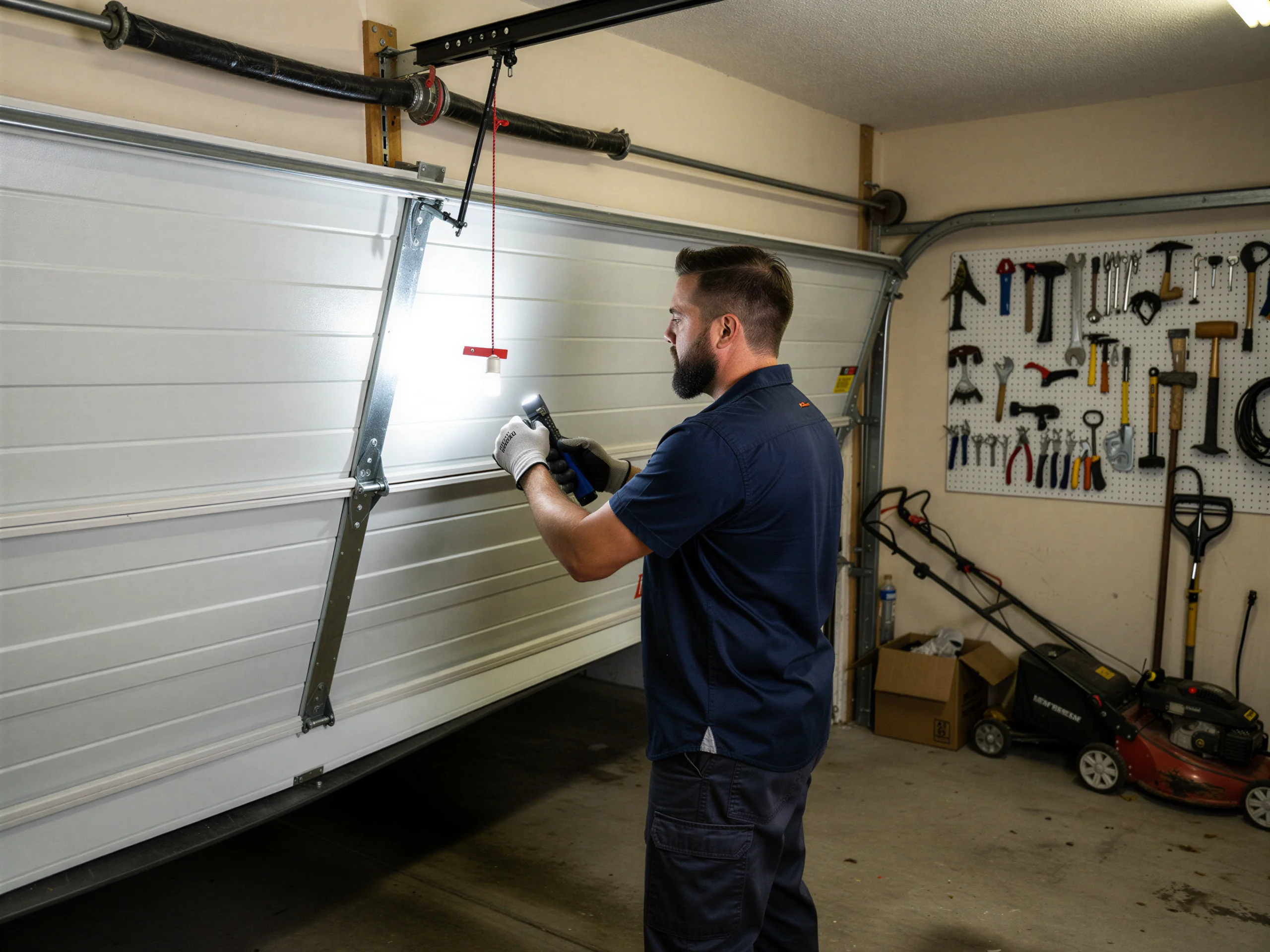
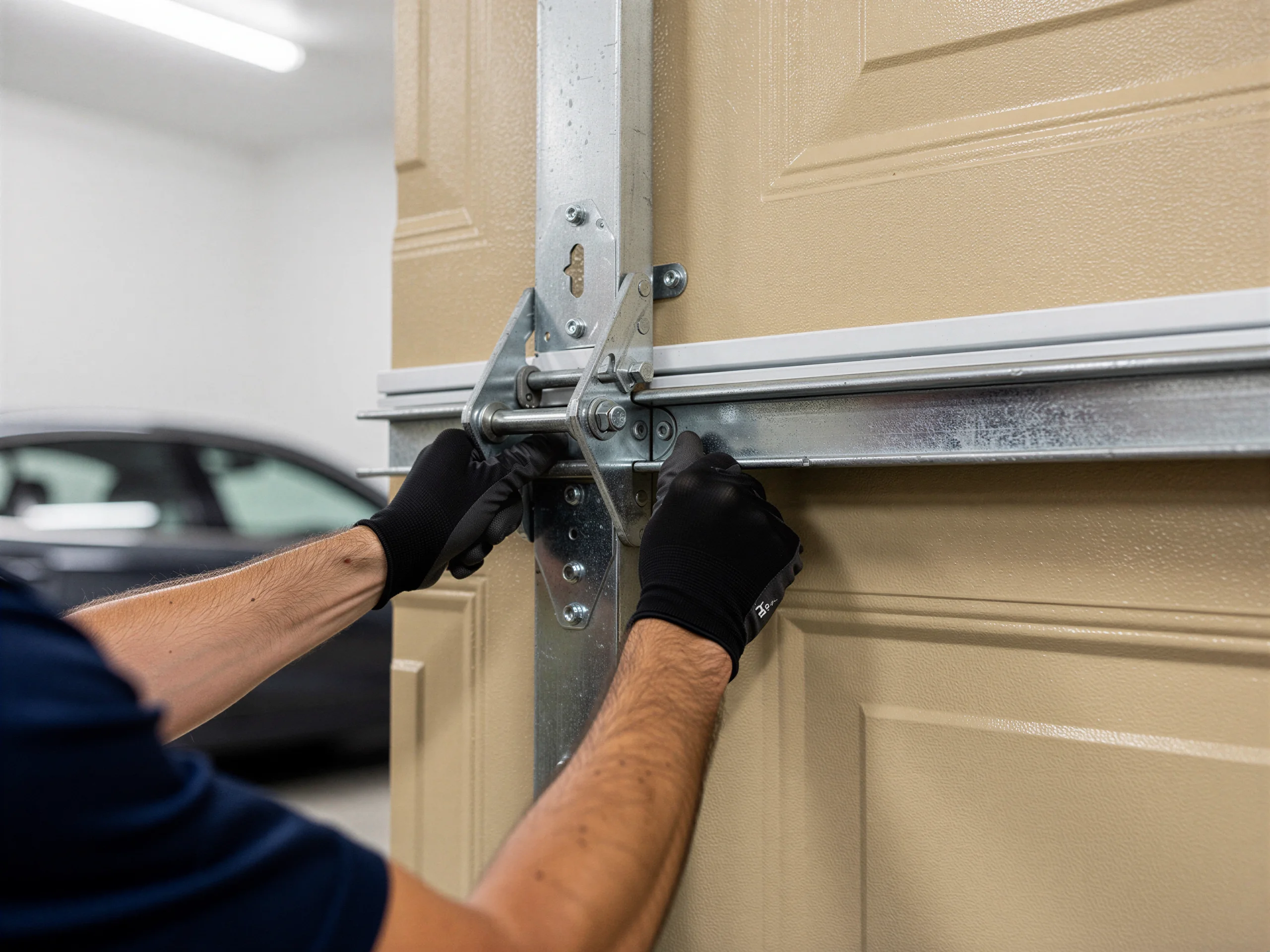
The giveaway isn't always a door that won't open. More often it's a door that opens unevenly - one side lifting before the other, a visible lean in the track, or an opener that strains and clicks before the door moves at all.
Daylight at bottom corners
On older San Dimas houses we also see daylight gaps at the bottom corners where the original frame has settled slightly over sixty-plus years, which no amount of weatherstripping fixes on its own.
Repairs won't hold long
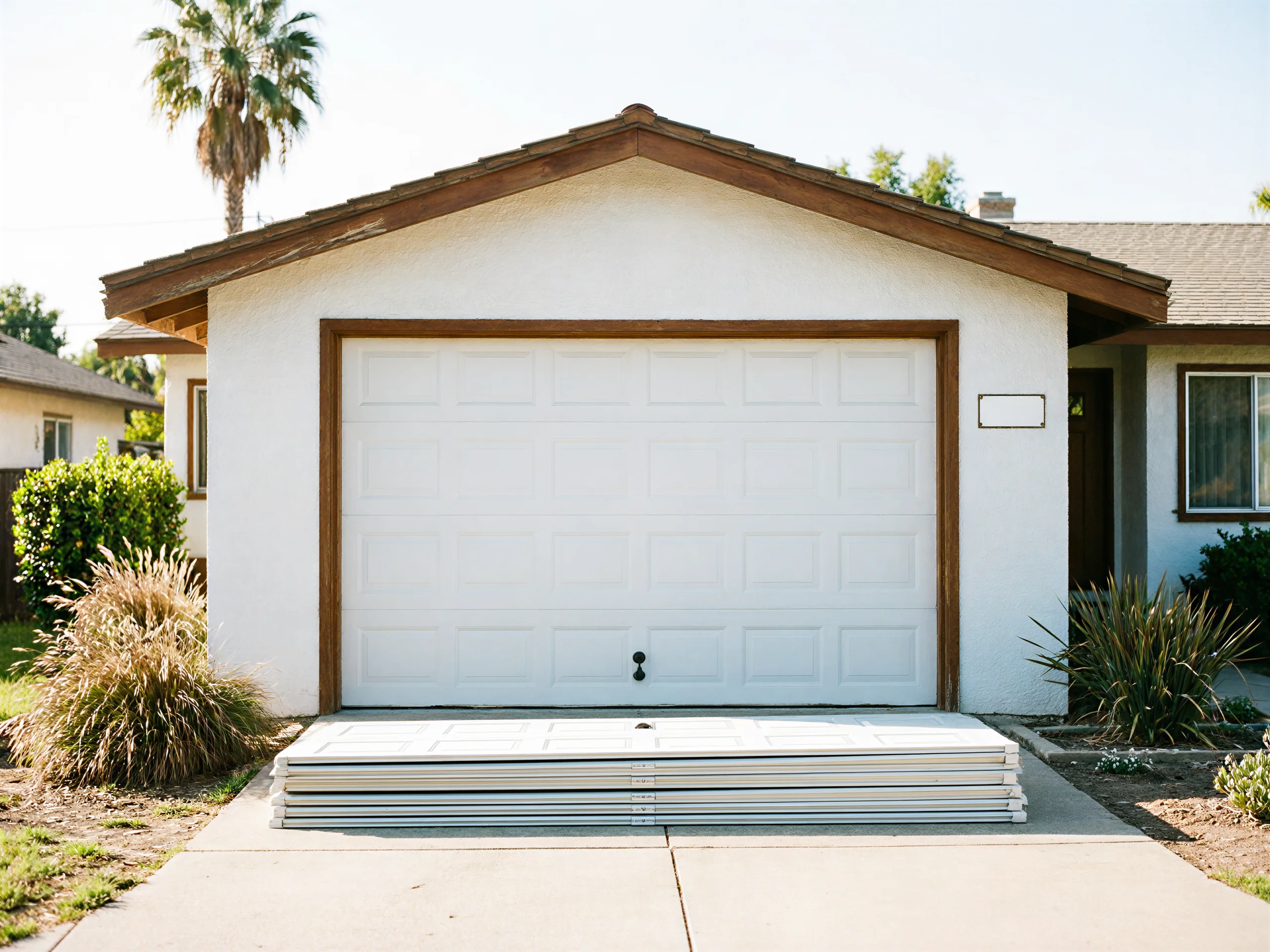
If your current door is original to a house from that 1943-1987 build window, or close to it, and you're noticing any of this, you're not looking at a repair that holds long-term.
Past adjustment limits
You're looking at hardware and a panel that have reached the end of what they can be adjusted around, and a new install is the honest answer rather than another round of patching.
How We Fix It
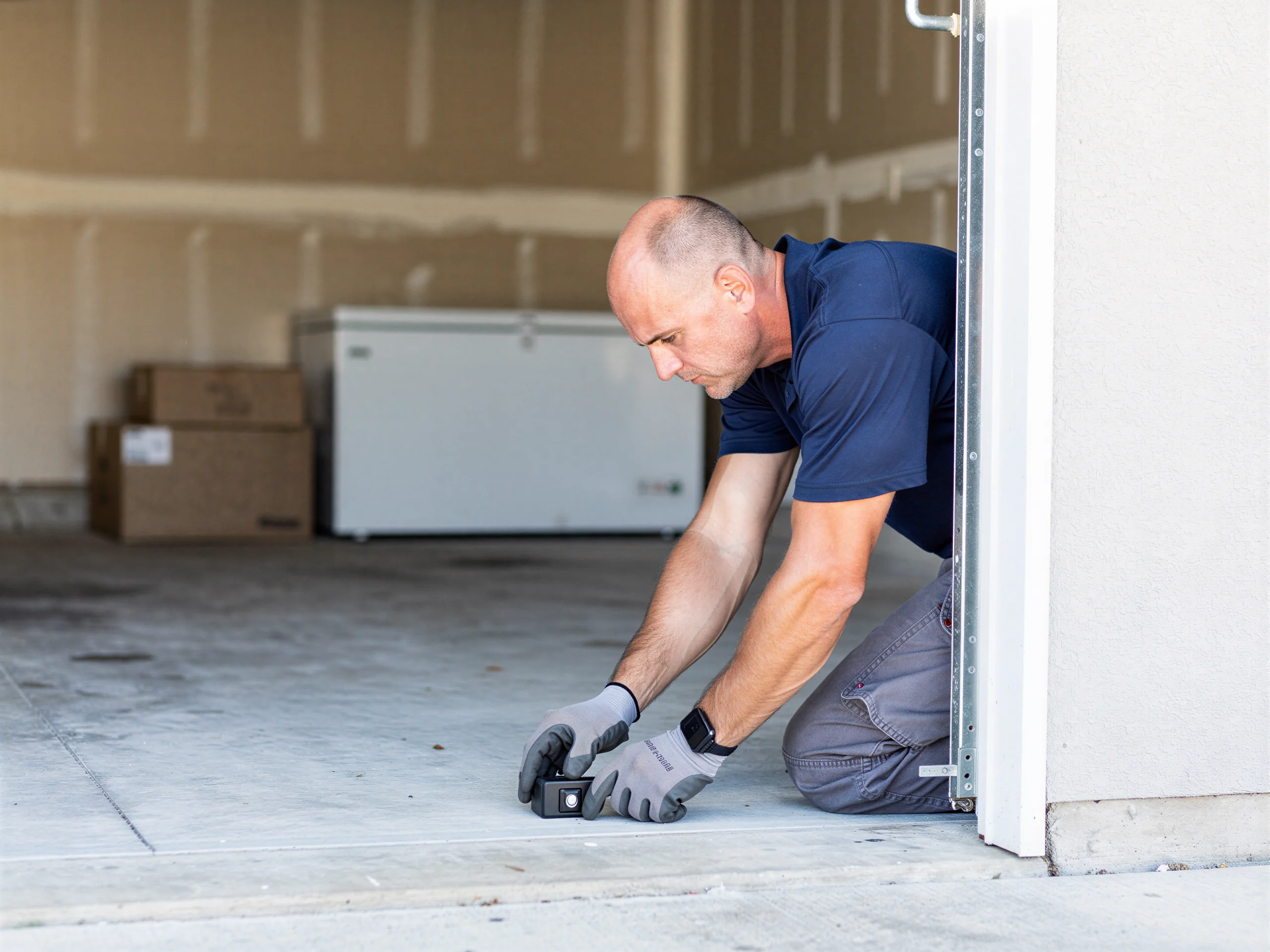
We start by measuring the actual opening, not assuming it matches the door that's coming out - framing settlement over decades means it often doesn't.
Sizing to new weight
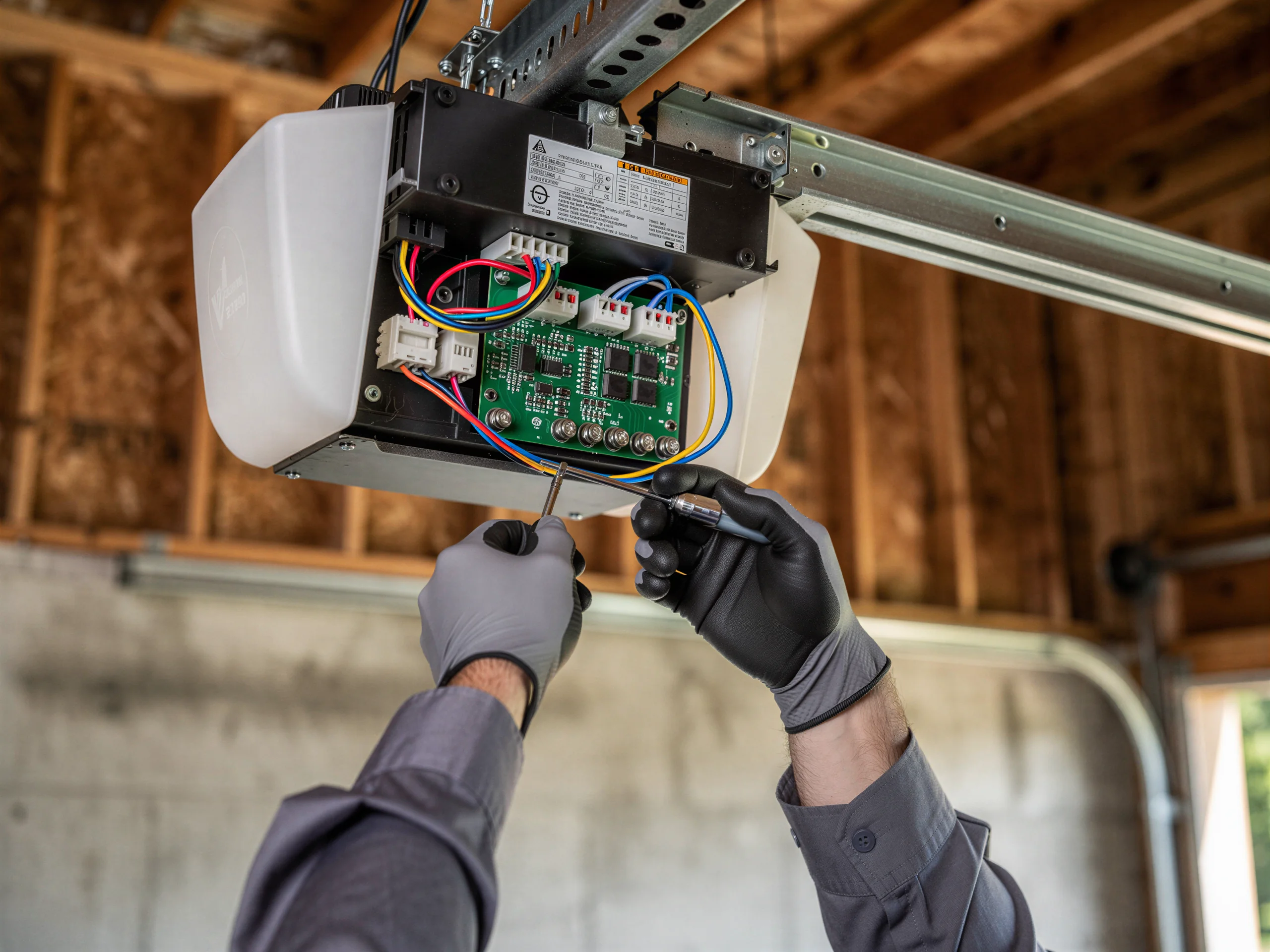
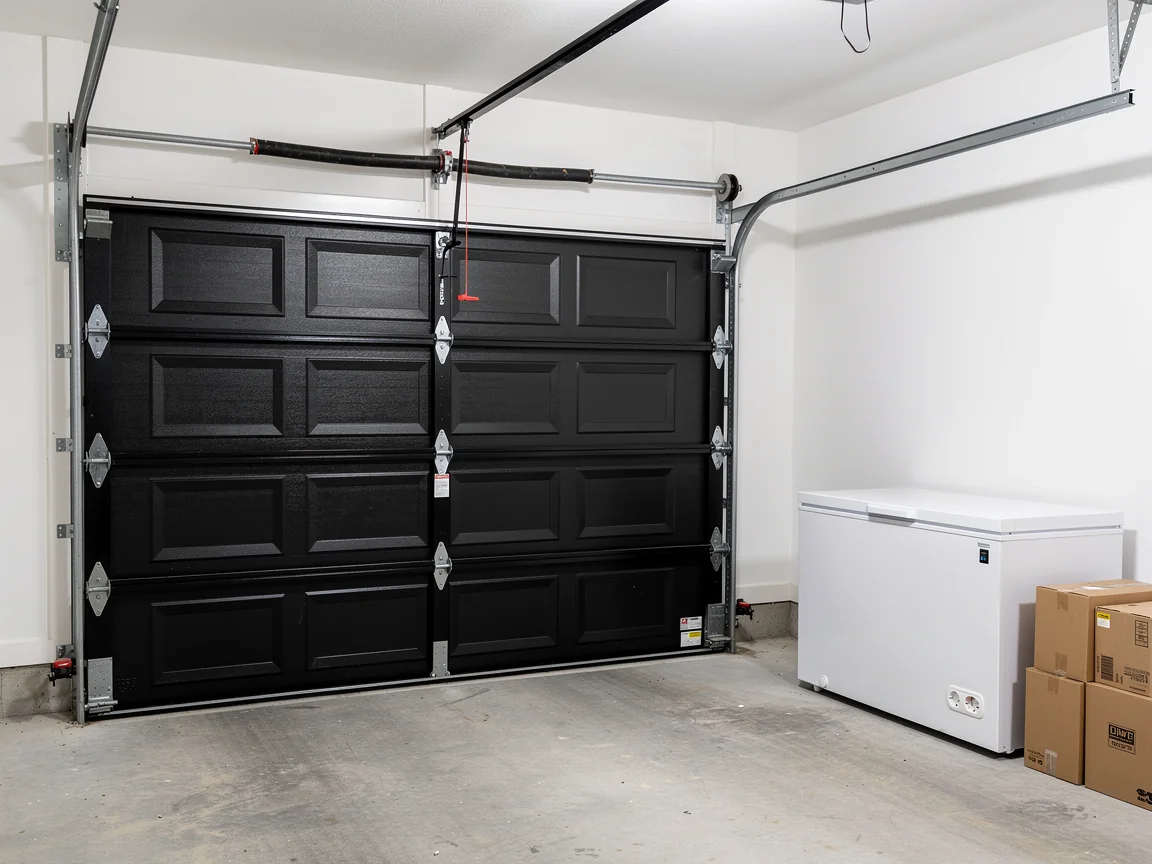
From there we size springs, drums, and cable to the new door's real weight, not the old door's, and we check the opener's lift rating against that number before reusing it.
Undersized opener replacement
If the opener was undersized for the original door, it's going to be worse off with a heavier insulated replacement, and we'll say so rather than bolt a new door to a motor that's going to fail in a year.
Special-order lead times
One limitation worth knowing up front: some door sizes and insulation grades are special-order items, and lead time on those isn't something we control. We'll tell you at the estimate stage if your choice is a stock item or a wait, so you're not guessing.
Doing It Yourself
You can buy a door kit off the shelf and bolt it to your existing track, and plenty of handy owners do. Where it goes wrong is the stuff that doesn't come in the box: matching spring wind and wire gauge to a heavier insulated panel, squaring a jamb that's shifted a half inch since the house went up sometime between 1943 and 1987, and re-using track brackets that were never rated for the door you're putting on them.
Off-level DIY hanging
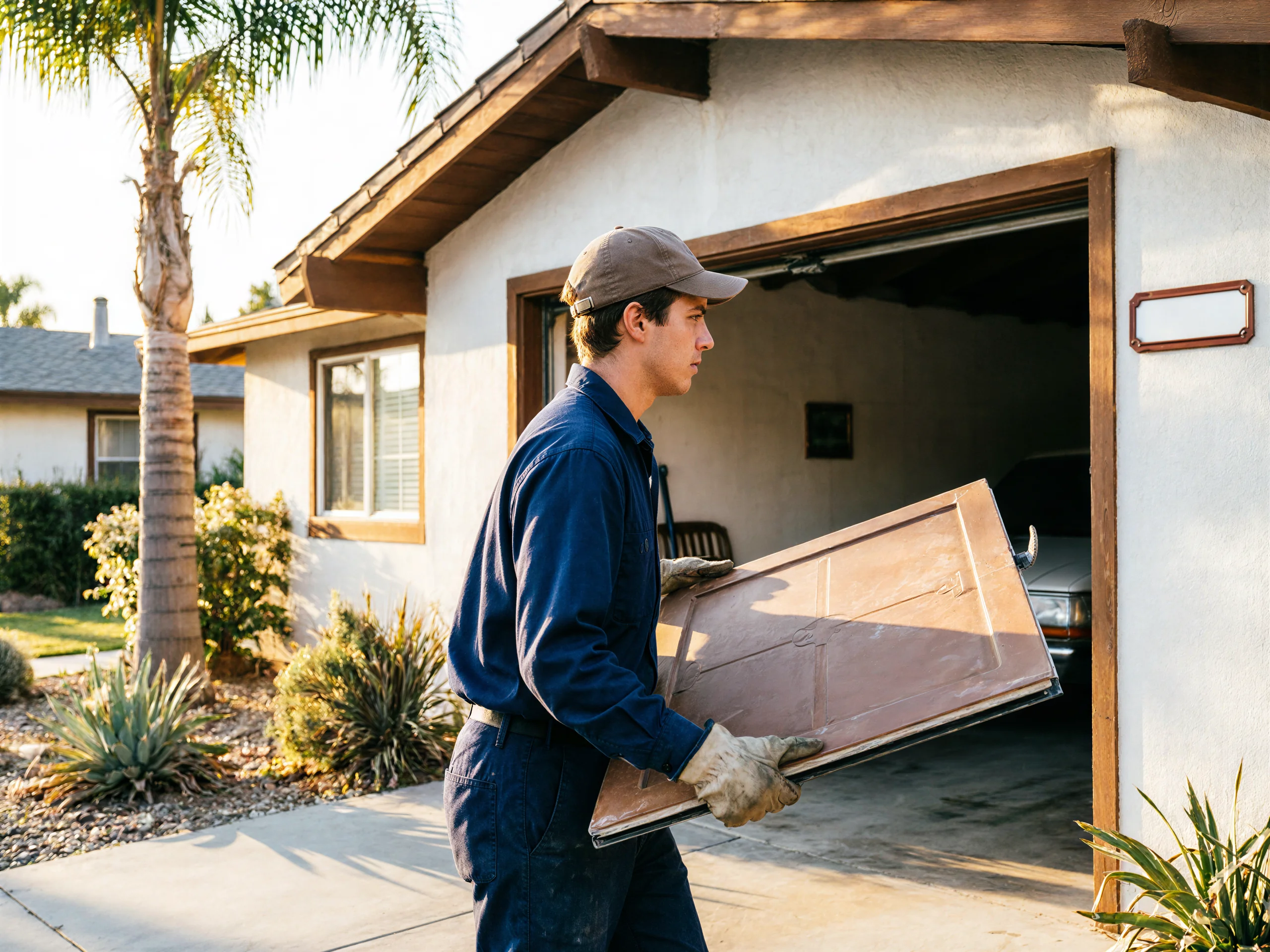
We've pulled doors off that were installed by a homeowner three weekends earlier, still in good shape, just hung wrong - off-level tracks that bind under load and torsion springs sized for a lighter panel than the one on the hardware.
Check spring sizing first
If you're set on doing it yourself, at minimum get the spring and cable sizing checked against your actual door weight before you walk away from the job.
Looking installed isn't enough
A door that looks installed and a door that's installed correctly aren't the same thing, and the difference shows up as a cable off a drum six months later, not on day one.
Why It Happens Here
Most of the houses on this side of San Dimas date to the same stretch as the rest of the area's stock - built 1943 through 1987, with the bulk of it going up in the 1960s and 70s. That means a lot of original or first-replacement doors are sitting on hardware sized for the lighter, uninsulated panels that were standard when the tract was framed. Owners upgrading to a heavier insulated door, or widening an opening during a remodel, are putting load on jamb framing and track hardware that was never built for it. Add in the moderate heat band here - steady warm stretches that cycle steel panels and dry out factory lubrication on rollers and hinges faster than a milder climate would - and you get openers straining against doors that are both heavier than the hardware expects and stiffer from heat-cycled components. New installation here isn't just swapping a panel. It means resizing springs and checking the opener's lift capacity against a door that may weigh considerably more than what it's replacing.
Talk to a local pro
Garage door service in San Dimas?
Same-day service with honest, upfront quotes.