The Symptom
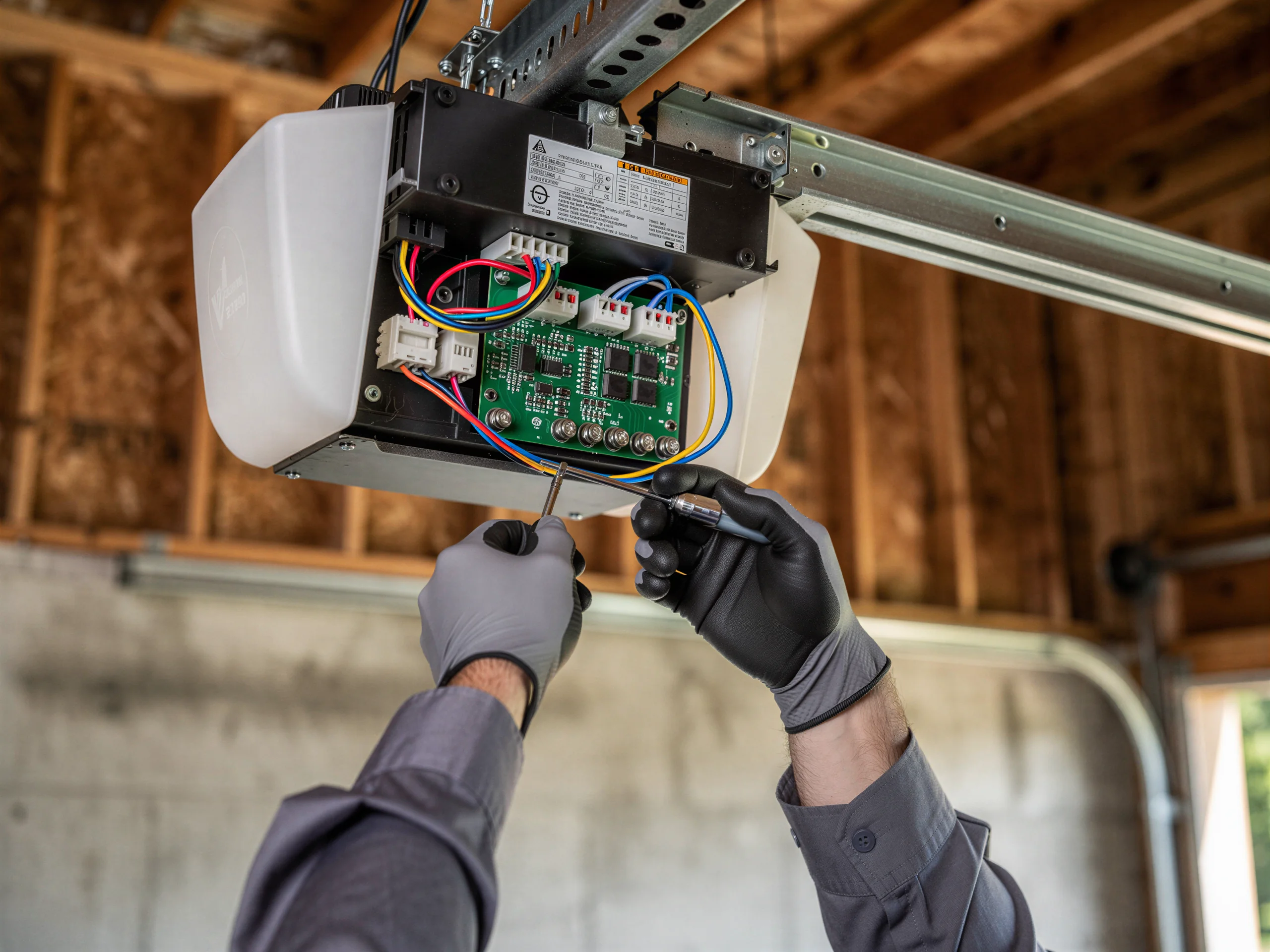
The door doesn't respond to the remote or wall button at all, but you can hear a faint relay click - that's a board that's receiving signal but not sending power to the motor.
Photo-eye drift reversal
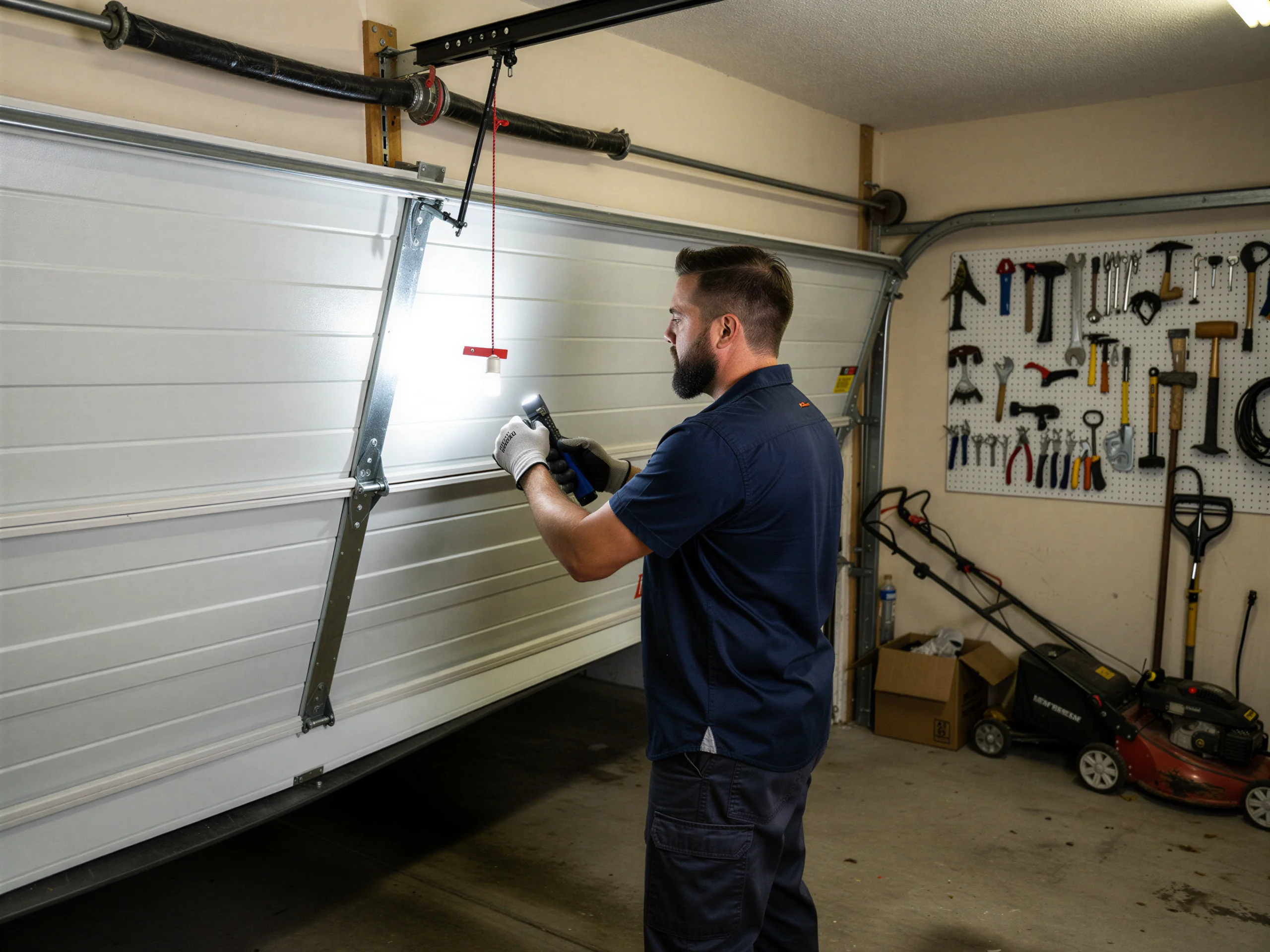
The door opens partway, then reverses, which almost always traces back to a photo-eye that's drifted out of alignment or a limit switch setting that's slipped with age. Sometimes the opener runs but the door doesn't budge - the motor isn't connected to the carriage, usually because the drive gear has stripped or the belt/chain has slipped off its sprocket.
Unreadable light codes
You might also get lights that flash in a pattern with no manual to decode them, or a remote that worked yesterday and is dead today with fresh batteries.
Chain grinding before failure
On older chain-drive units common in San Dimas's mid-century homes, a grinding noise right before failure is common - the chain riding on a worn sprocket. On newer belt units it's quieter right up until it isn't: a sudden silence where the belt used to hum.
How We Fix It
We start by testing the board, the sensors, and the motor separately rather than guessing, because on an opener this old, more than one part is usually failing at once and swapping the easy piece first just delays the real diagnosis. If the board itself has failed, we check whether a compatible replacement board still exists for that model before we recommend repair over full unit replacement.
Sensor and wiring issues get fixed on the spot in most cases - realignment, new photo-eye pairs, or re-running wiring that's gone brittle. Gear and sprocket wear is a straightforward internal parts swap.
When the unit is original to a 1960s or 70s build and the board is gone, we'll say so plainly: a new opener with current safety sensors and a sealed board is usually the better move than hunting for parts on a thirty- to sixty-year-old unit. We don't push replacement when a repair will hold - but we also won't pretend a dead board on an obsolete chassis is a quick fix.
Doing It Yourself
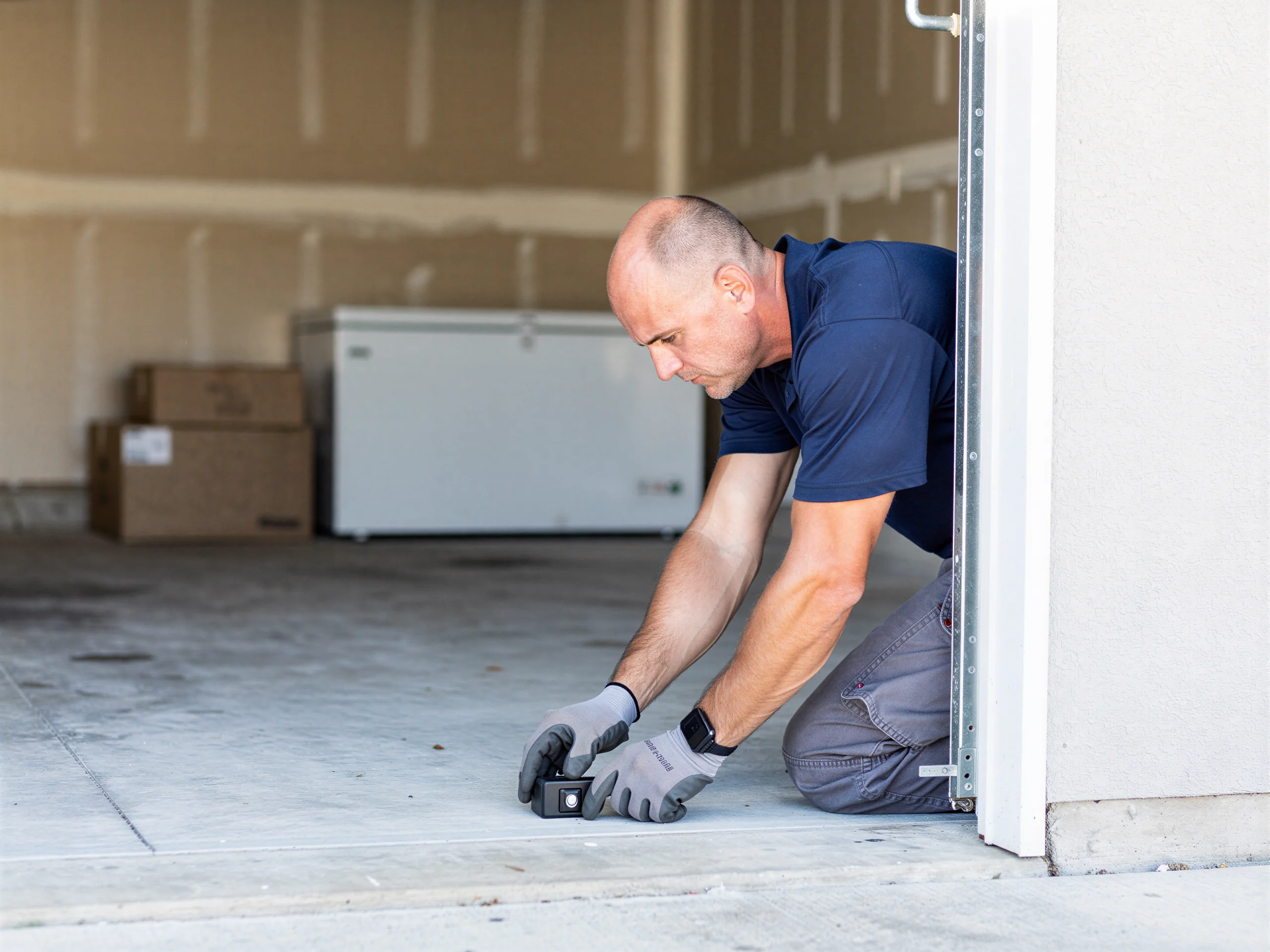
If the opener hums but the door doesn't move, check the obvious first: the wall switch wiring, the photo-eye sensors (a cobweb or a shift in alignment will stop the door cold), and whether the manual release cord got pulled by accident.
Sensor lens cleaning
Clean the sensor lenses with a dry cloth and make sure both eyes line up and glow steady, not blinking. If you hear the motor straining or clicking but the gear doesn't turn, that's usually a stripped drive gear inside the unit - a $20 part that takes the whole housing apart to reach, and not a fifteen-minute fix even for someone handy.
Original board failures
Circuit board failures show up as dead buttons, a remote that won't pair, or lights that flash a code you can't look up because the manual is long gone. We'll tell you straight: if your opener is original to a house built in the 1960s or 70s, which covers a lot of San Dimas stock, you're not dealing with a modern board.
Discontinued parts cost more
Parts for those units are often discontinued, and chasing a $15 capacitor with a two-week lead time costs more in time than replacing the head unit. Know when to stop turning wrenches and call.
Why It Happens Here
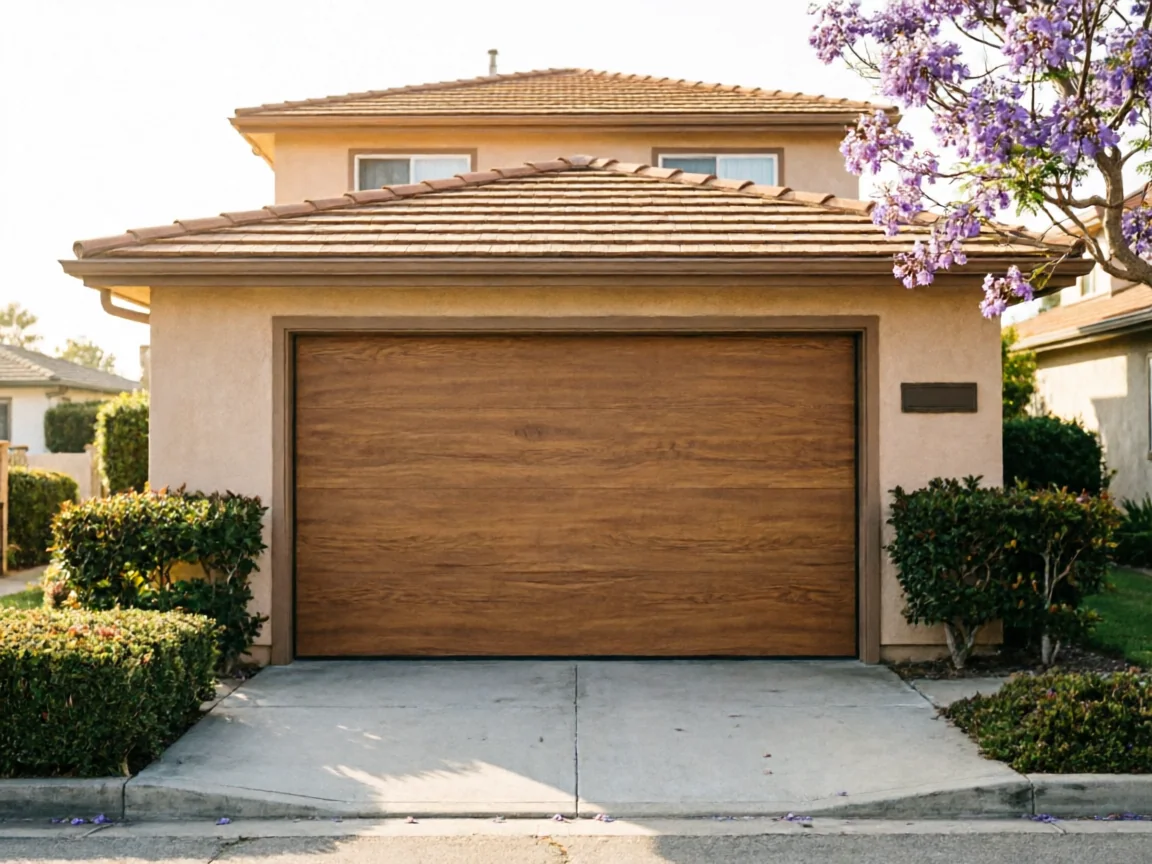
San Dimas housing runs mostly 1943 to 1987, with the median build year sitting at 1963, and most of that stock reflects the same 1960s-70s construction pattern you see across the wider service area. That means a large share of openers in this town are either the original chain-drive units from that era, bolted to garages that were never updated for a modern logic board, or a first-generation replacement from the 80s or 90s that's now also aging out.
The climate here runs in the moderate heat band, which doesn't sound dramatic, but it matters for a garage that sits closed all day under direct sun. Circuit boards and capacitors degrade faster with repeated heat cycling - hot attic-adjacent garage all afternoon, cooling overnight, every day for decades. That thermal cycling is harder on solder joints and sensor wiring than steady heat would be.
Old wiring insulation in a 1960s garage, combined with a board that's absorbed thirty-plus summers of heat swings, is a specific failure pattern - not a generic one. It's why opener calls in this part of the service area skew toward board and sensor failures rather than the belt or track issues you'd expect in newer construction.
Talk to a local pro
Garage door service in San Dimas?
Same-day service with honest, upfront quotes.