What Can Go Wrong
On a door this old, the extension springs are the most likely failure, and when one goes, the door comes down unevenly or won't lift at all.
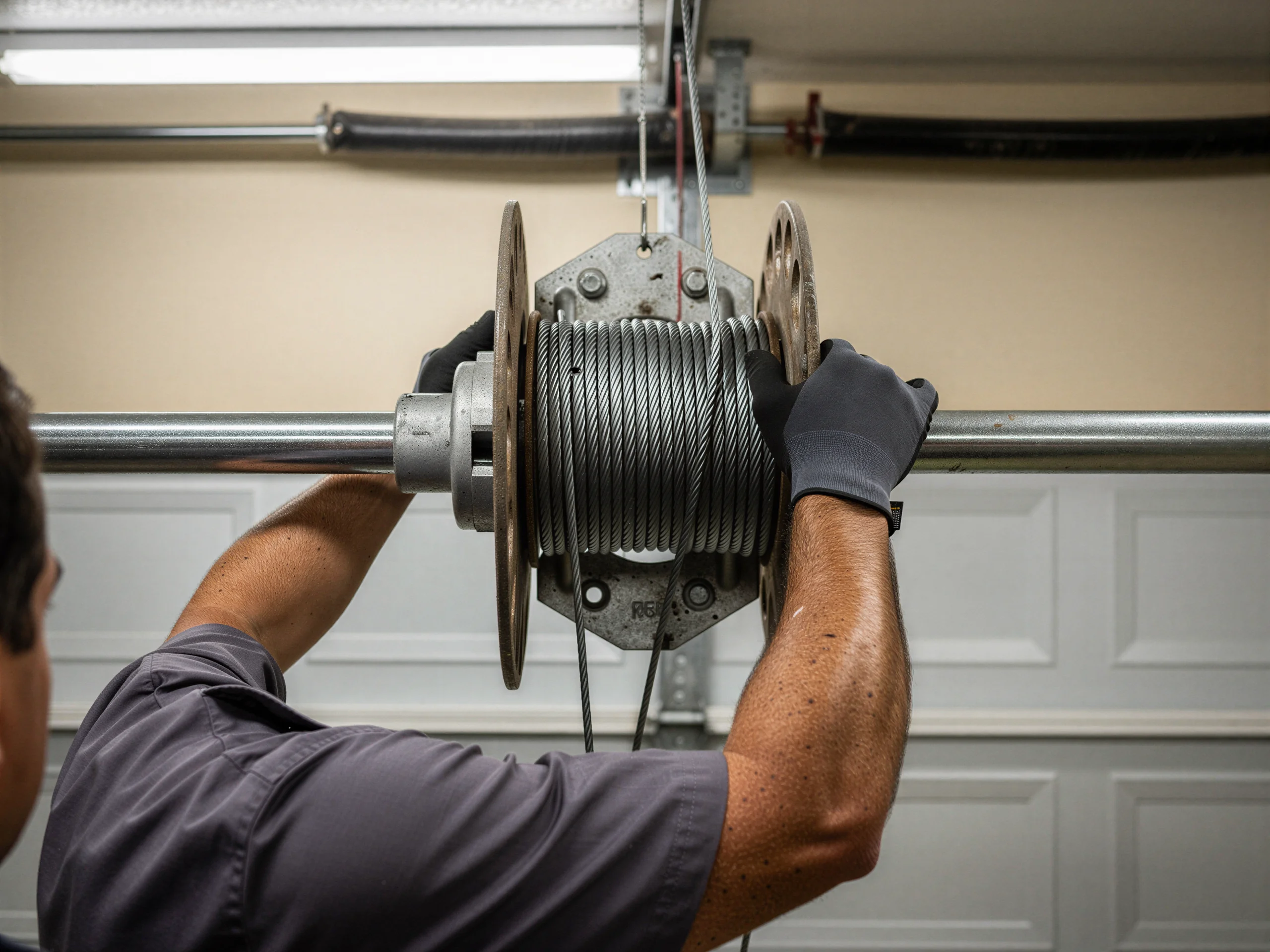
Unretrofitted safety cables
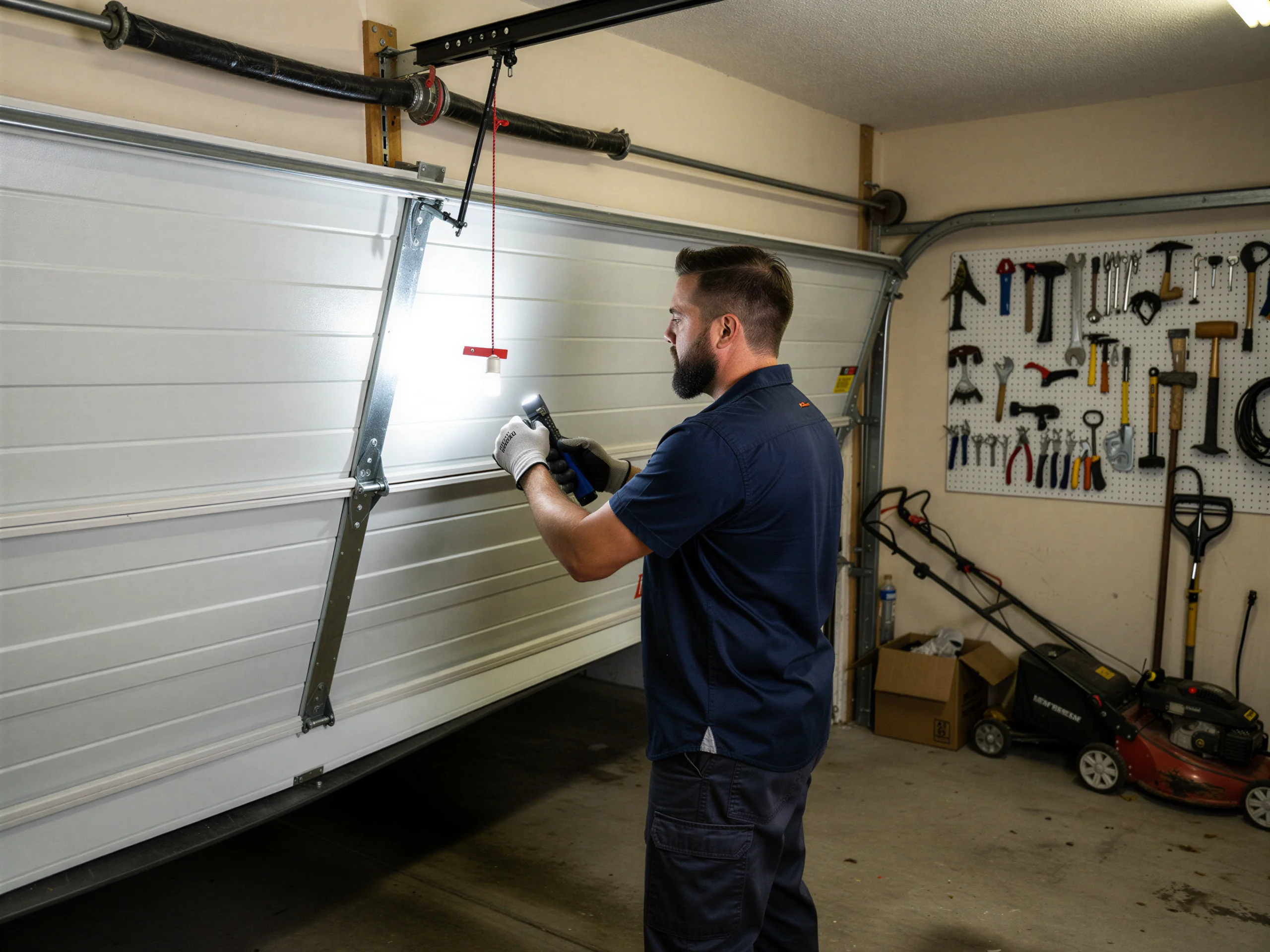
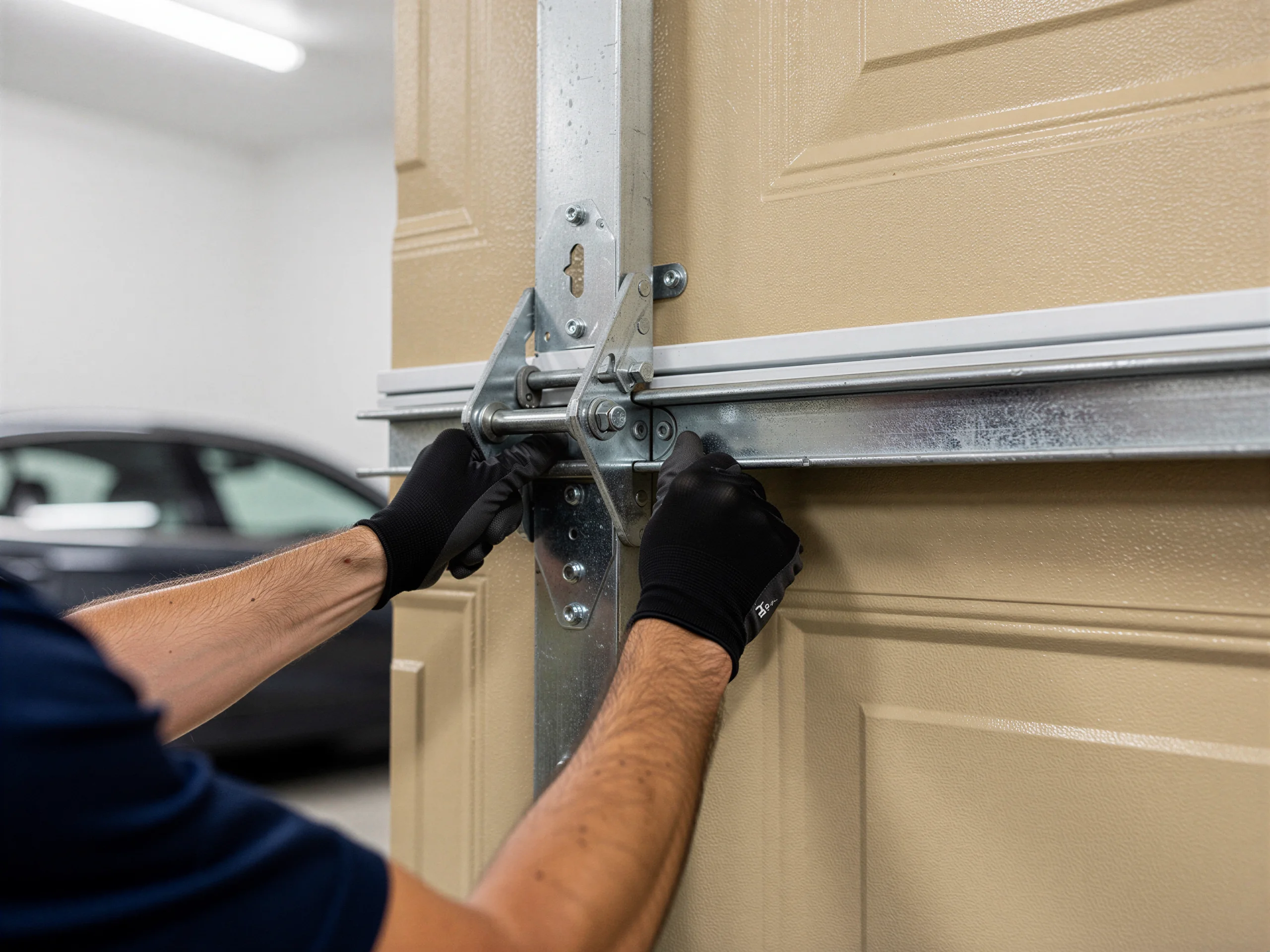
If the safety cables were never retrofitted, a snapped spring can whip loose instead of staying contained - that's a repair we treat as urgent, not routine. Track misalignment is the second common call. Fifty years of settling, especially on a slab poured in the mid-'70s, can shift the header just enough that the rollers bind.
Original steel rollers
Rollers themselves are usually original steel by now, which means noise and wear long before outright failure. Openers are a mixed bag - some houses still run a chain-drive unit from a decade or two ago, others have been upgraded.
Force settings checked
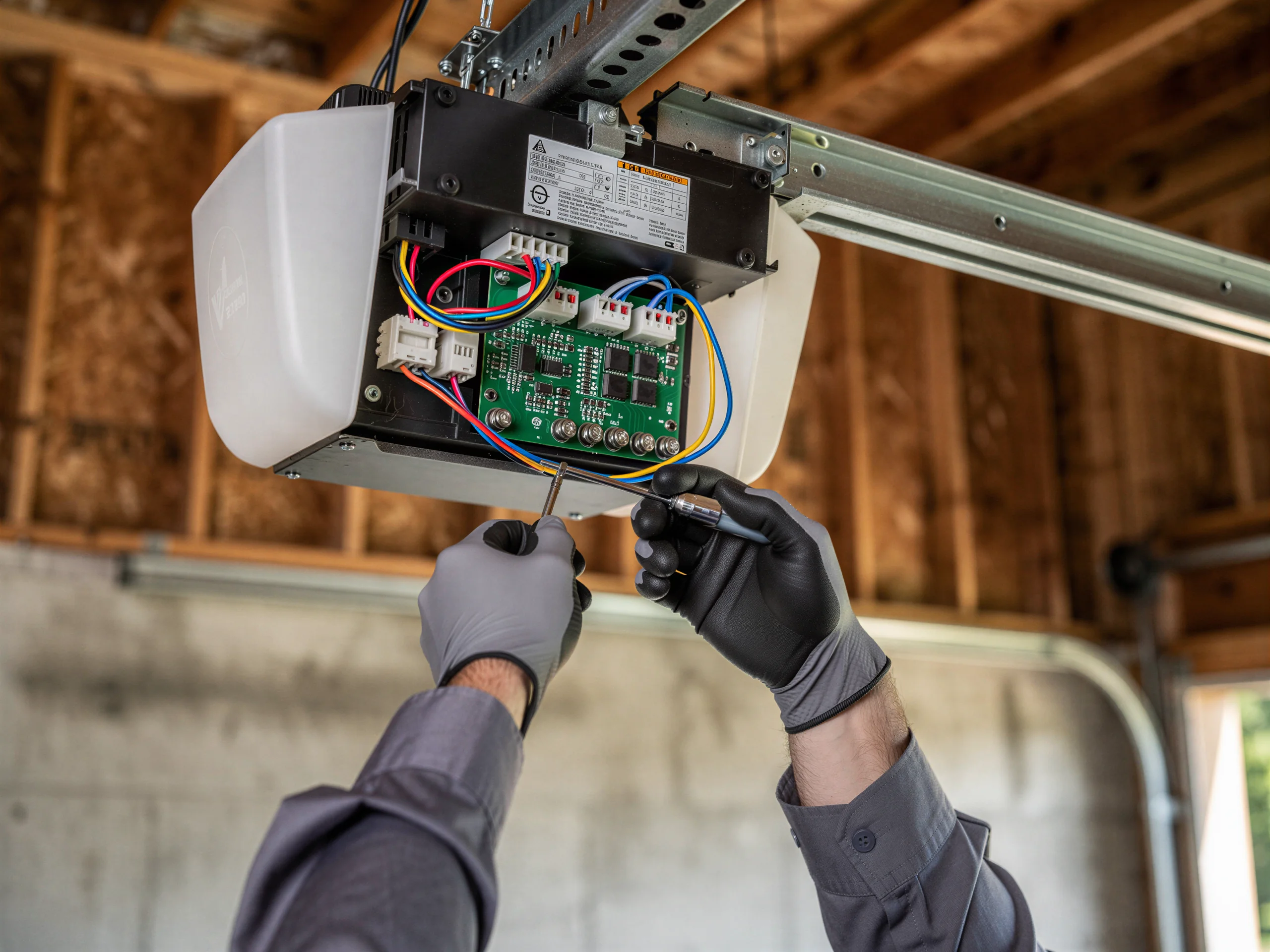
We check the opener's force settings regardless, since an old door with worn springs puts more strain on the motor than it was built for, and that combination burns out gears faster than either problem alone would.
Getting It Booked In
Call and tell us the door's rough age - if you know it's close to the house's build year, say so, since that tells us whether to expect extension springs or torsion.
Symptom-based intake questions
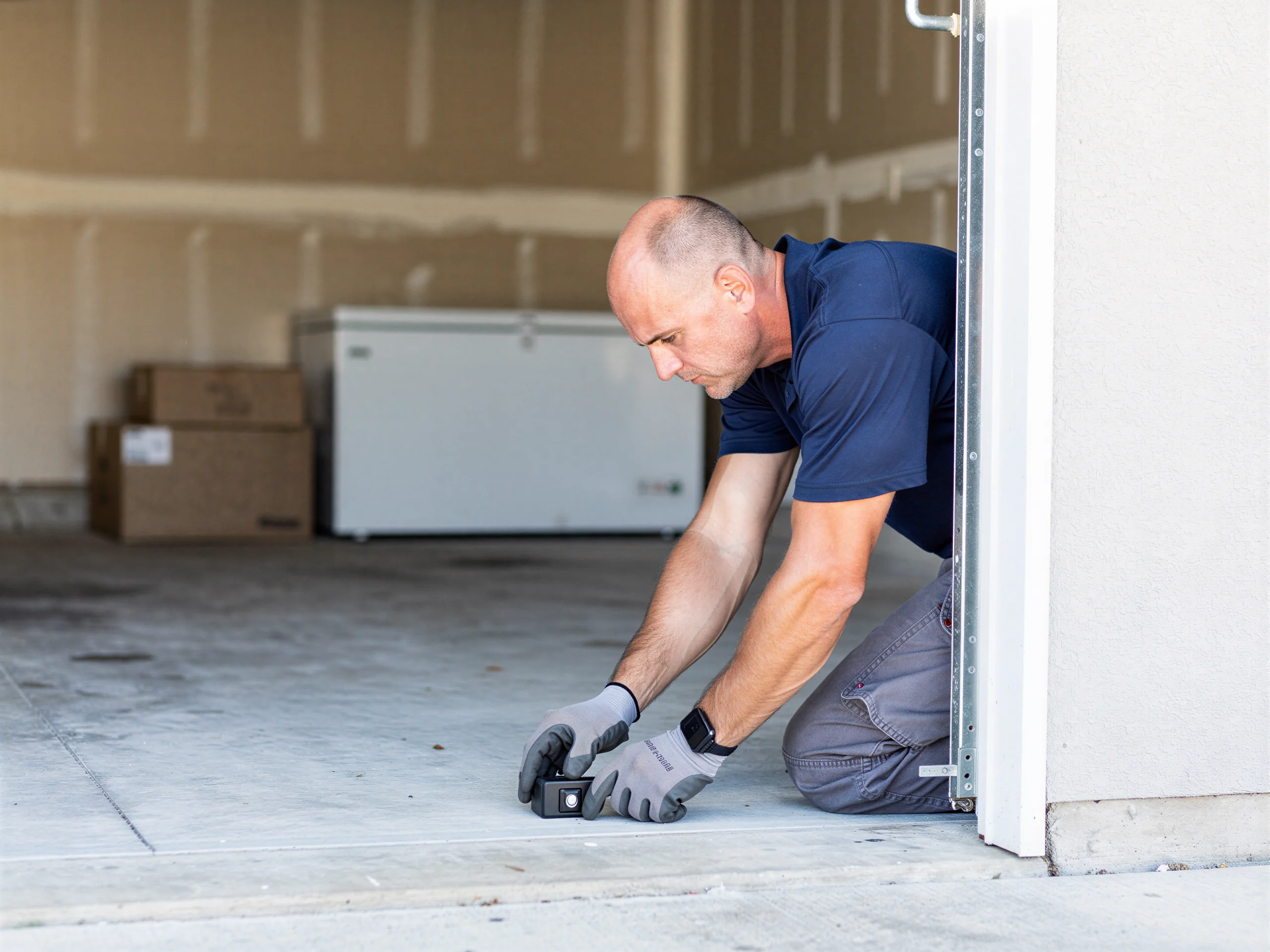
We ask what the door is doing: won't open, opens partway and stops, makes a bang before it quits. A bang usually means a spring let go. A door that reverses halfway is more often a sensor or track issue.
Second part option
We schedule the job out of San Dimas and load the truck for what you've described, but we always carry a second option in case the problem turns out to be something else once we're looking at it in person.
Booked, not walk-in
There's no local branch in La Verne - we're a short drive over, not a depot in town - so the job gets booked, not walked in on.
How We Fix It
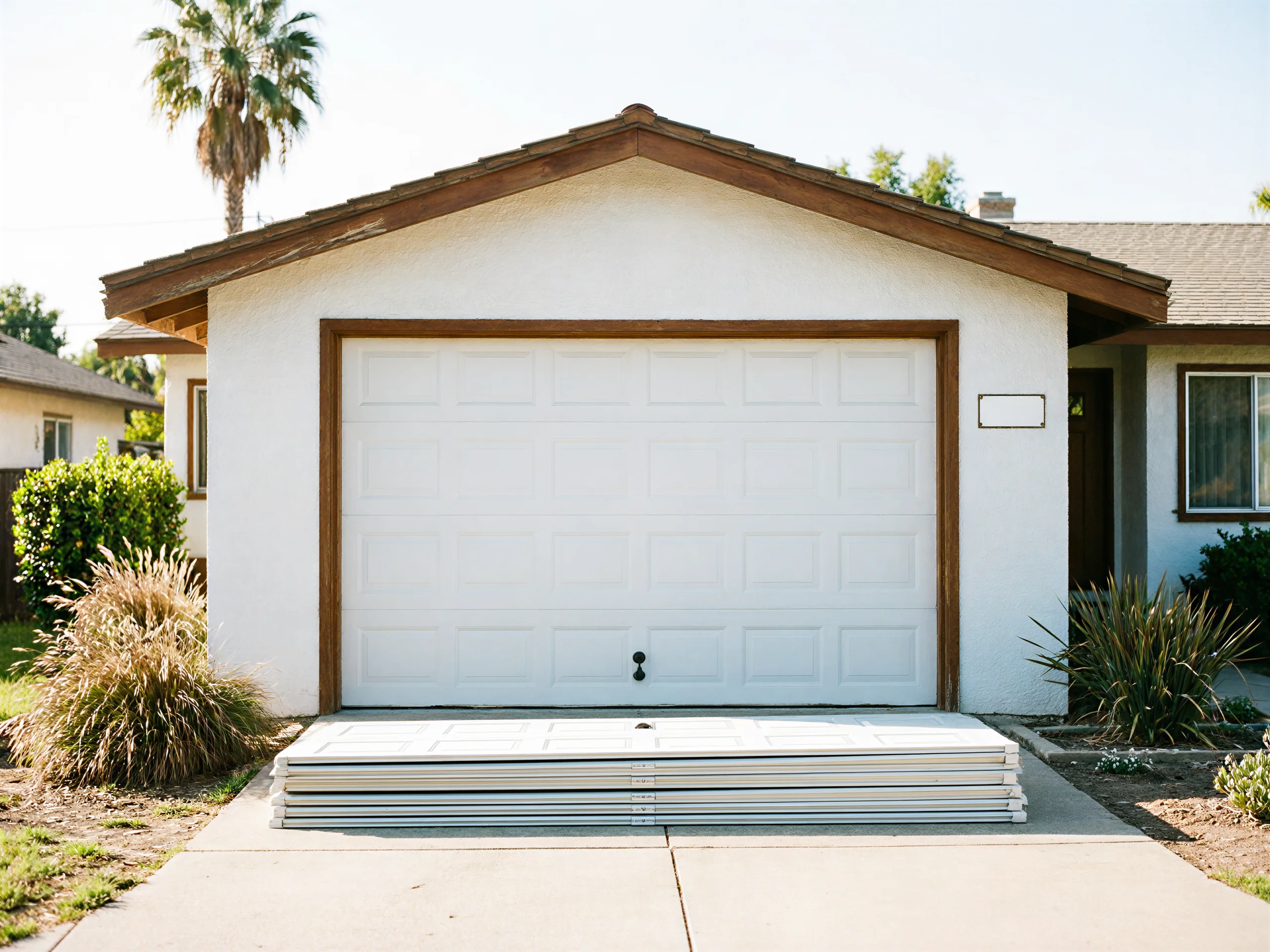
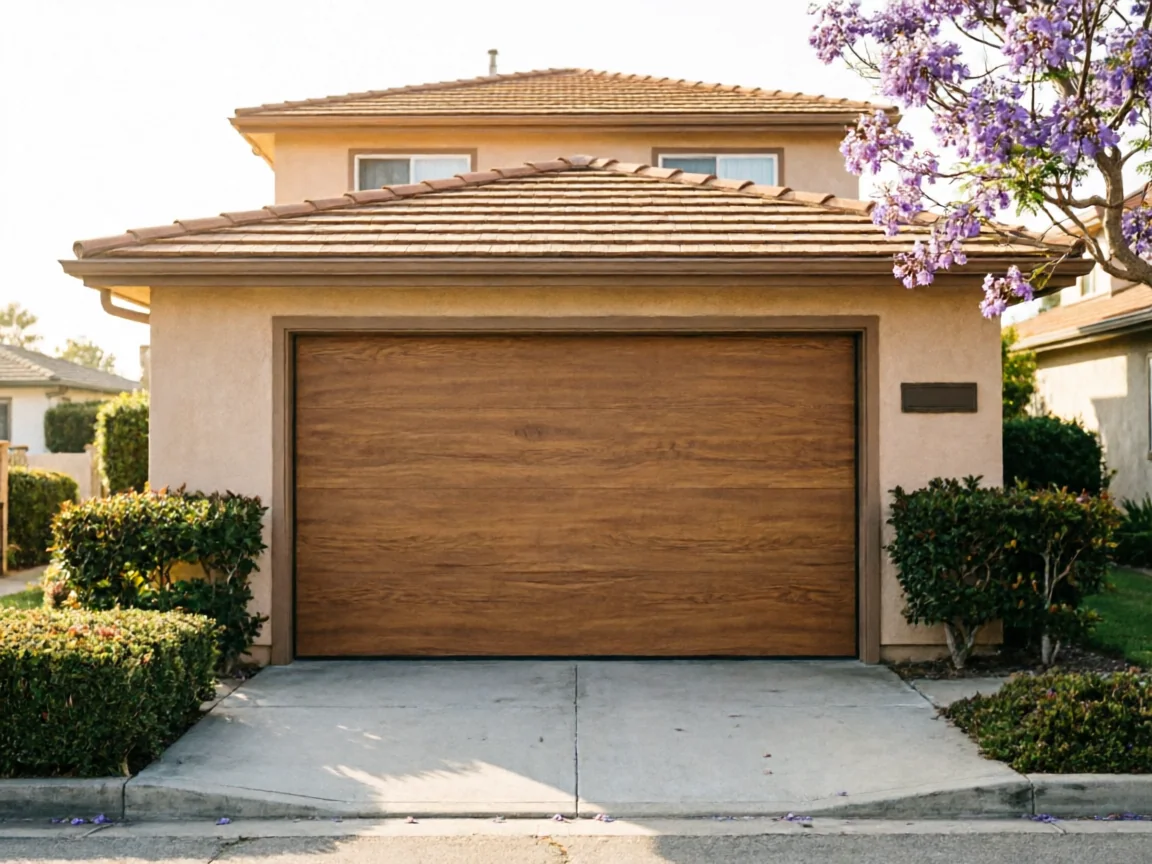
Most garages in La Verne were built around 1976, which puts the door itself squarely in the steel sectional era - wider panels than the older wood doors, usually a single 16-foot double or a pair of 8-foot singles, hung on galvanized track that's now pushing fifty years old.
Horizontal extension spring setups
A lot of these were installed with extension springs mounted along the horizontal track rather than a torsion bar over the header, since that was still common residential practice into the late '70s. That matters for a repair call: extension spring setups fail differently than torsion setups, and the safety cables that are supposed to catch a broken extension spring are often missing or rusted through on a door this age.
Track square and panel origin
We come out from San Dimas, about 2 miles away, and the first thing we check isn't the opener - it's whether the track is still square and whether the panels are original steel or a replacement from a remodel.
Repainted door clues
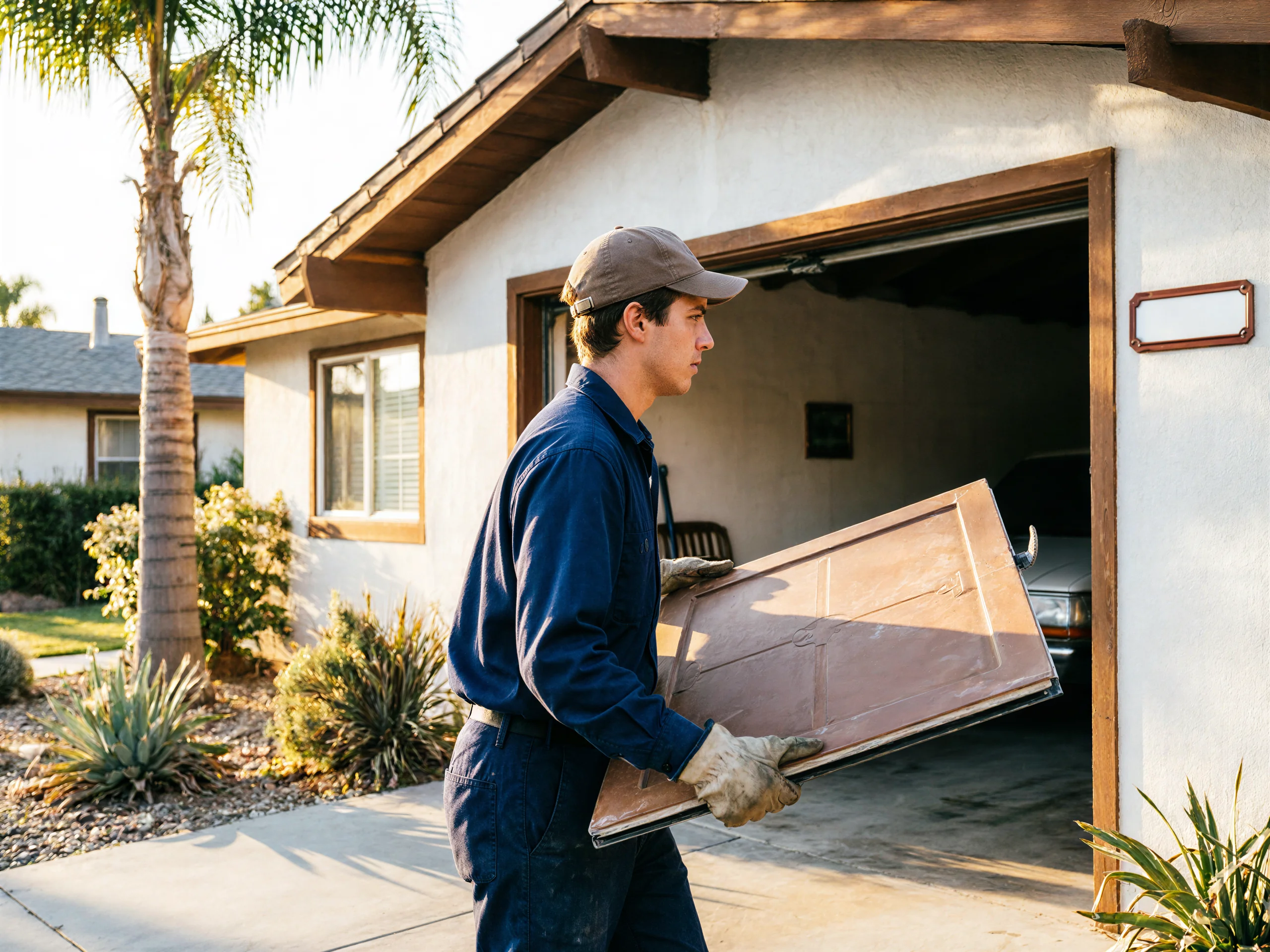
A door that's been repainted or resurfaced once already tells us something about what's underneath. From there it's spring replacement, cable work, roller swaps, or track alignment, depending on what's actually failed. We don't push a full door replacement unless the panels are rusted through or the track is bent beyond a clean pull-back.
What It Costs
We don't have a posted price list for this page, and we're not going to make one up. Cost depends on whether it's a spring, a cable, a roller set, or a full track realignment, and whether the opener needs attention too. What we can tell you is that a door built around original 1970s hardware often needs more than one thing fixed at once, since the spring, the cable, and the rollers tend to wear out on roughly the same timeline. We'll look at the door, tell you what's actually failing, and quote the job before we start - not after.
Talk to a local pro
Garage door service in San Dimas?
Same-day service with honest, upfront quotes.