Why It Happens Here
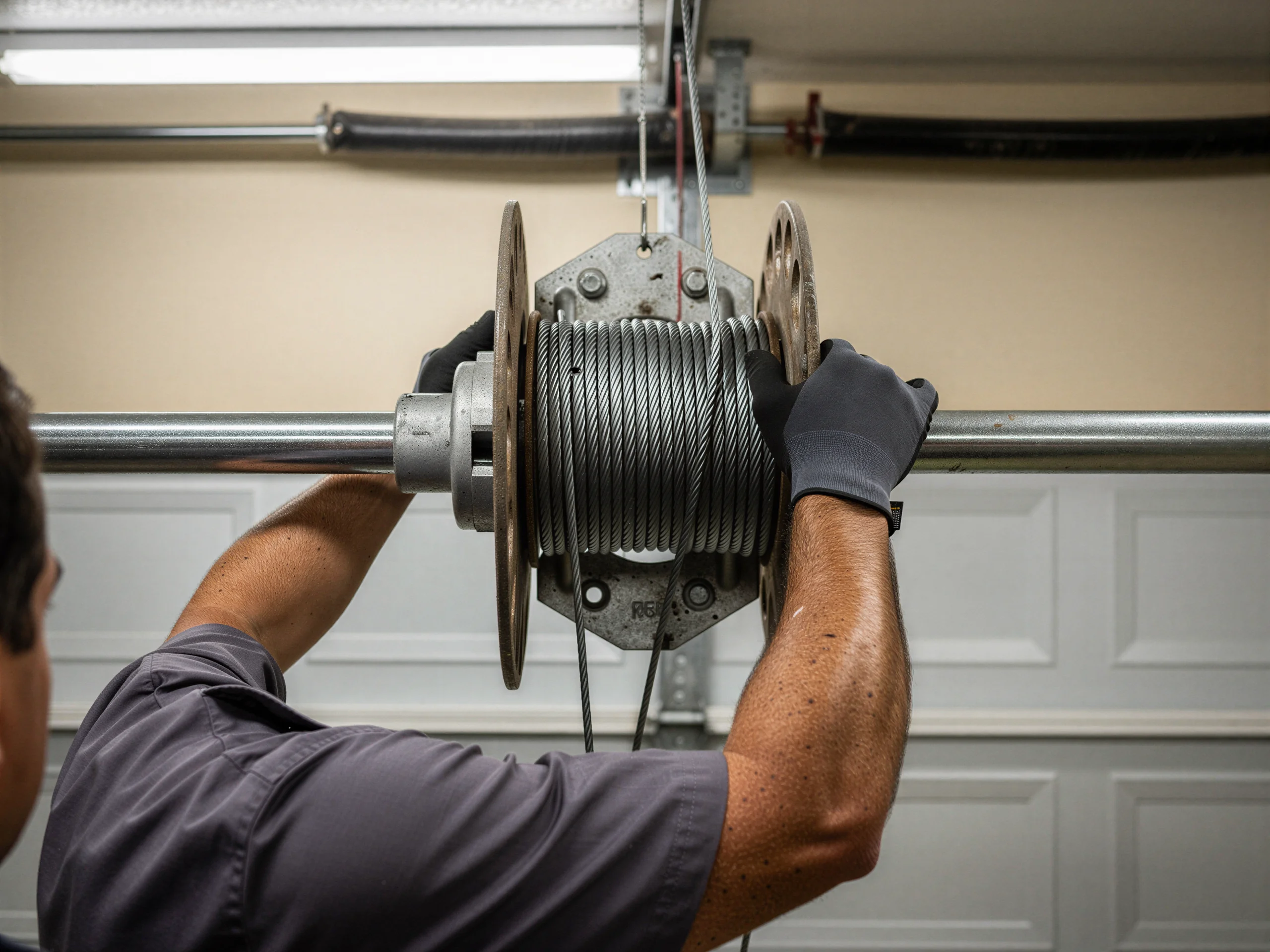
Median year built in East San Gabriel is 1961, right in the middle of the 1943-to-1987 window that covers most of the housing stock across this part of the county. A door that old was almost certainly fitted with its original torsion hardware at some point, or a one-for-one replacement decades back that matched what was already there. Those cables are galvanized steel, and galvanized steel loses strands to rust and fatigue over time regardless of how often the door gets used.
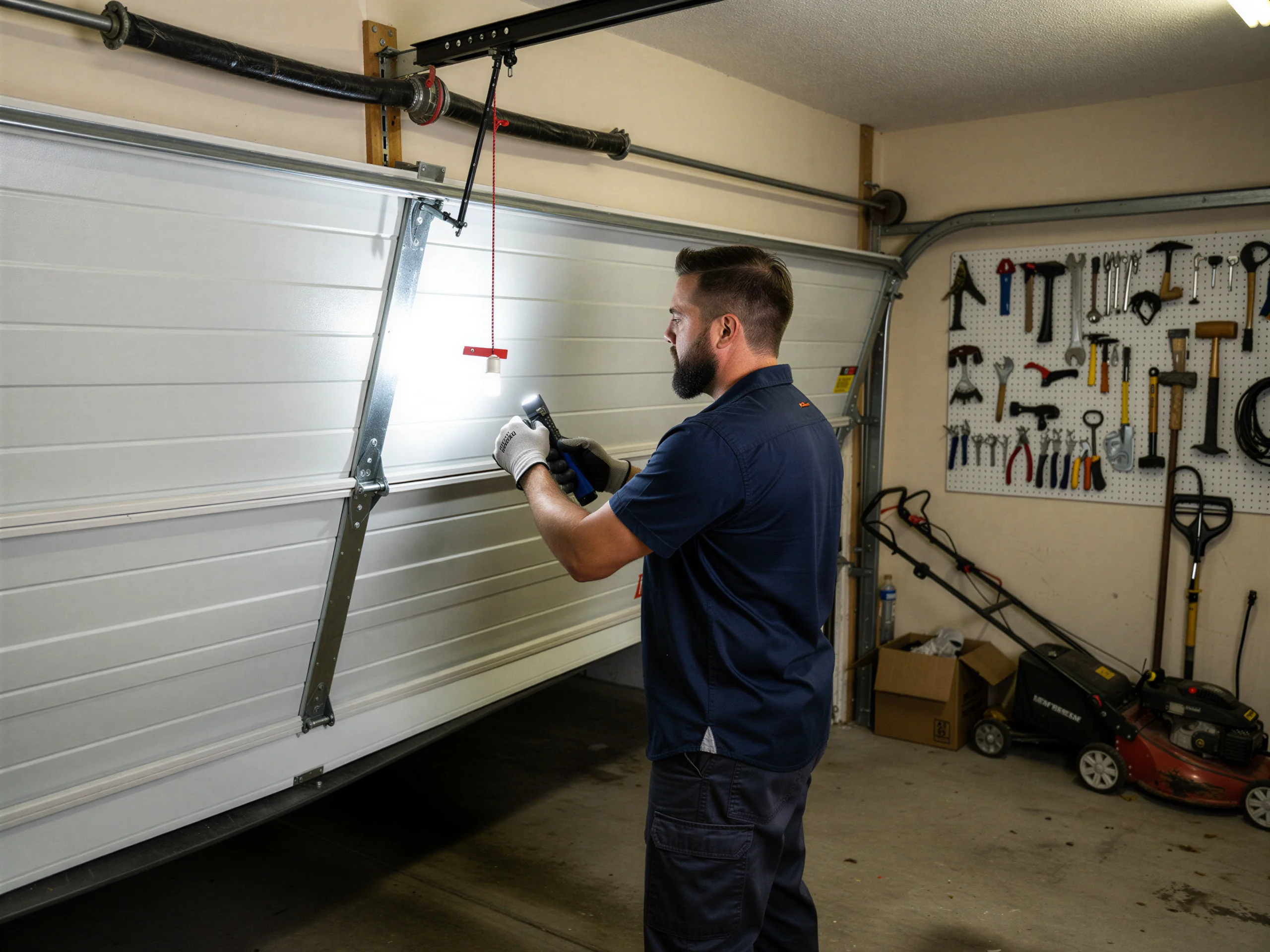
This area sits in a moderate heat band rather than true desert heat, so we're not seeing the kind of extreme thermal cycling that cooks cable coating fast. The failures we see here are closer to straightforward age and fatigue - a cable that's been flexing around the same drum groove for fifty-plus years finally gives at a frayed spot. It's not dramatic. Most owners hear a loud bang, the door drops crooked on one side, and that's the cable.
How Long You Are Without the Door
We're coming from San Dimas, sixteen miles out, which is the longest drive we make to any town on our list. That's not a same-hour fix the way a call five minutes from the shop might be. Once we're on site, a standard cable replacement on one side of a double door, or on a single door, is usually done inside the visit - it's not a job that stretches across multiple trips unless we find something unexpected once the door's open, like a bent track or a drum that's cracked.
What changes the timeline more than the drive is the door itself. If both cables are original to a house built around 1961, we're often replacing both sides even though only one broke, and that adds time versus a straight one-cable swap. We'd rather tell you that up front than have you waiting on a door that's still only half fixed.
How We Fix It
East San Gabriel has about 7,702 households, which makes it one of the smaller stops on our route compared to the bigger named areas we cover.
Less hardware variety
That size matters for how a cable call usually goes here: fewer doors means less variety in the hardware, and most of what we find is the same lift cable and drum setup that came standard on torsion systems from the early 1960s build wave. When a cable snaps, we don't just restring it and leave.
Drum, cable, spring check
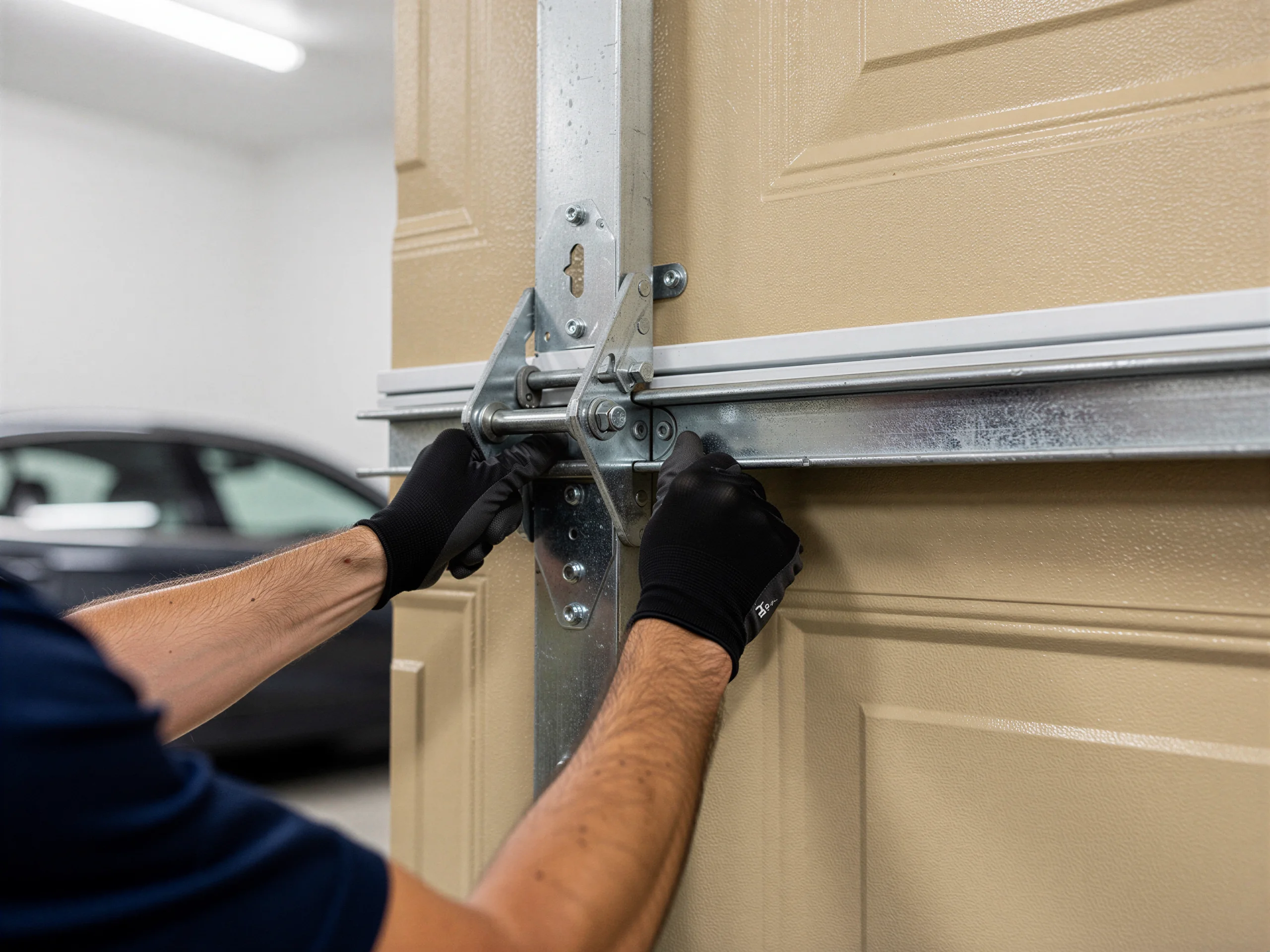
We check the drum for a chewed groove, look at the other cable even if it looks fine (cables on the same door age at close to the same rate), and check that the spring is still carrying its rated weight before we put tension back on the new cable. On a double door that's two cables, two drums, and usually a trip up the ladder on both sides.
Bent drums need ordering
We carry stock cable sizes that fit most residential doors from this era, but if your drum or bottom bracket is bent or rusted through, that part isn't something we keep on the truck in every size. We'll tell you straight if it needs a special order rather than quoting a fix we can't actually do that day.
Doing It Yourself
A garage door cable is under real tension even with the door down, because the spring is still loaded. Cutting or loosening the wrong thing on a torsion system can send a bar or bracket moving fast enough to break fingers or worse.
Not a weekend job
We're not saying this to upsell a visit - it's the honest reason cable work isn't a safe weekend project the way swapping a roller is. What you can do yourself: look at the door before you touch anything.
Lower side warning signs
If one side of the door is sitting lower than the other, or you see a frayed cable with wire ends sticking out like a broom, that's your sign to stop using the opener and leave the door down until someone looks at it.
Second cable overload risk
Running the opener on a door with a partly failed cable risks the second cable going too, under the extra load, which turns a one-side repair into a two-side job.
Talk to a local pro
Garage door service in San Dimas?
Same-day service with honest, upfront quotes.