How Long You Are Without the Door
We run out of San Dimas, about 6 miles from Walnut, so there's drive time built into any visit, we're not going to pretend otherwise or promise a window we can't back up. Most opener repairs, once we're on site, are a single visit: board swap, sensor realignment, or gear replacement if that's what's worn. A full opener replacement is also usually same-visit work if the unit's in stock. Where it stretches out is a part that has to be ordered, which happens more with older boards that aren't made anymore, less common in Walnut given the newer housing stock, but it still comes up on a 1980s-era opener. We'll tell you up front if that's the situation rather than leave you guessing.
How We Fix It
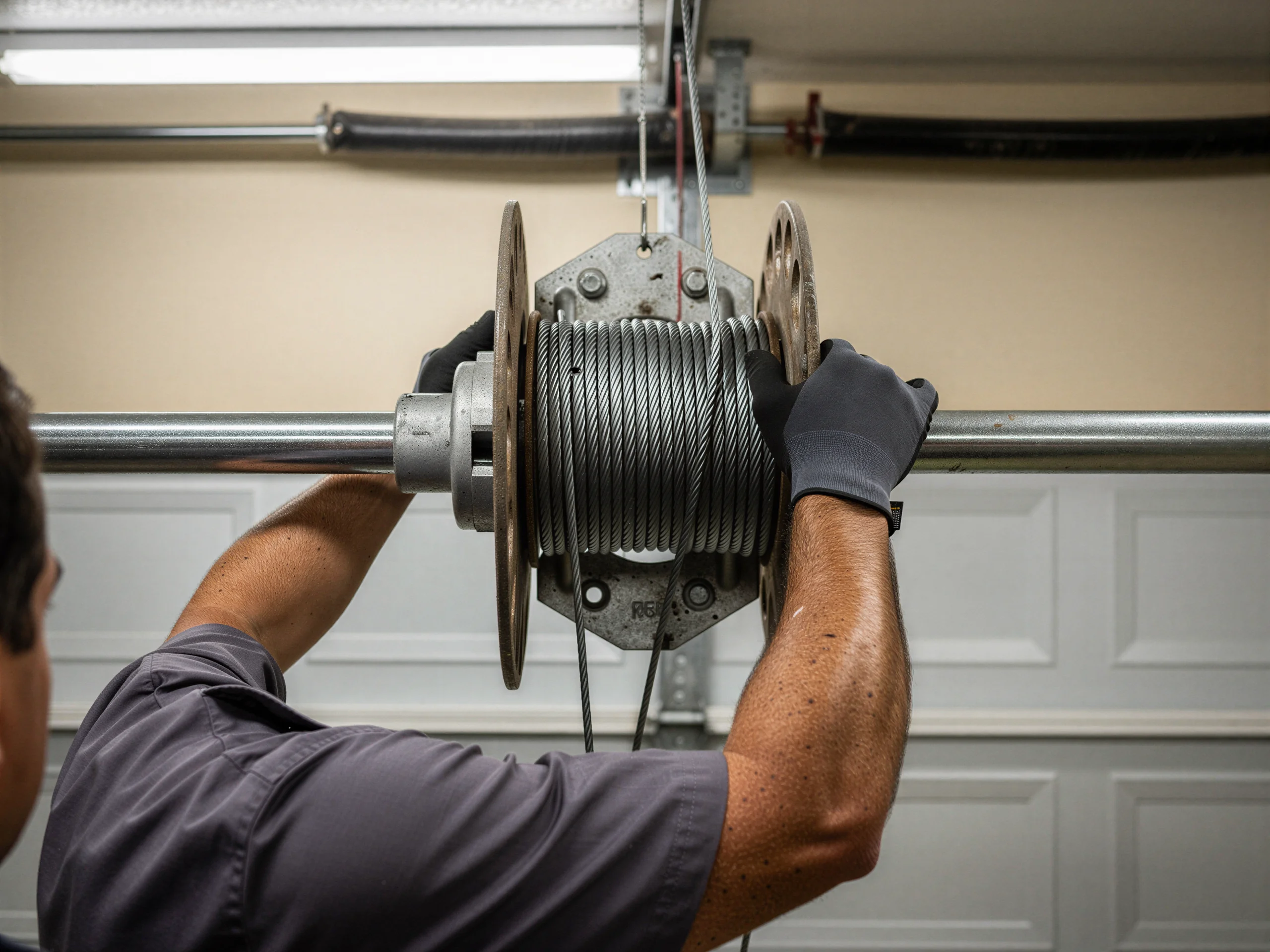
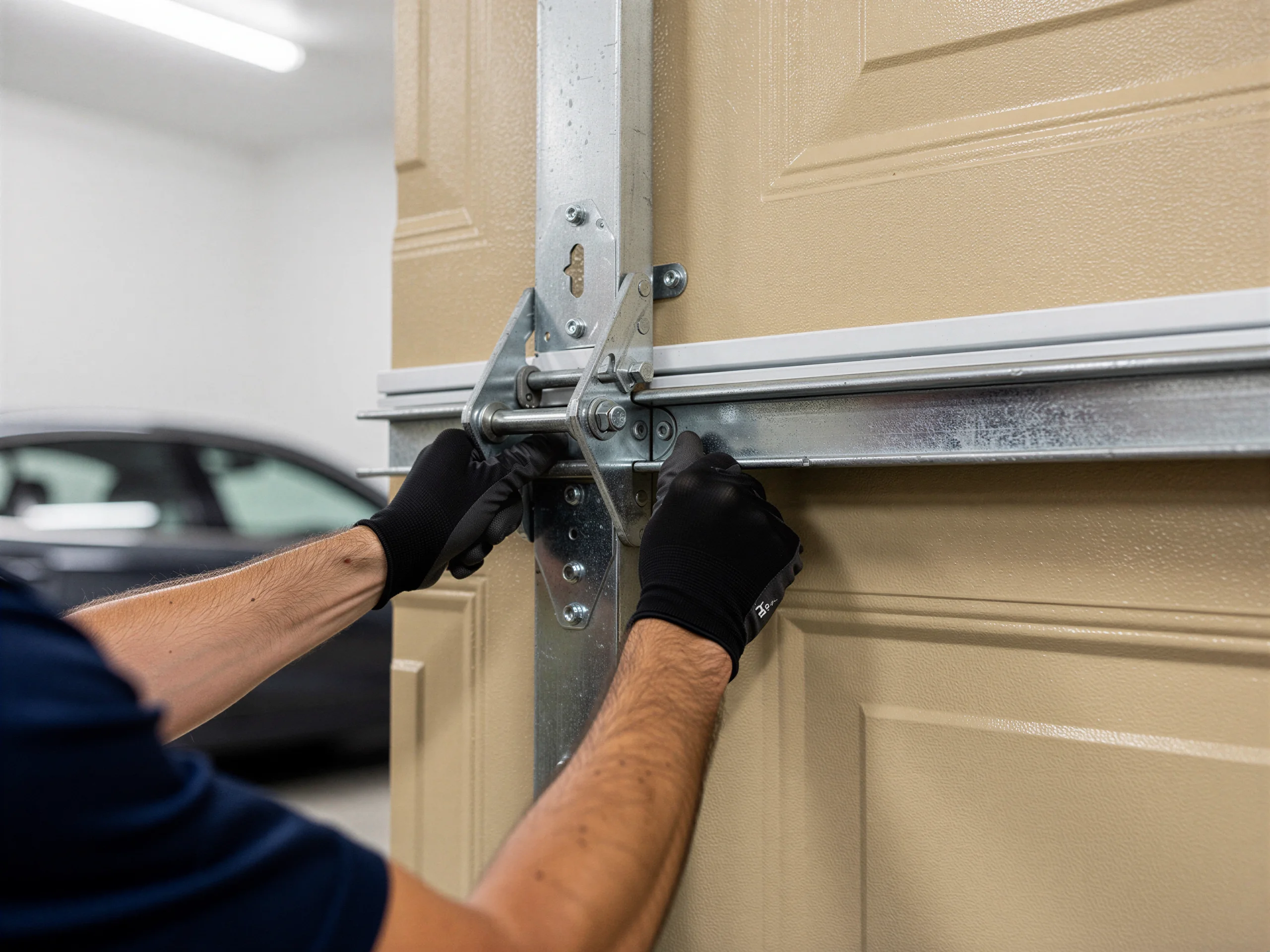
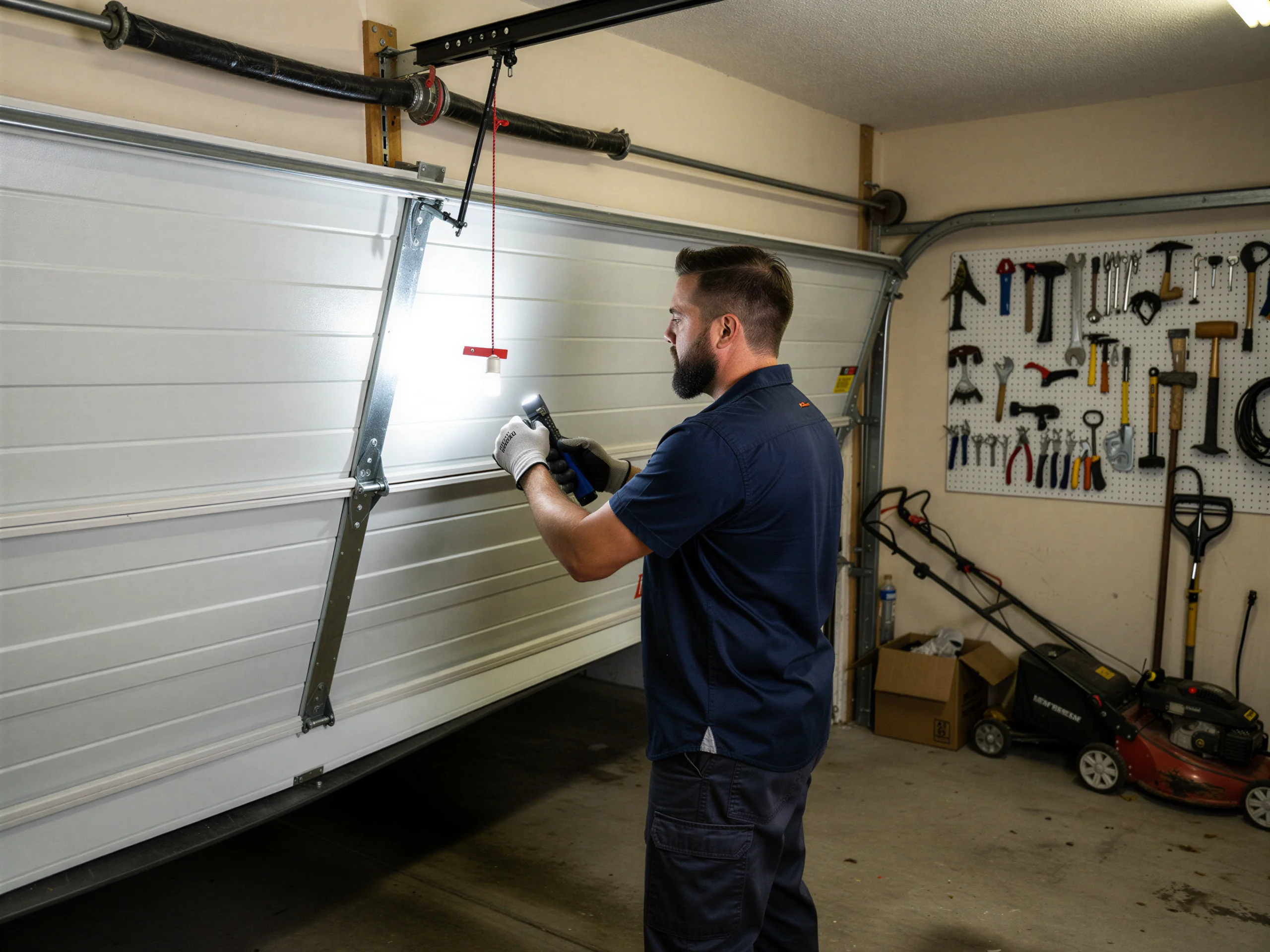
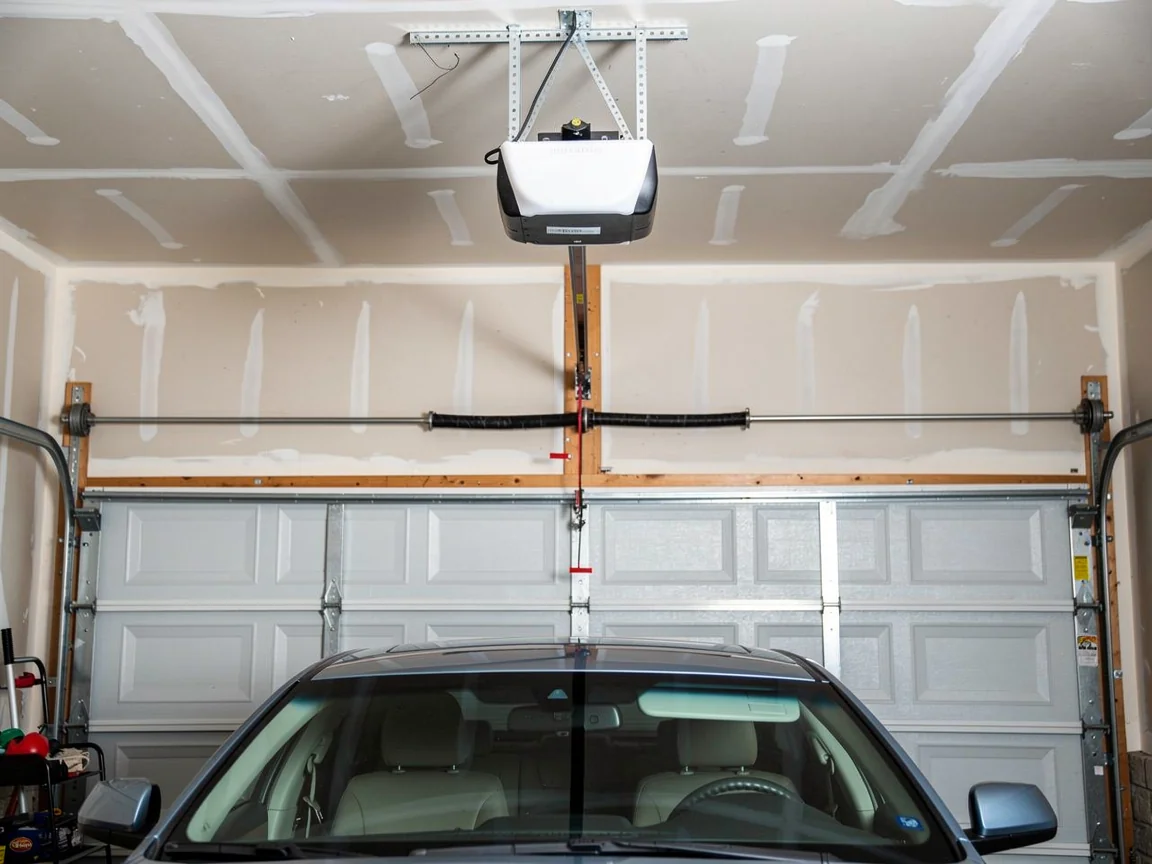
We start the same way every time: check power, check the sensors, pull the release and check the door's own weight and balance before touching the opener itself. A lot of what looks like an opener failure is actually a spring or cable problem putting extra strain on the motor, and fixing the opener without fixing that just means a repeat call. Once we've isolated it to the unit, we diagnose board versus motor versus gear kit and tell you the real options, including when replacement is the better call than repair, especially on an older board nobody manufactures anymore. We test the full cycle before we leave, not just the first open and close.
Why It Happens Here
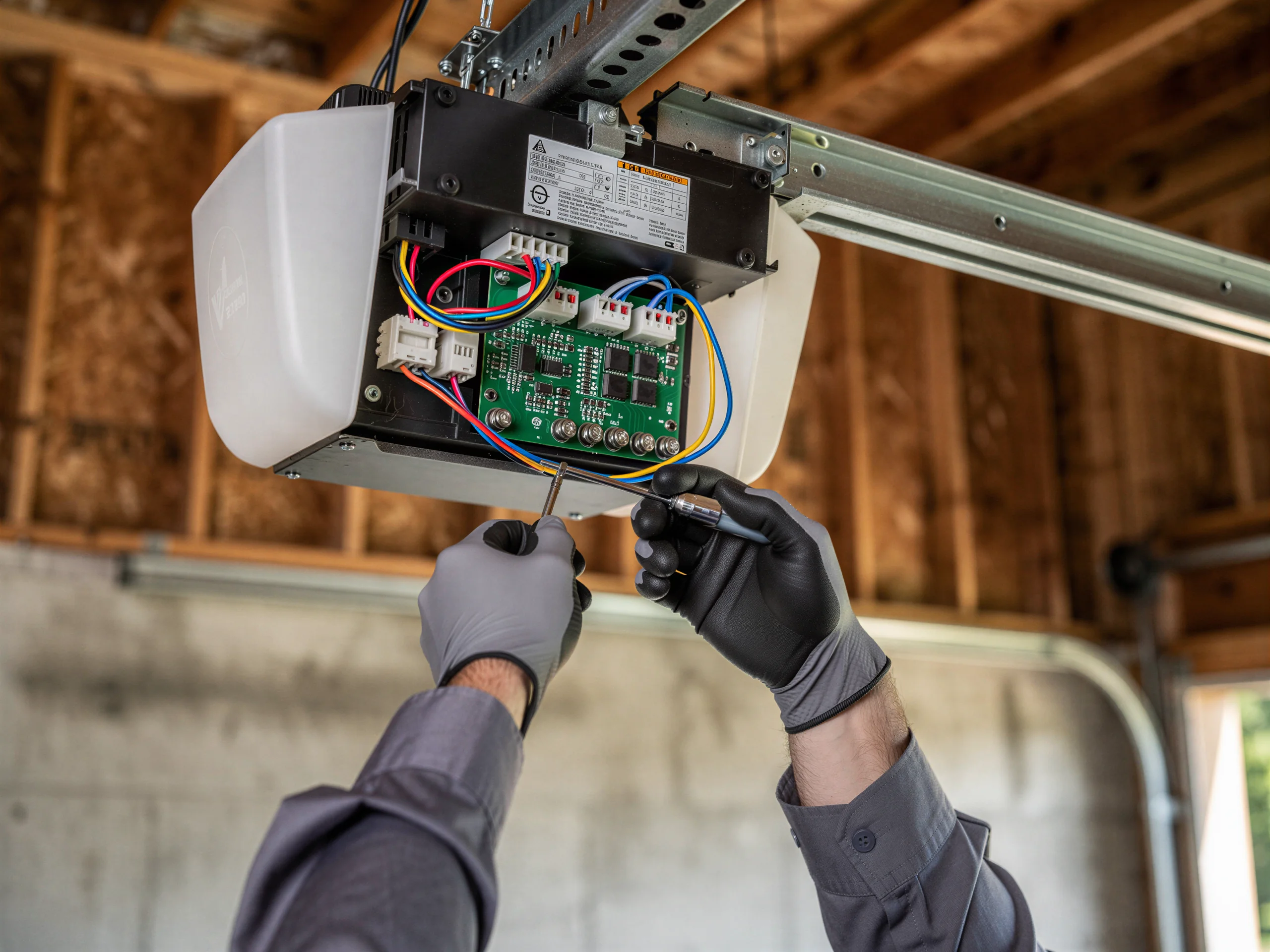
Walnut is a smaller piece of what we cover, about 8,534 households, and the housing stock here runs newer than a lot of the service area. Most of it went up around 1983, well past the 1963 median for the wider territory. That matters for openers because newer construction means fewer of the old screw-drive units bolted straight to a wood header, and more chain and early belt-drive models with circuit boards instead of pure mechanical relays. Those boards don't like heat soak. The climate here runs on the moderate end for heat, but a garage with west sun still cooks a logic board over a few summers, and that's usually what we find: a board that's failed, not a motor that's worn out. Sensor alignment is the other common call. Openers from the 80s and 90s used sensor brackets that were never built to stay square for forty years, and a tap from a bike or a ladder knocks them out just enough that the door won't close on command. It's rarely the motor itself that's the problem in houses this age. It's almost always the electronics or the eyes.
What It Costs
We don't post prices for opener repair because the fix depends entirely on what's actually broken, a board, a sensor, a gear set, or a full unit.
Income-linked opener upgrades
What we can tell you is what tends to drive the decision in Walnut specifically. Median household income here is $133,762, noticeably higher than the $104,565 median across the rest of the area we serve.
Swap over board repair
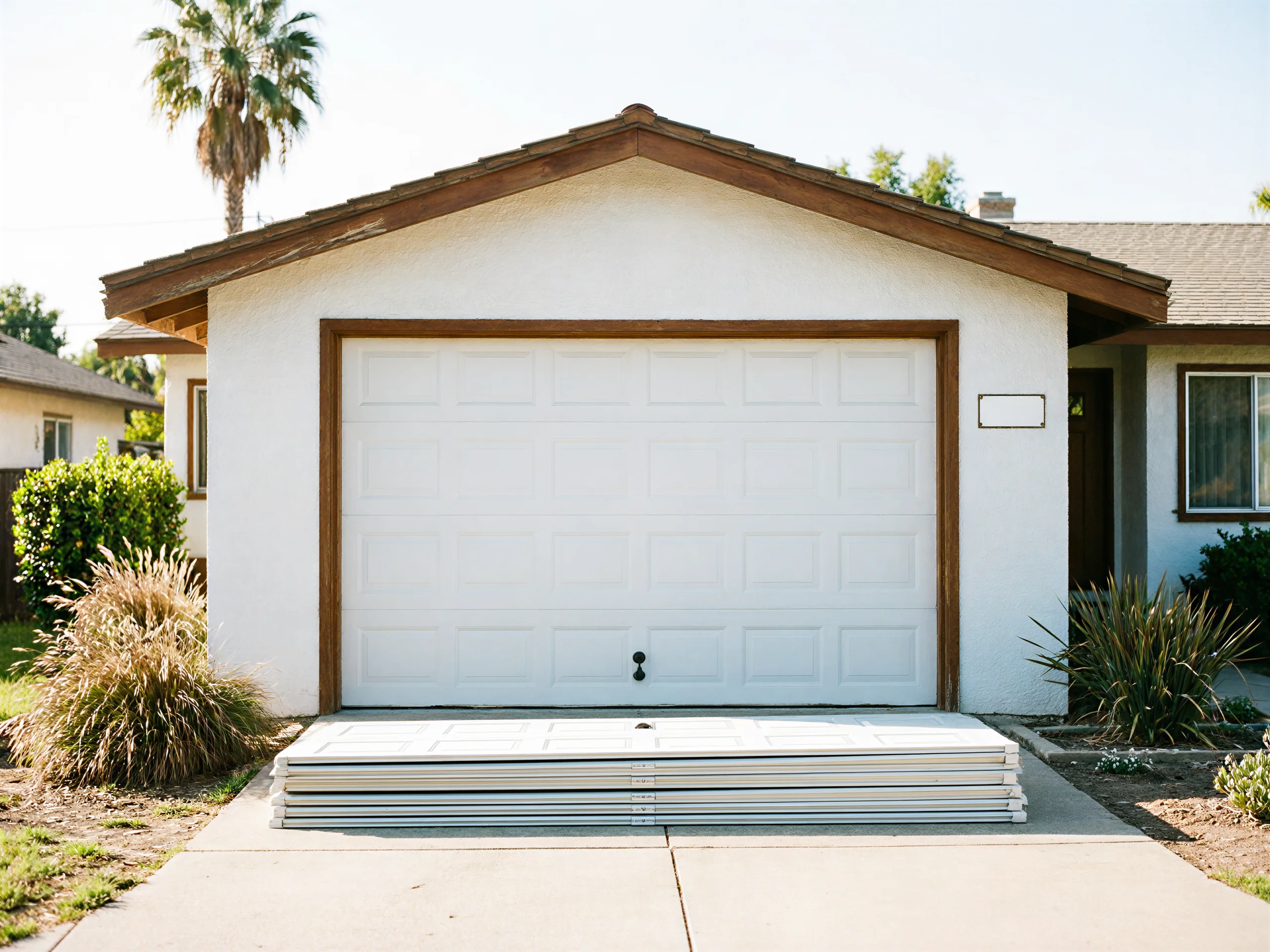
In practice that means more Walnut homeowners choose a full opener swap over nursing along an older logic board once it starts acting up, rather than chasing a repair that buys another year or two.
Honest 80s unit advice
That's not a sales pitch, it's just the pattern we see call to call. If your opener is from the 80s stock common here and the board's gone, we'll tell you straight whether a repair makes sense or whether you're better off putting that money into a new unit.
Doing It Yourself
Before you call anyone, check the obvious. Make sure the unit is actually getting power, a tripped outlet or a pulled plug is more common than people expect.
Nudging sensors back
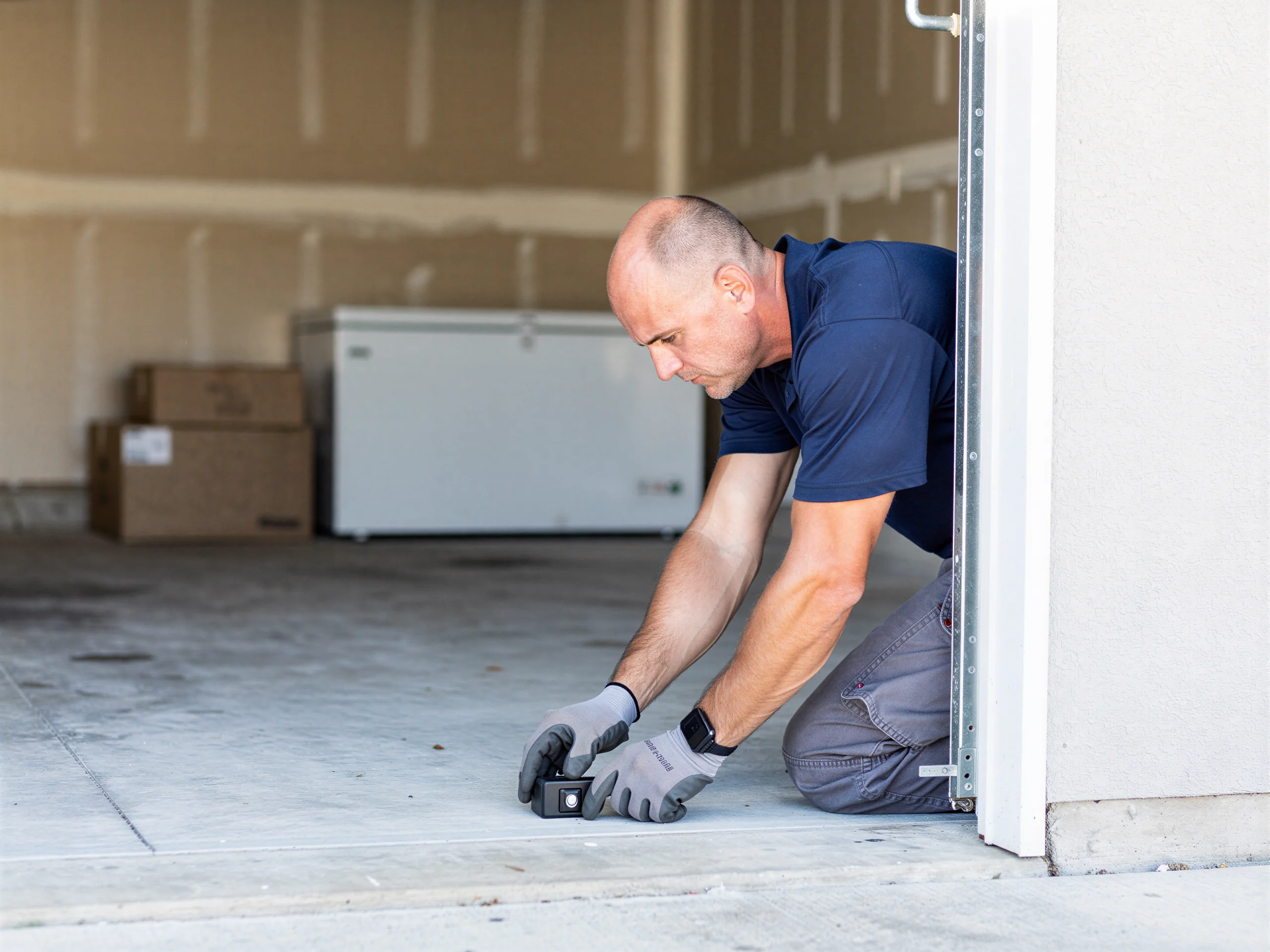
Check the two sensors at the bottom of the track; if either one has a blinking light, something's blocking the beam or they've drifted out of alignment, and you can usually nudge them back by hand.
Release cord weight test
Pull the manual release cord and see if the door moves freely by hand, if it's heavy or binds, that's a spring or track problem, not an opener problem, and running the opener against it will burn out the motor.
Housing opening limits
We're honest about the limits here: once you're past sensors and power, opening the unit housing to get at the board or the gears means working around a wound spring and a motor under tension, and that's not a weekend project. If the basic checks don't fix it, it's a call, not a YouTube afternoon.
Talk to a local pro
Garage door service in San Dimas?
Same-day service with honest, upfront quotes.