Doing It Yourself
Between visits, a few things are worth doing on a door this old. Wipe down and lubricate the track and hinges with a garage-door-rated lubricant, not household oil, which attracts dust and gums up over a season.
Tighten track bracket bolts
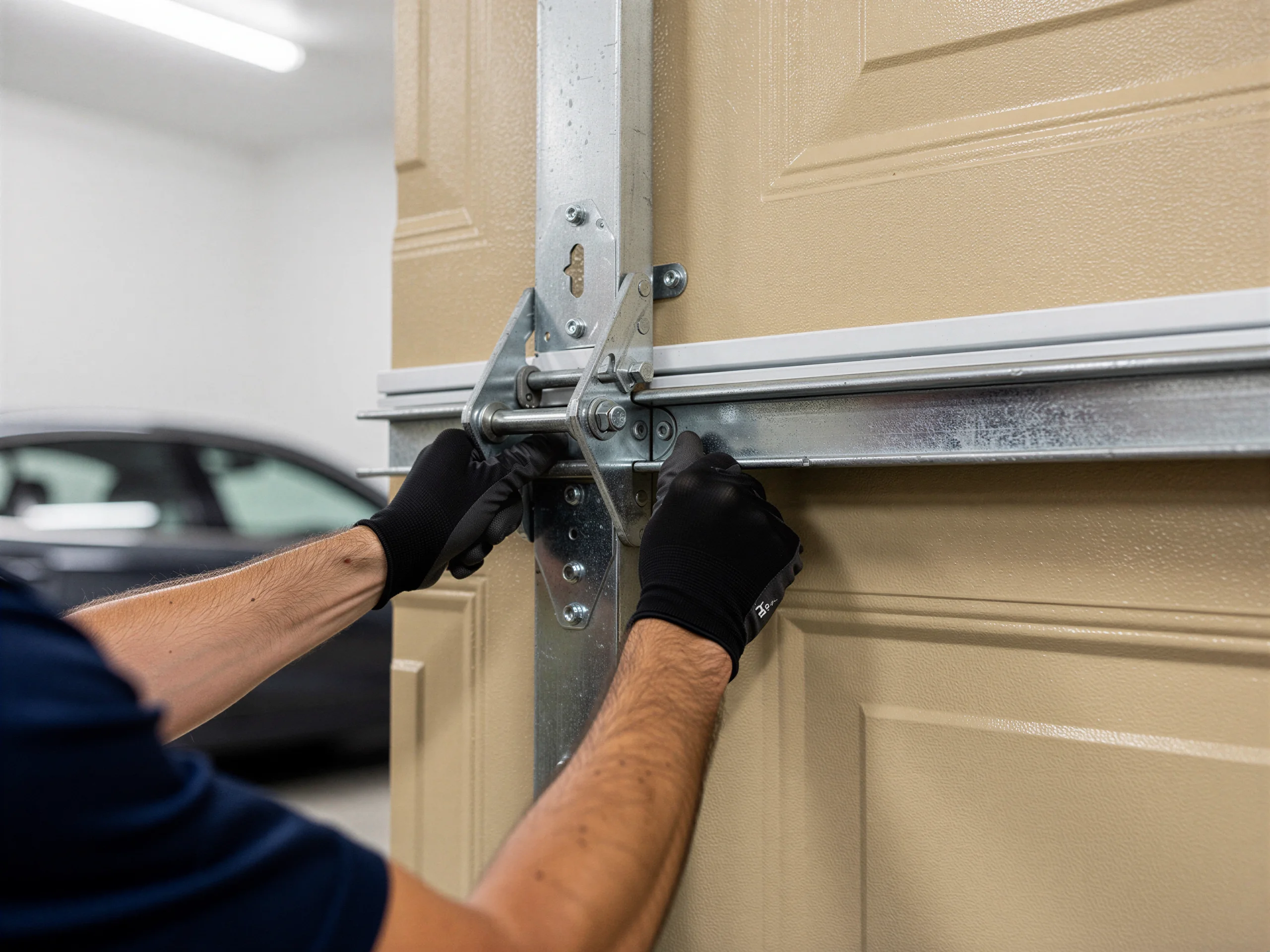
Check that mounting bolts on the track brackets are still snug - wood frames that have shifted over eighty years often loosen the hardware around them. Look at the bottom corners of a wood panel door for soft spots or visible gaps, since that's where moisture does the most damage over time.
Extension springs need pros
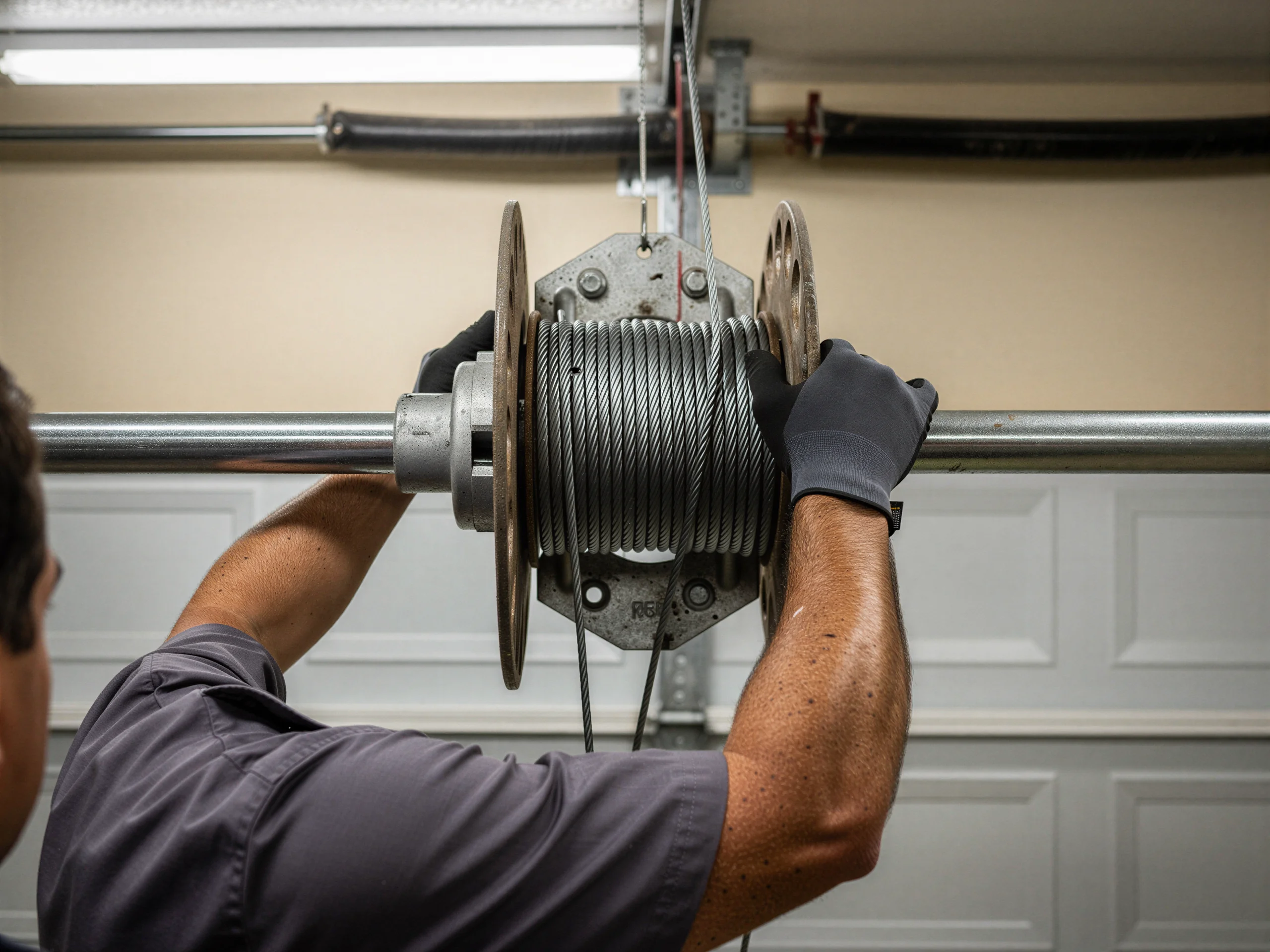
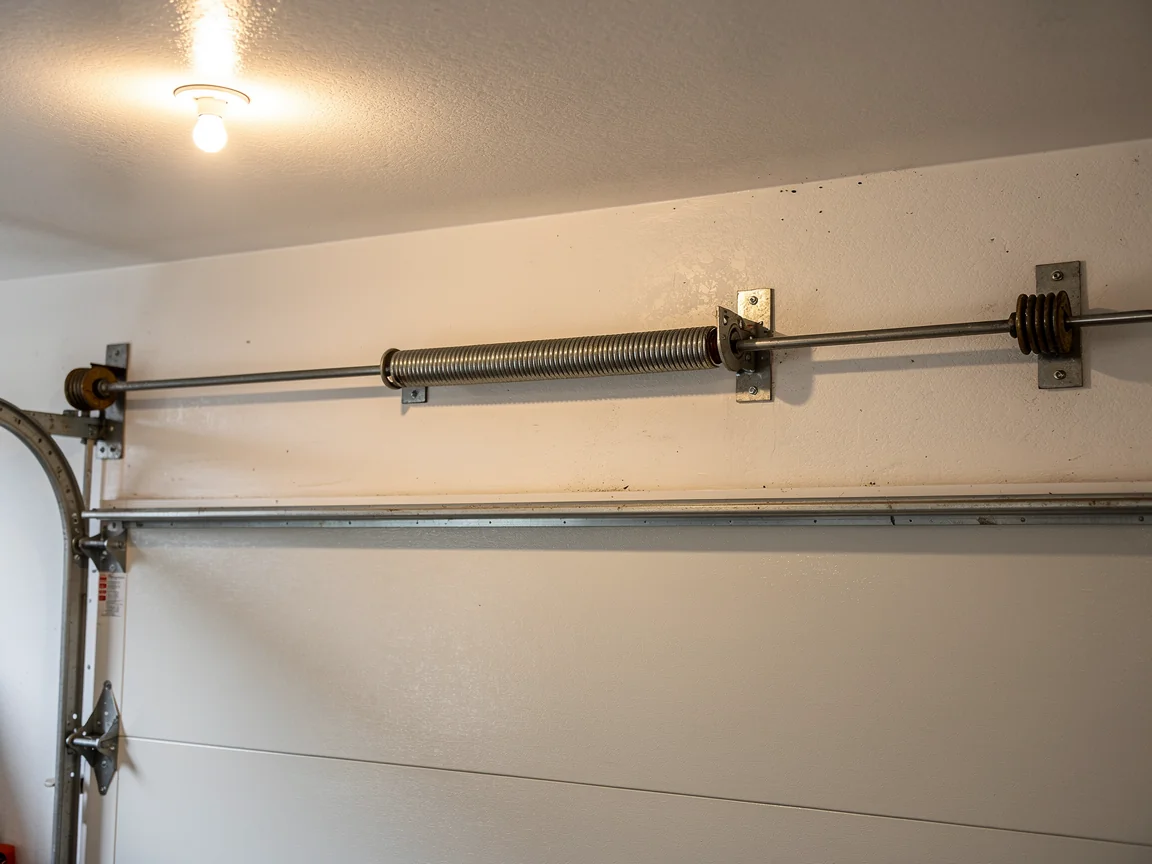
What we don't recommend doing yourself: touching the spring tension on an older extension-spring system. These aren't contained the way modern torsion springs are, and on a door built in the 1940s the mounting hardware holding them has had decades to fatigue. That's a call for us, not a weekend project.
What Is on the Truck
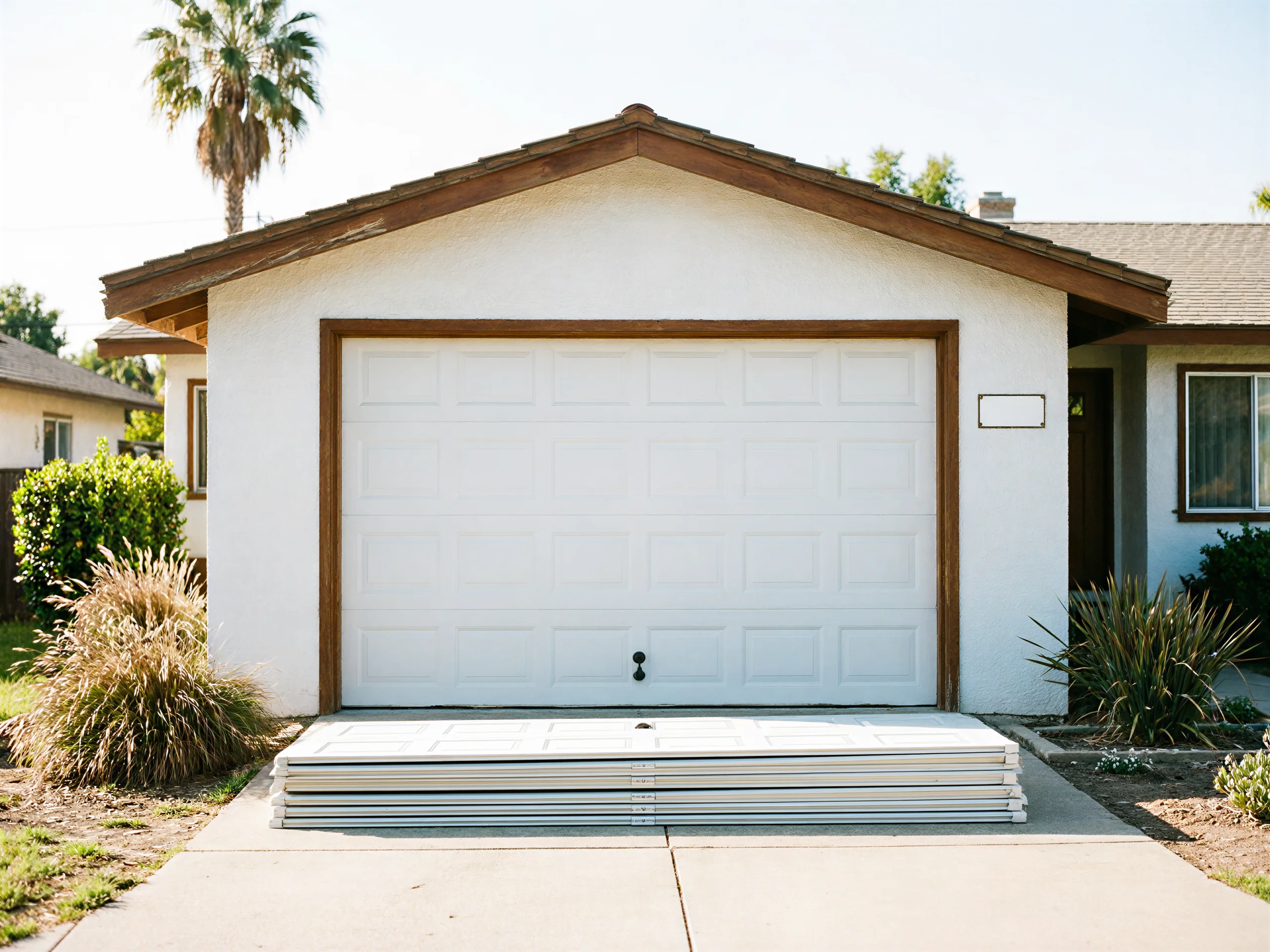
For a service call to this part of our coverage area, we bring hardware sized for older openings rather than assuming a modern standard width, along with extension spring components to match pre-torsion setups still in place on original doors. We carry wood-safe lubricants and fasteners sized for the lighter-gauge track brackets common on doors this age, plus the tools to true up a track that's drifted out of parallel over decades rather than years. What we don't carry on every truck is a replacement wood panel cut to a non-standard 1940s opening - that's a special order, and we'll tell you up front if your door needs one rather than patching around it.
Why It Happens Here
San Marino's median home was built in 1943, two decades ahead of the 1963 median across the rest of our service area. That gap matters for a garage door. A house from the early 1940s was built with a single-car opening in mind, usually eight feet wide, and the door on it was more likely to be solid wood panel construction than the steel sandwich doors that became standard later. Wood doors of that era hang on simpler hardware: flat tracks, lighter hinges, and often extension springs rather than the torsion setups common on newer garages. None of that hardware was built to last eighty years without attention. Add in a moderate heat climate that puts real swings into the wood through the year, and you get doors that expand and contract slightly in their frames every season. That movement loosens screws, works hinges out of square, and dries out whatever lubricant was last applied - which on a door this old may have been a very long time ago. We're not guessing at this from a brochure. It's what the building stock in this part of the service area actually looks like, and it's different from the postwar tract housing that dominates closer to San Dimas.
The Symptom
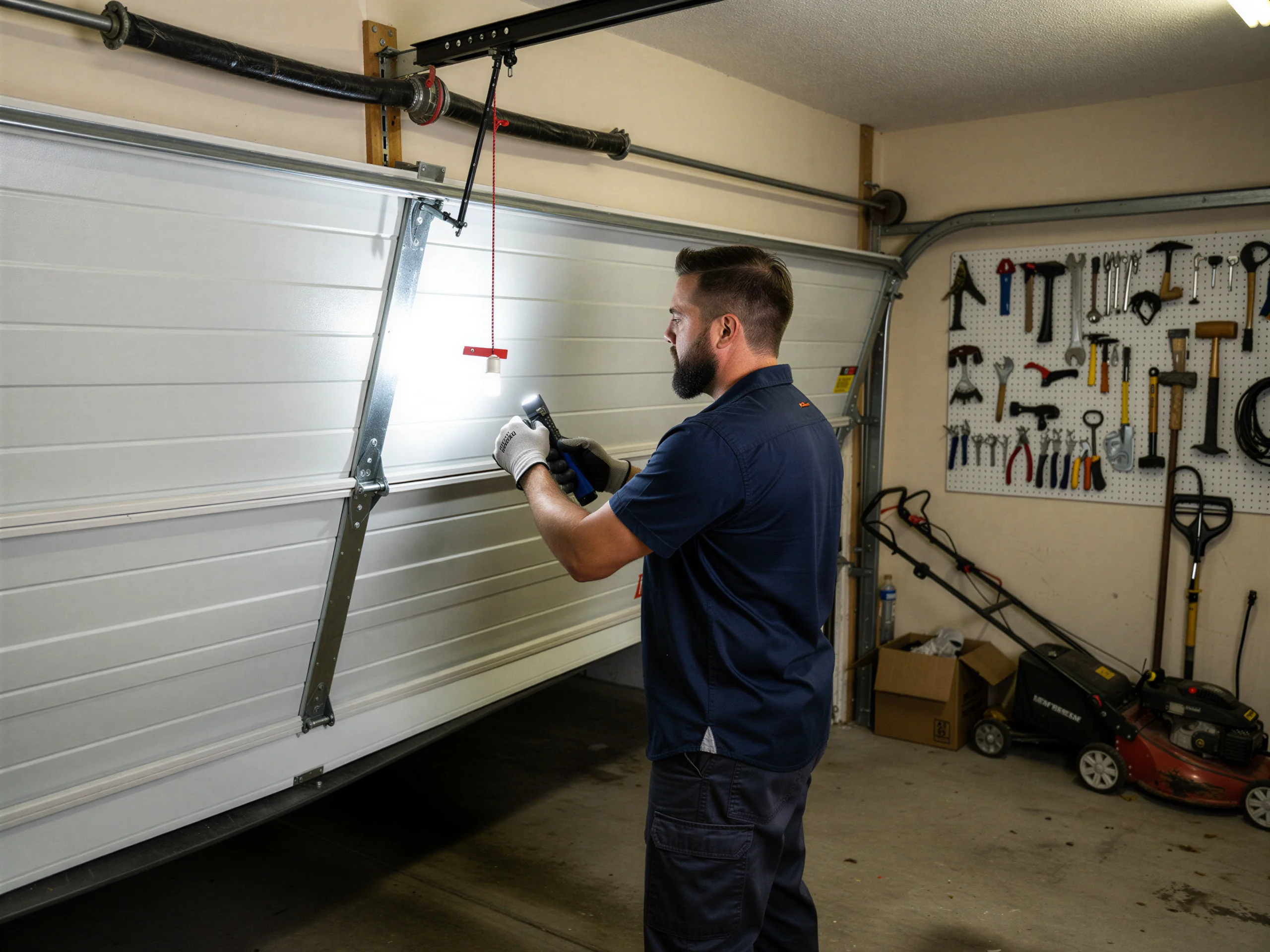
On a door this old, the first sign is usually binding, not noise. The door sticks partway up or down, or one side lifts a beat before the other because the track has pulled slightly out of parallel.
Wood panel corner sag
On wood panel doors specifically, watch for a visible sag at the bottom corners - the panel itself can bow over decades even if the hardware is sound.
Narrow opening hardware
If the door is original to a 1943-era garage, the opening is also likely narrower than modern standard, which means any replacement roller or track hardware has to be matched by hand rather than pulled off a generic shelf.
Thud from tension drift
A door that used to close quietly and now settles with a thud at the bottom is telling you the spring tension has drifted, which on old extension-spring setups is a more fiddly adjustment than on a torsion system.
What It Costs
We don't have a flat number to quote here, and we wouldn't trust one if someone gave us one. A maintenance call on a door this age depends on whether the hardware is original, whether parts for a non-standard opening width need sourcing, and how much the wood itself has moved. What we can say: San Marino's household income runs well above the rest of our coverage area, and that shows up in the quality of the original materials we find on these doors - solid wood, not veneer, which is worth preserving rather than replacing if the frame and panel are still sound. Given that, a maintenance visit on an older door is often the cheaper path compared to full replacement, provided the rot or warp hasn't gone past the point of adjustment.
Talk to a local pro
Garage door service in San Dimas?
Same-day service with honest, upfront quotes.