Doing It Yourself
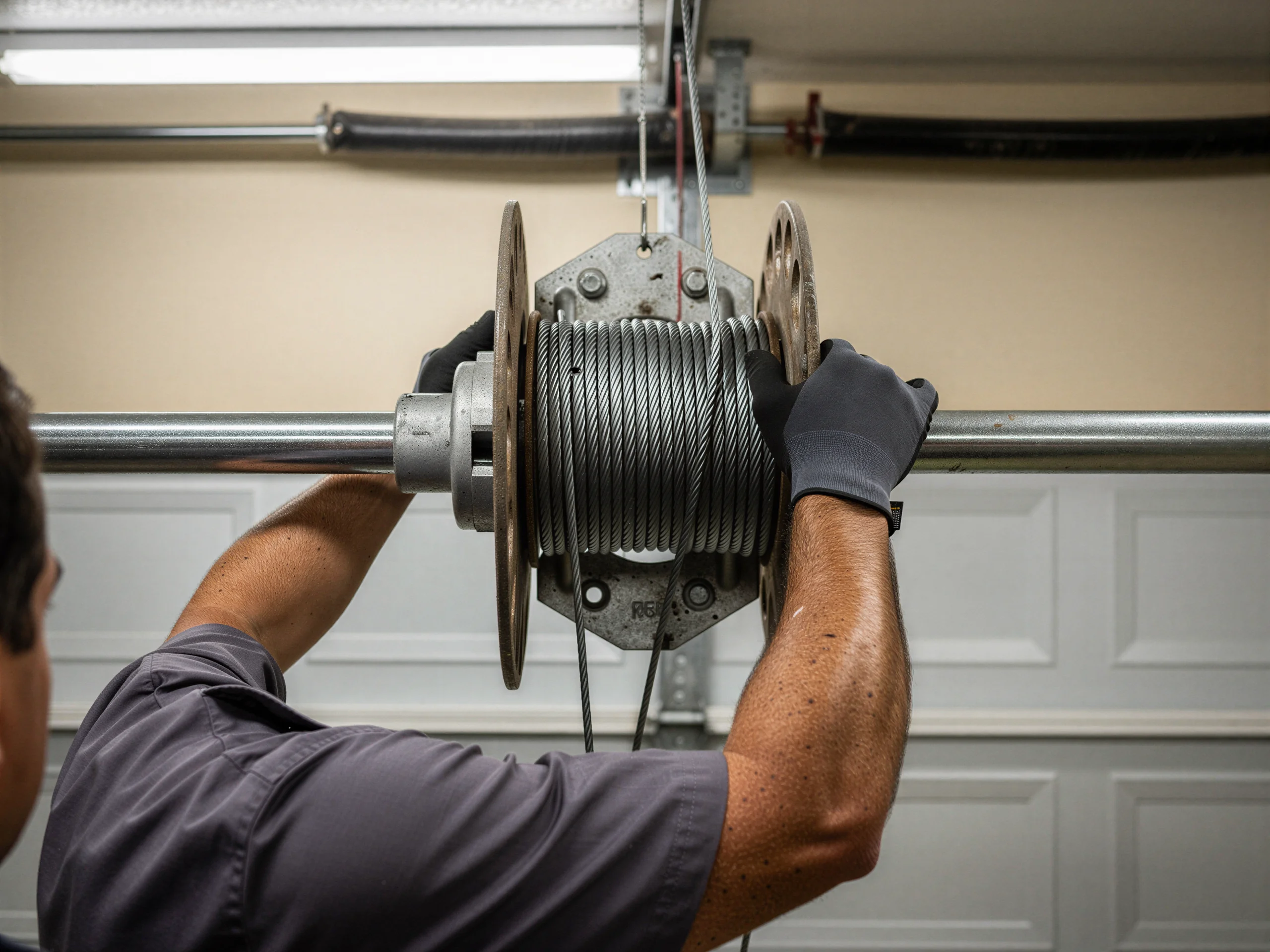
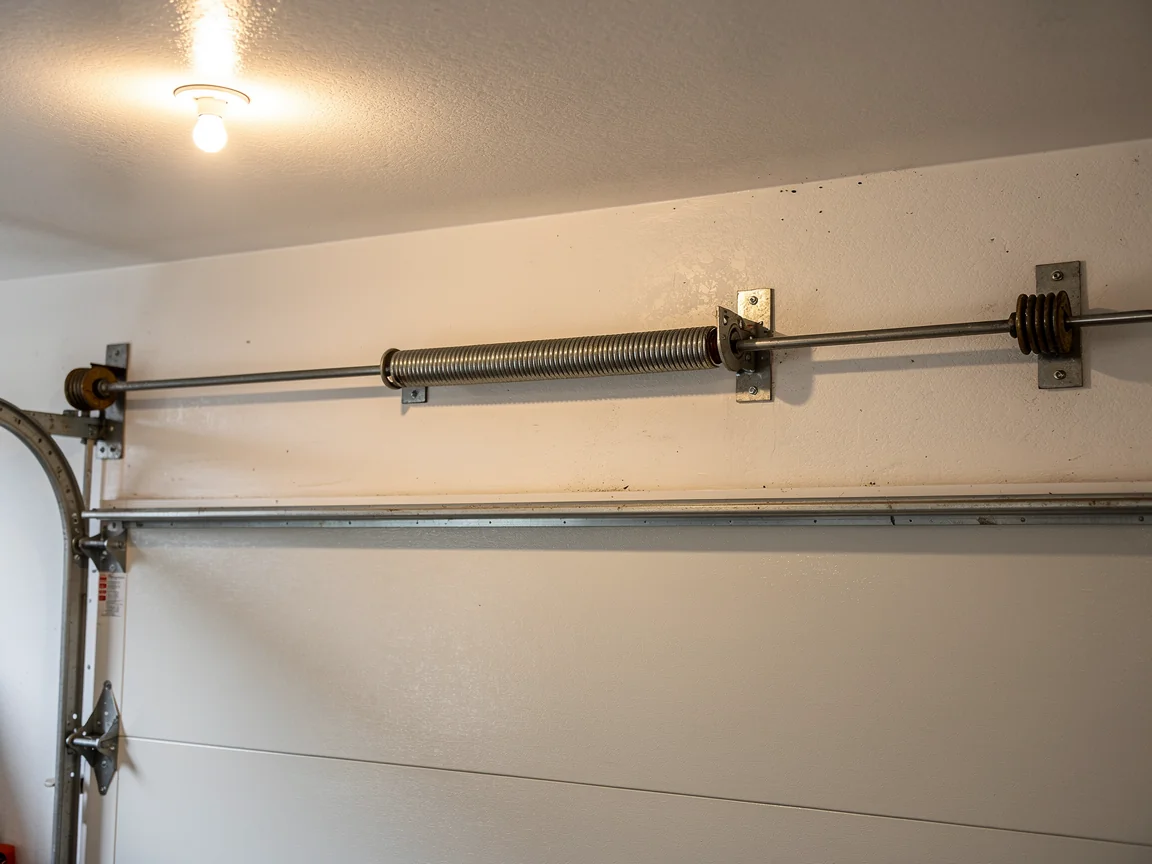
Don't try to force a derailed door back onto the track yourself. The door is under spring tension even when it looks still, and on a door this old you don't know the condition of that spring without inspecting it closely.
Use the emergency release
What you can safely do is pull the emergency release cord so the opener stops pulling against a jammed door, and leave the door where it sits until someone looks at it.
Skip lubricating a dragging door
If the door is only dragging and hasn't come off the rail yet, resist the urge to lubricate it and keep running it - that just wears the roller groove faster.
Not a simple bolt fix
We'll say plainly: this isn't a tighten-a-bolt repair on a door of this vintage, and treating it like one usually turns a $200 job into a $600 one.
What Is on the Truck
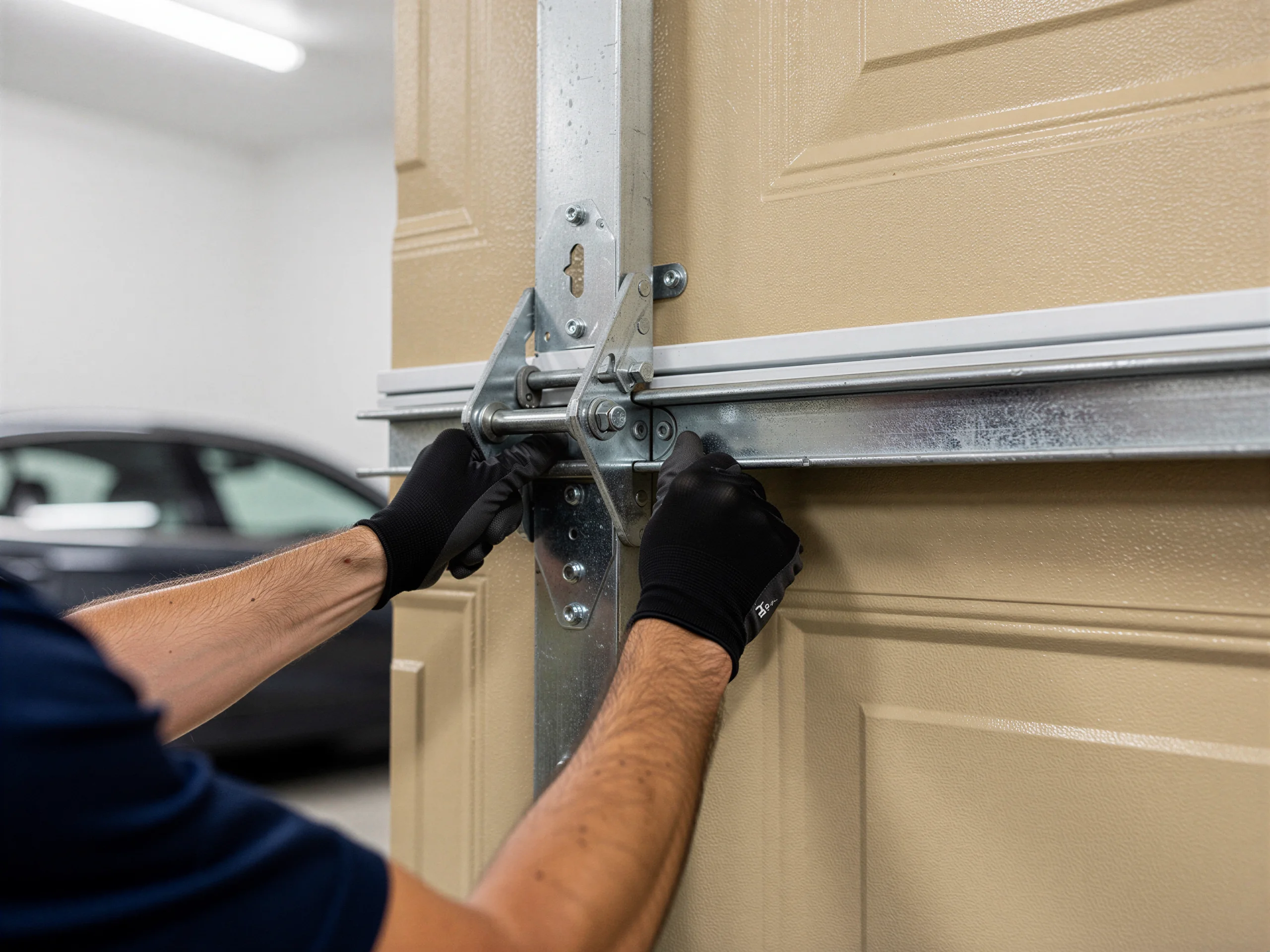
We come out from San Dimas, 17 miles from San Marino, carrying track sections, roller sets, and bracket hardware sized for both modern doors and the narrower rail common on homes built in the 1940s. That second category matters here specifically, since San Marino's housing stock sits at the early end of the 1943-1987 range covered across our service area, and a truck stocked only for newer rail would come up short on a lot of San Marino calls. We carry both gauges for that reason. One honest limit: if a specific vintage bracket isn't something we carry that day, we'll tell you on site rather than guess, and we'll get the right part ordered instead of forcing a mismatched one in.
Why It Happens Here
San Marino's median home dates to 1943, which puts a lot of this town's garage doors on hardware two full generations older than what you'd find in neighborhoods built in the 60s and 70s. Doors from that era were often hung on narrower steel track with less forgiving roller clearance, and decades of small adjustments, repaints, and replaced panels can leave the alignment a little off from what the original installer intended. Add in a slab or wall that's settled over 80 years, and the track brackets don't always sit where they used to. That's the core problem: it's not one bad spring or one bent panel, it's a door riding on geometry that's shifted slowly over a long time. A door that's been engineered the same since 1943 doesn't fail the same way a 1975 door does, and treating it the same way usually just means the roller jumps the rail again in a few months. We look at where the track itself has moved before we touch anything else.
The Symptom
The door usually still opens and closes, mostly, but it rattles, grinds, or hangs crooked at one corner.
Partly seated roller drags
Sometimes a roller sits half out of the channel and the door drags against the frame instead of gliding past it. On a door this age, that gap between roller and track tends to be a slow drift rather than a sudden jump, so homeowners often live with a scraping sound for weeks before it finally derails all the way.
Leaning door means derailment
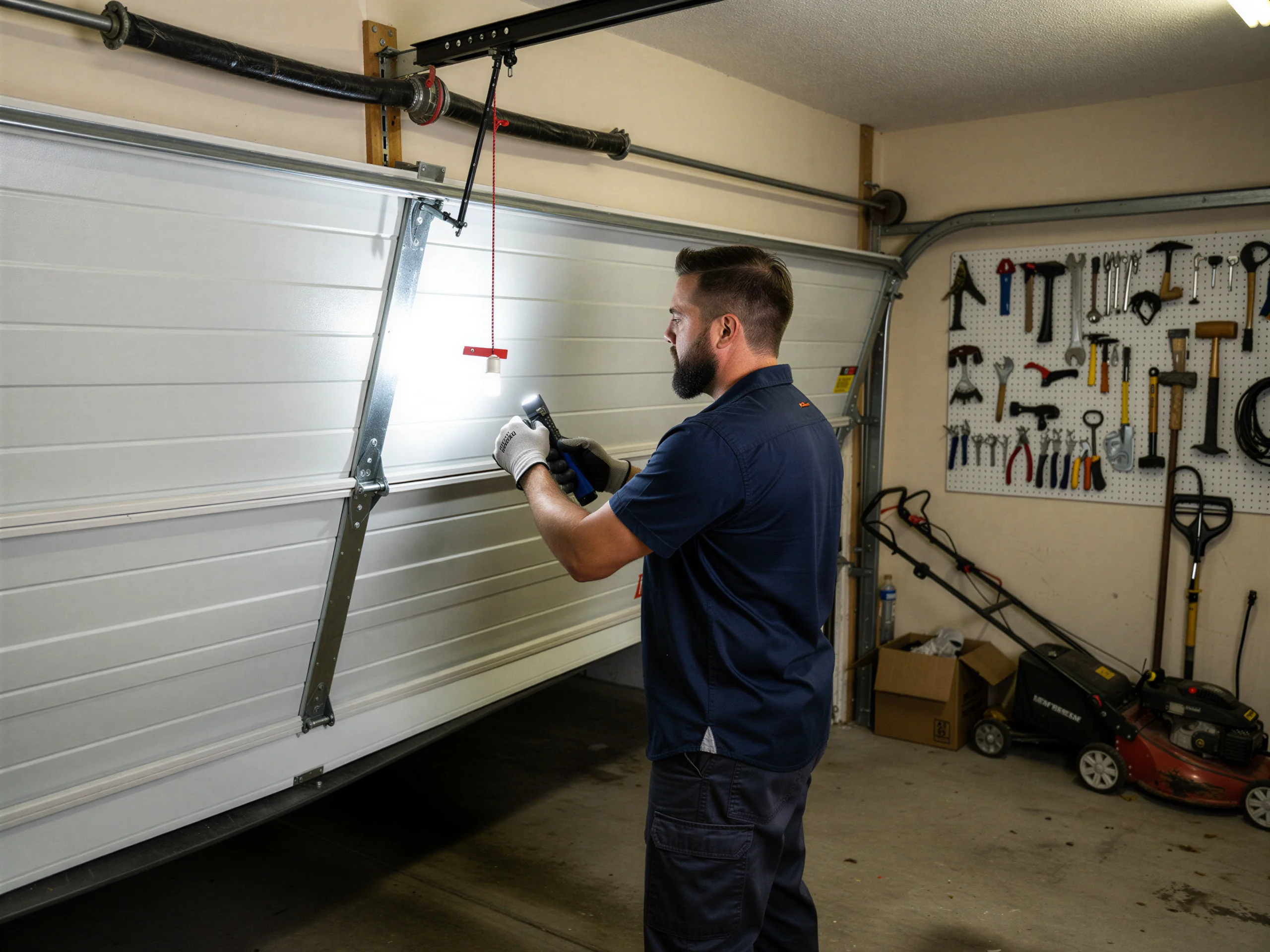
If the door stops moving mid-travel and leans to one side, that's usually the roller fully off the rail, and running the opener again at that point just bends the track further and risks the panel. Catching it at the grinding stage, before full derailment, is the cheaper fix every time.
What It Costs
We don't publish a flat number here because what it costs depends on whether the track itself is bent or just the roller's out of position, and on doors from San Marino's 1943-era stock, bent track is more common than on newer houses because the original steel gauge is lighter. A straightforward re-track with no bent rail is a different job than one where the vertical track has to come off and get replaced. Given San Marino's household income sits well above the wider service area average, we'd rather tell a homeowner straight that replacement hardware on an 80-year-old door sometimes costs more than people expect, simply because matching rail width and roller size to original spec isn't a stock part at every supplier.
Talk to a local pro
Garage door service in San Dimas?
Same-day service with honest, upfront quotes.