Doing It Yourself
A new door kit from a home center assumes a square, standard-width opening, and on a house built in 1943 that's an assumption worth checking before you buy anything. If the opening is out of plumb by more than a small amount, hanging a new sectional door yourself means fighting uneven gaps the whole way, and a door that doesn't seal evenly will let in dust and heat no matter how new it is.
We'll say plainly that squaring up eighty-year-old framing isn't a one-person, one-afternoon project, and it's not something we'd tell a homeowner to tackle solo even with the right tools. Where the framing is already true, installing a new door is a more reasonable DIY job. Where it isn't, get the opening checked first - it changes what door you can even order.
What Is on the Truck
For jobs in San Marino, the truck carries jamb shims and dimensional lumber for squaring openings that have shifted since the house was framed, on top of the standard sectional door stock we bring to any install.
Single and double openings
We size doors to the increments common in 1940s single-car openings as well as the wider two-car openings added or widened later, since both show up here depending on when a house was last remodeled.
Custom wood not milled
We don't carry custom wood doors milled to match an original 1943 opening - that's a specialty order with its own lead time, and if a homeowner wants to match an original look rather than go with a standard sectional, we'll say so up front rather than pretend it's a same-visit job.
Standard hardware on truck
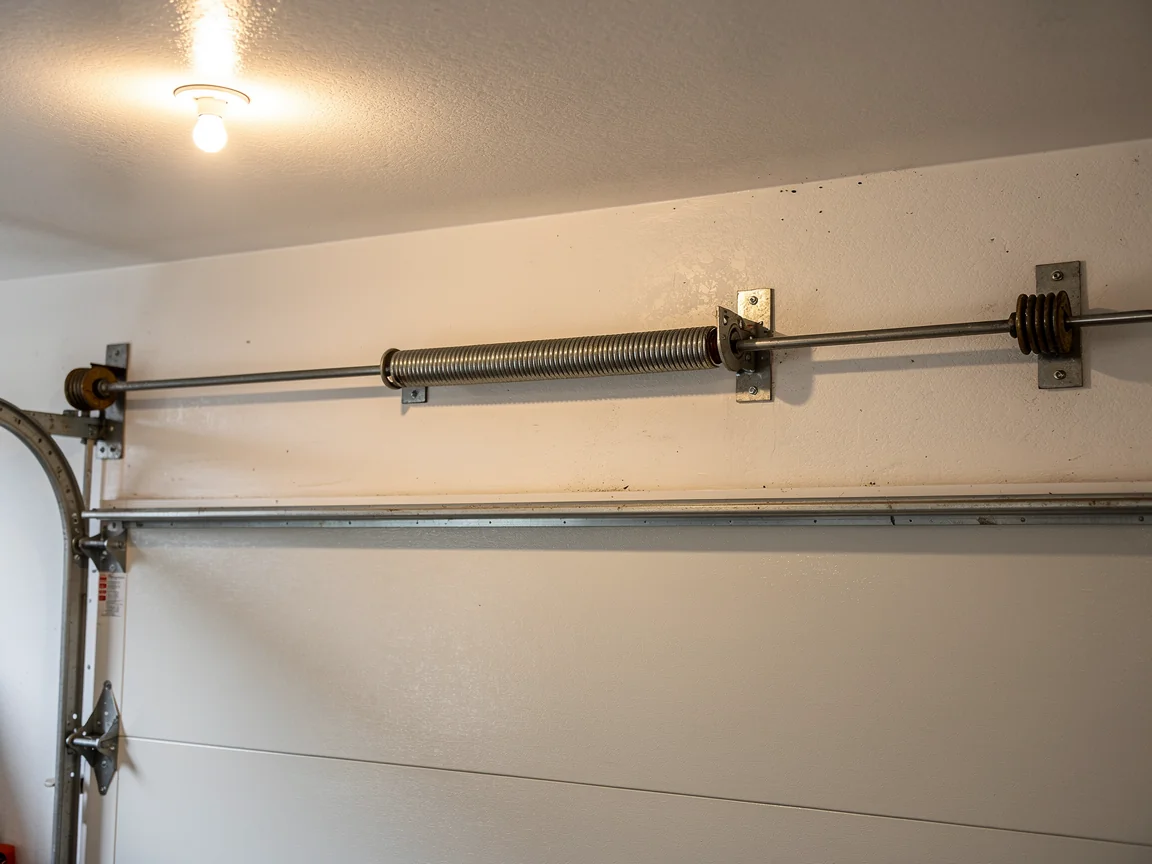
For everything else - track, rollers, standard torsion hardware sized to the new door's weight - that's stocked on the truck same as any install out of San Dimas.
Why It Happens Here
Most of San Marino went up around 1943, which puts it close to two decades ahead of the 1963 median for the wider service area we cover out of San Dimas. That matters more than people expect, because a garage built in 1943 was framed for the cars and the doors of that era - usually a single bay, often narrower than what a modern sectional door ships in.
Over eighty years, that original framing has moved. Foundations settle, jambs go out of plumb by a half inch or more, and the rough opening that was square in 1943 rarely is now. Add in a moderate heat climate band that still puts real sun load on a west-facing garage wall, and original wood jamb material that's taken decades of expansion and contraction, and you get openings that look standard-sized from the driveway but aren't once you put a square on them. This is the fault that drives most installs here - not a worn-out door, but an opening that was never built for the door going back into it.
The Symptom
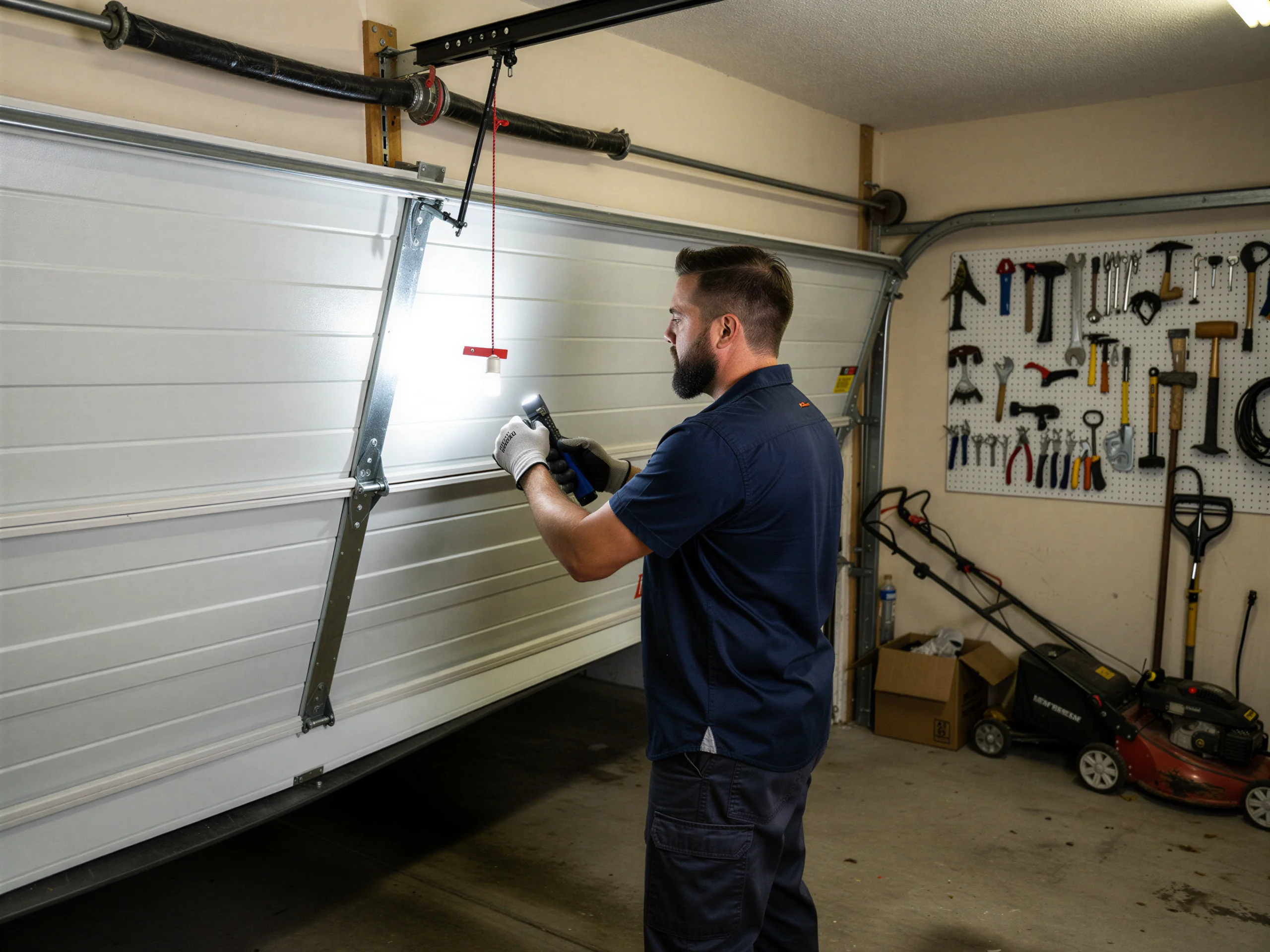
The giveaway is usually a gap. Either light shows along one side of the closed door, or the installer who measured for a replacement comes back saying the new unit won't sit flush without shimming one jamb out further than the other. Sometimes it's simpler than that: the current door is a single-panel or narrow two-car-adjacent style that nobody makes parts for anymore, and the homeowner wants it swapped for a standard sectional door, only to find the opening is two or three inches off true width.
Another version shows up as a door that closes but binds halfway down, dragging on one track. That's less often a broken part and more often a frame that's racked slightly out of square since 1943, which a track adjustment won't fix on its own. If your garage is original to the house, a visual square and plumb check before ordering a door saves a second trip.
What It Costs
We don't have a flat number to quote here, because the cost on a 1943-era opening depends on how far out of square the framing is, not just the door itself.
Jamb rebuild costs more
A straightforward swap into an opening that's still true costs less than one where the jamb needs to be pulled, re-shimmed, or partly rebuilt before the new door will seal properly.
Income shapes finish choice
San Marino's median household income runs well above the service area average, and we see that reflected in material choices more than in job complexity - insulated steel and wood-look composite doors come up more often here than the builder-grade doors common elsewhere in the territory.
Framing priced after trim
That's a choice of finish, though, not a fix for an out-of-square opening. The framing work, where it's needed, is priced on what we find once the old trim comes off, not before.
Talk to a local pro
Garage door service in San Dimas?
Same-day service with honest, upfront quotes.