What Can Go Wrong
On a door built around 1966 - which is the typical build year for houses in Claremont - the common failure is a roller walking out of a steel track that's narrower and lighter-gauge than what goes into a door today.
Roller, hinge, track failures
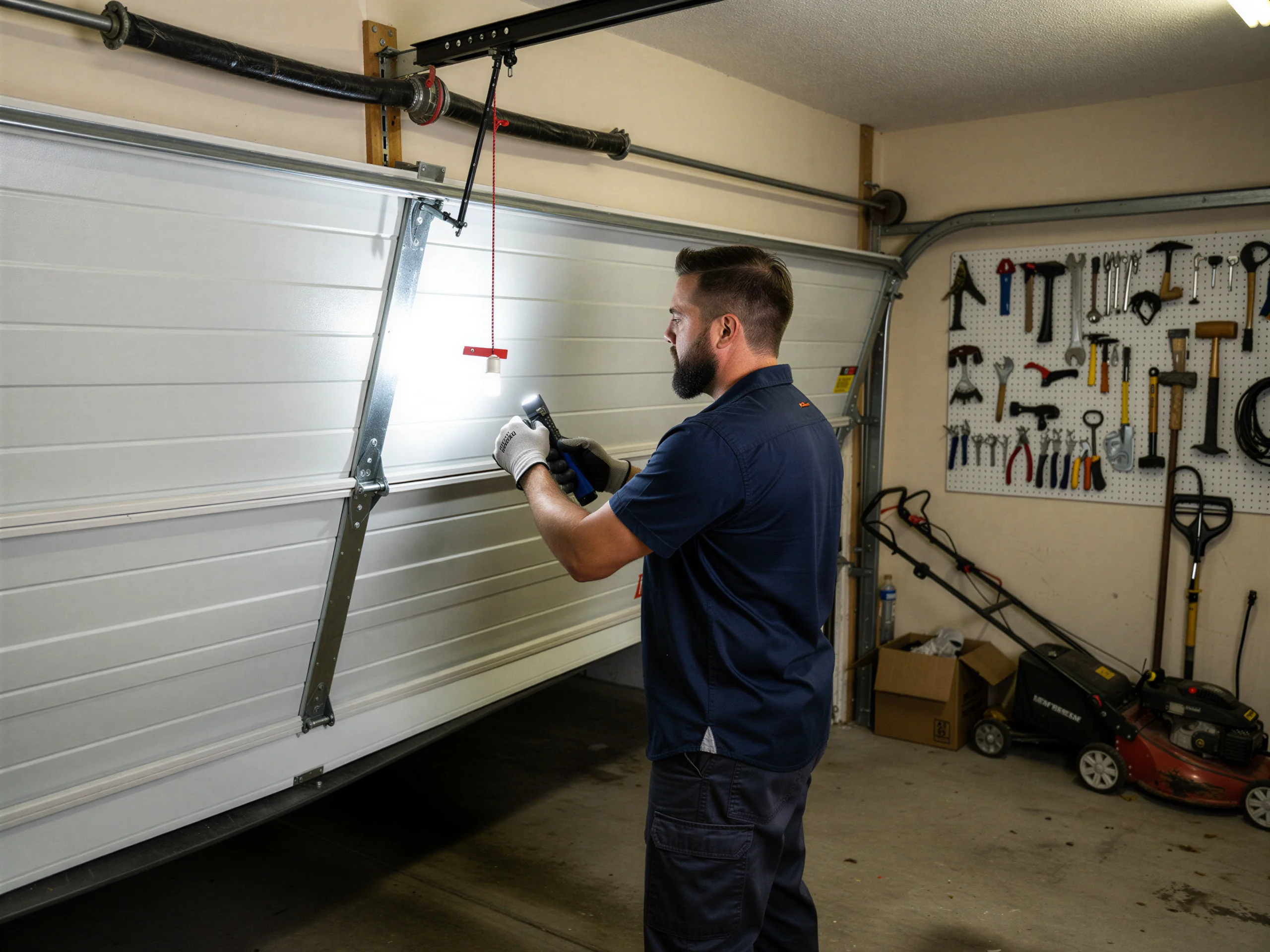
The roller stem bends, a hinge cracks at the mounting hole, or the track itself gets knocked out of alignment and the door climbs the rail on one side instead of running straight. On these older setups the cable can also jump its drum if a roller catches, which pulls one side of the door down crooked while the other side keeps moving.
Double door leverage
Double doors are especially prone to this because the extra width puts more leverage on the same light hardware that a narrower single door would have gotten away with. Sometimes it's as small as one bent roller; sometimes the track has been bowed out from the wall and the whole section needs to come off and get reset.
Level test decides time
We can't tell which one it is over the phone - we have to put a level on the track and watch where the roller sits before we know if this is a twenty-minute job or a half-day one.
How We Fix It
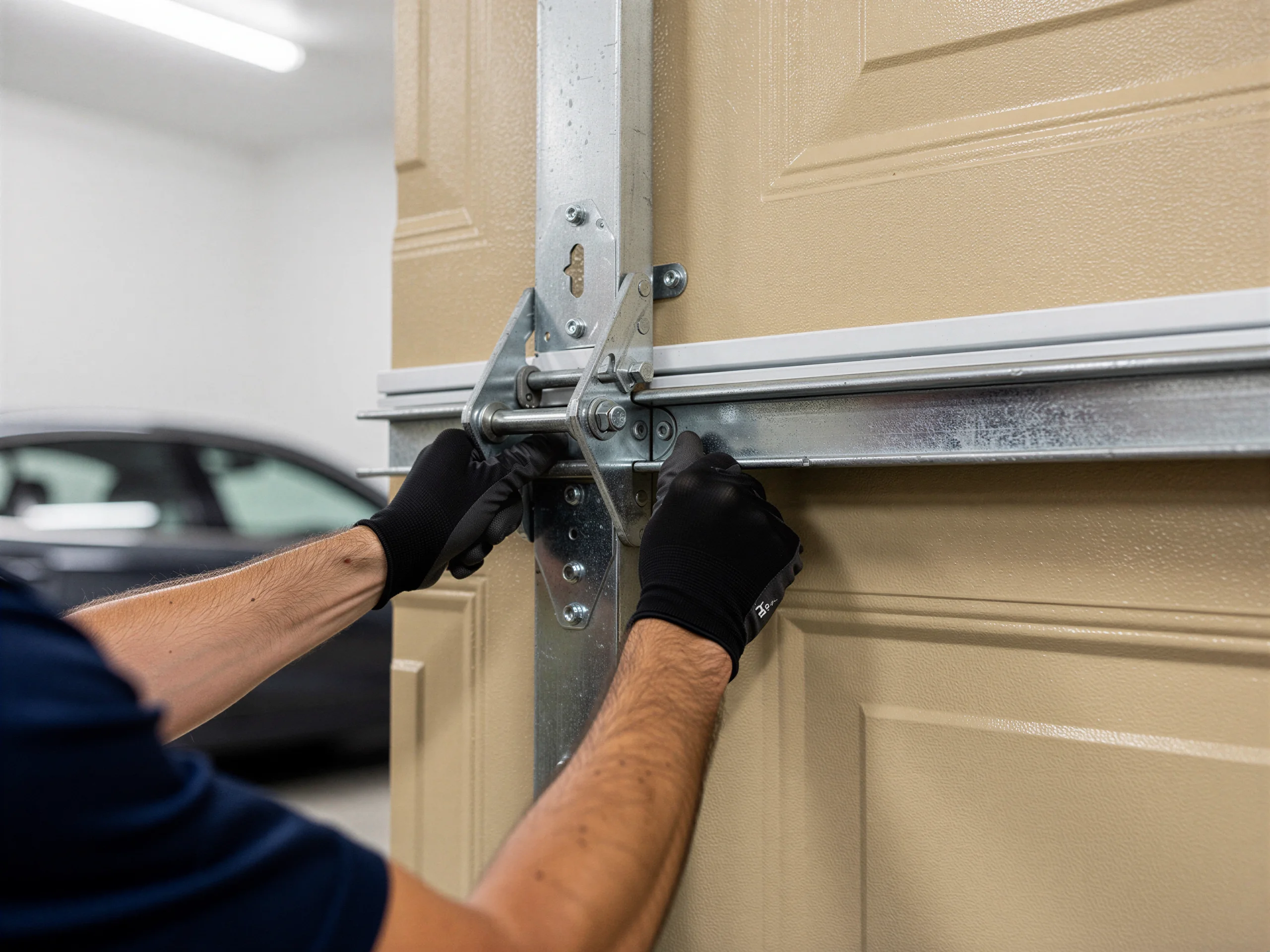
First thing on site is finding where the roller actually left the track, because that tells us whether the fix is realignment or replacement. If the track is just knocked out of true, we loosen the mounting brackets, square it back against the jamb, and reseat the roller - that's the quick version.
Replace bent rollers
If the roller stem is bent or the hinge is cracked, those get swapped rather than bent back; a roller that's already failed once under load isn't one we trust to hold a second time.
Cable and drum check
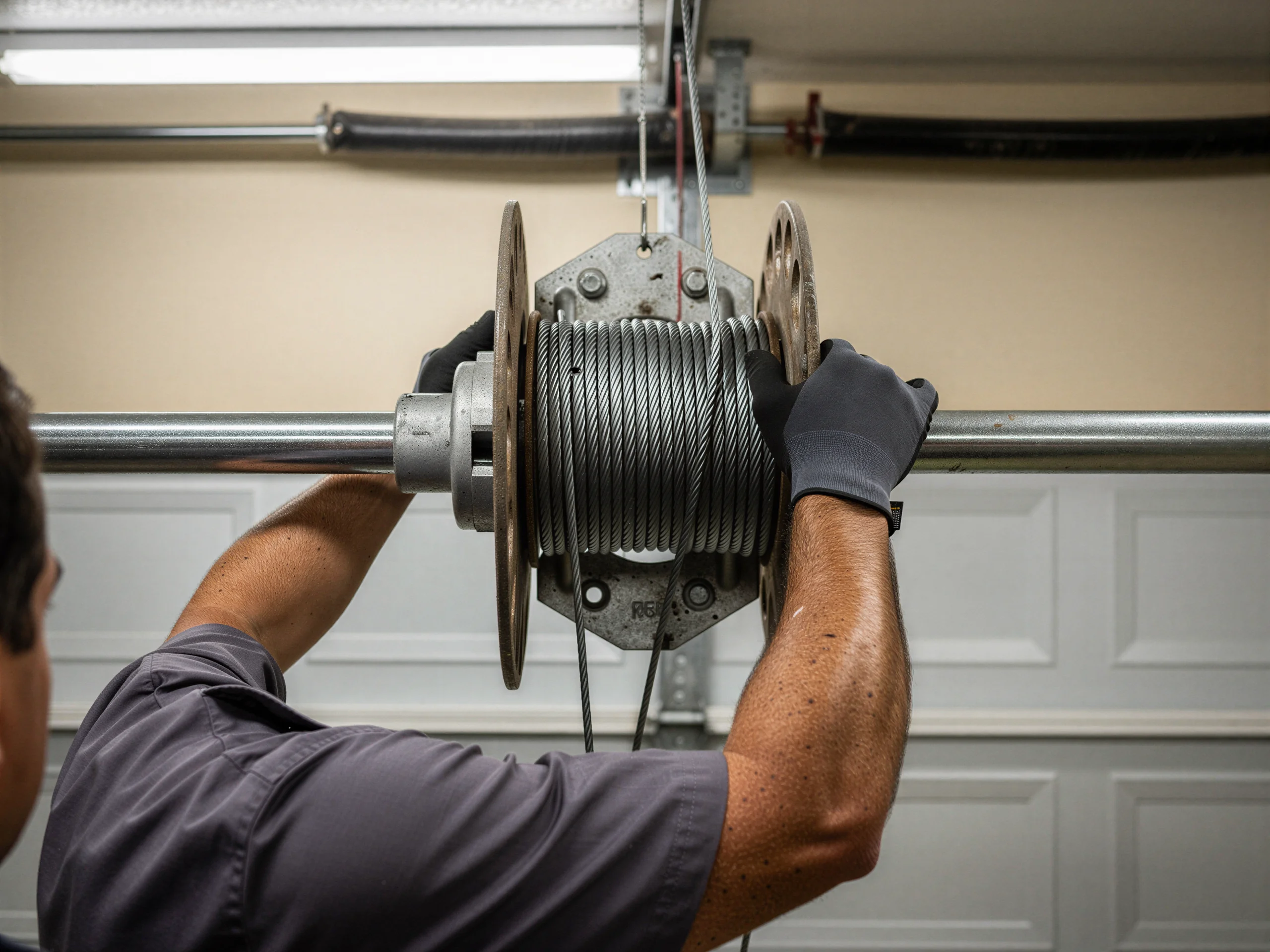
We check the cable and drum while we're in there, since on a door this age a jumped cable often rode along with the off-track roller rather than causing it.
Creased rail not fixable
The one honest limit here: if the track has been bent sharply enough to crease the rail itself, or a panel has been bowed from the door being forced while stuck, bending the track back isn't a repair we'll stand behind - that section gets replaced, not straightened. We'll tell you on site if we're looking at that, before any work starts, not after.
Why It Happens Here
Claremont's housing stock centers on 1966, a few years past the 1963 median for the wider service area, which puts most garage doors here on the same generation of steel track and single-stem roller hardware that was standard through the mid-1960s. That hardware wasn't built for the heavier insulated doors homeowners have since added or for decades of daily cycling, and it shows up as the track losing its original alignment faster than it would on newer, heavier-gauge rail. The area's climate band is moderate on heat, which spares these doors the thermal expansion problems that crop up where metal tracks see wide swings - so when a Claremont door comes off track, it's almost always wear and alignment, not heat-warped rail. With 12,185 households in Claremont and a median income of $122,127, we see more owners opting to replace worn-out original hardware outright with heavier rollers and track rather than patch the same light-gauge parts a second time, which is usually the better call on a door built to 1966 standards.
The Symptom
The door looks crooked when it's partway open - one corner higher than the other, or a visible gap along one side of the frame that isn't there when the door is fully down.
Scraping noise before derailment
You'll often hear it before you see it: a grinding or scraping noise as the roller drags against the track instead of rolling through it. On a remote-operated door, the opener may strain and stop partway, or reverse itself, because the track resistance reads to the opener like an obstruction.
Never force a derailed door
If you try to run the door manually, it may bind hard at one point and refuse to move past it. Don't force it past that point - pushing a door with a derailed roller the rest of the way often bends the track further or pulls the hinge loose entirely, turning a roller swap into a track replacement.
What It Costs
We don't have a flat rate to quote here, because the range between a single bent roller and a full track reset is wide, and the only way to know which one you've got is to look at it. What we can tell you is what drives the number up: how many rollers and hinges need replacing, whether the track itself needs to come off the wall and get reset or just realigned, and whether the cable jumped its drum in the process. A straightforward roller swap on a single door is a different job than resetting a bowed track on a double door with a jumped cable, and we'll give you the real number once we've seen which of those you're dealing with - not before. If a second trip is needed because a part isn't on the truck, we'll say so on site rather than guess at it over the phone.
Getting It Booked In
We don't keep a crew stationed in Claremont - the truck comes from San Dimas, six miles up the road, so when you call we're scheduling a drive-out, not a drop-in from around the corner.
No ten-minute promise
That's worth knowing before you call: we're not going to promise a ten-minute arrival, because we're not sitting on your street. What we can do is get you on the schedule the same day in most cases and talk you through whether this is a five-minute fix or something that needs a second trip for parts.
Details that set the truck
Tell us whether the door moves at all, whether it's a double or single, and whether you can see the roller sitting outside the track - that's the information that tells us what's riding in the truck when we leave San Dimas. If you're not sure what you're looking at, a phone photo of where the door is stuck usually settles it faster than trying to describe it.
Talk to a local pro
Garage door service in San Dimas?
Same-day service with honest, upfront quotes.