What Can Go Wrong
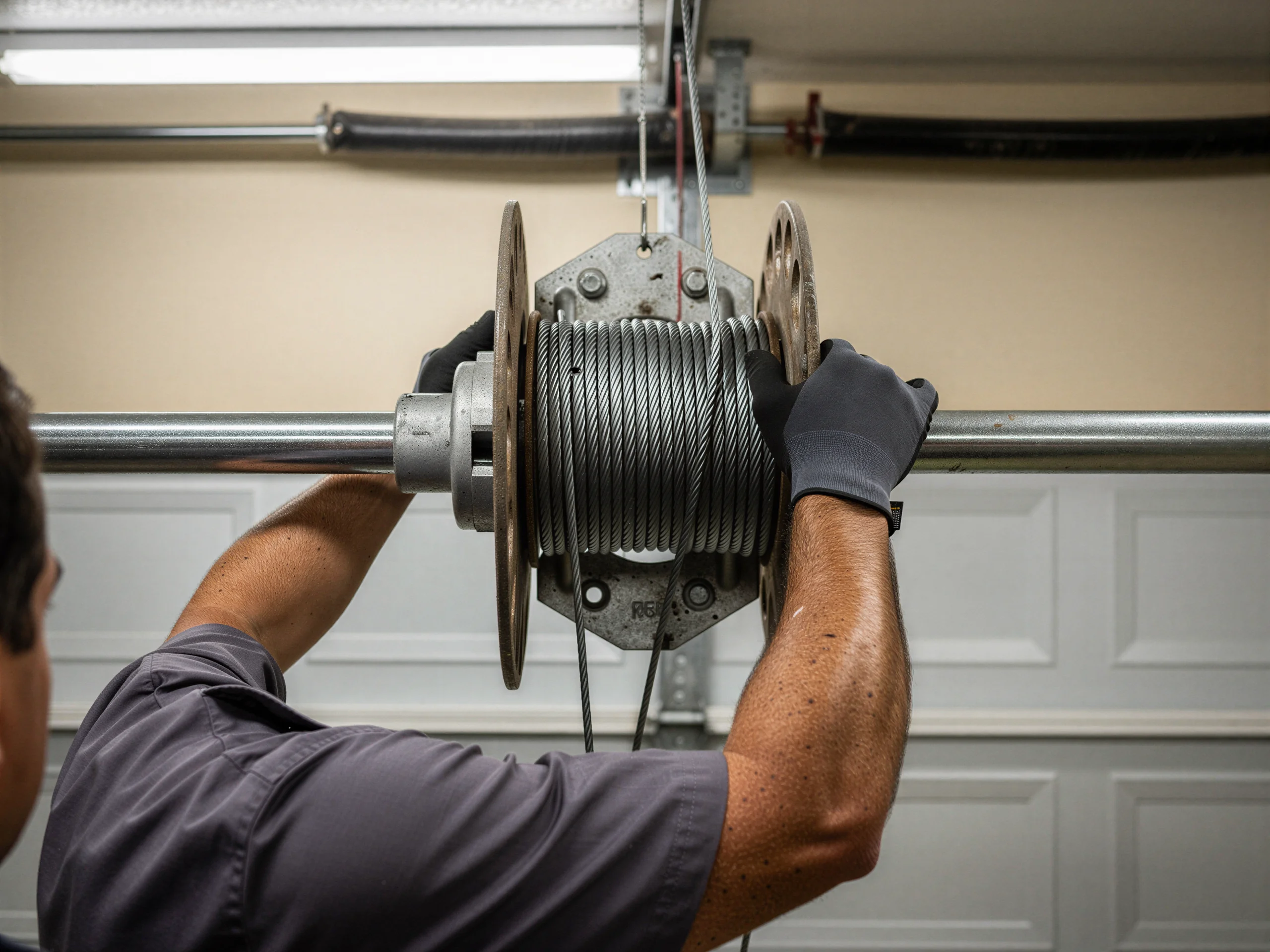
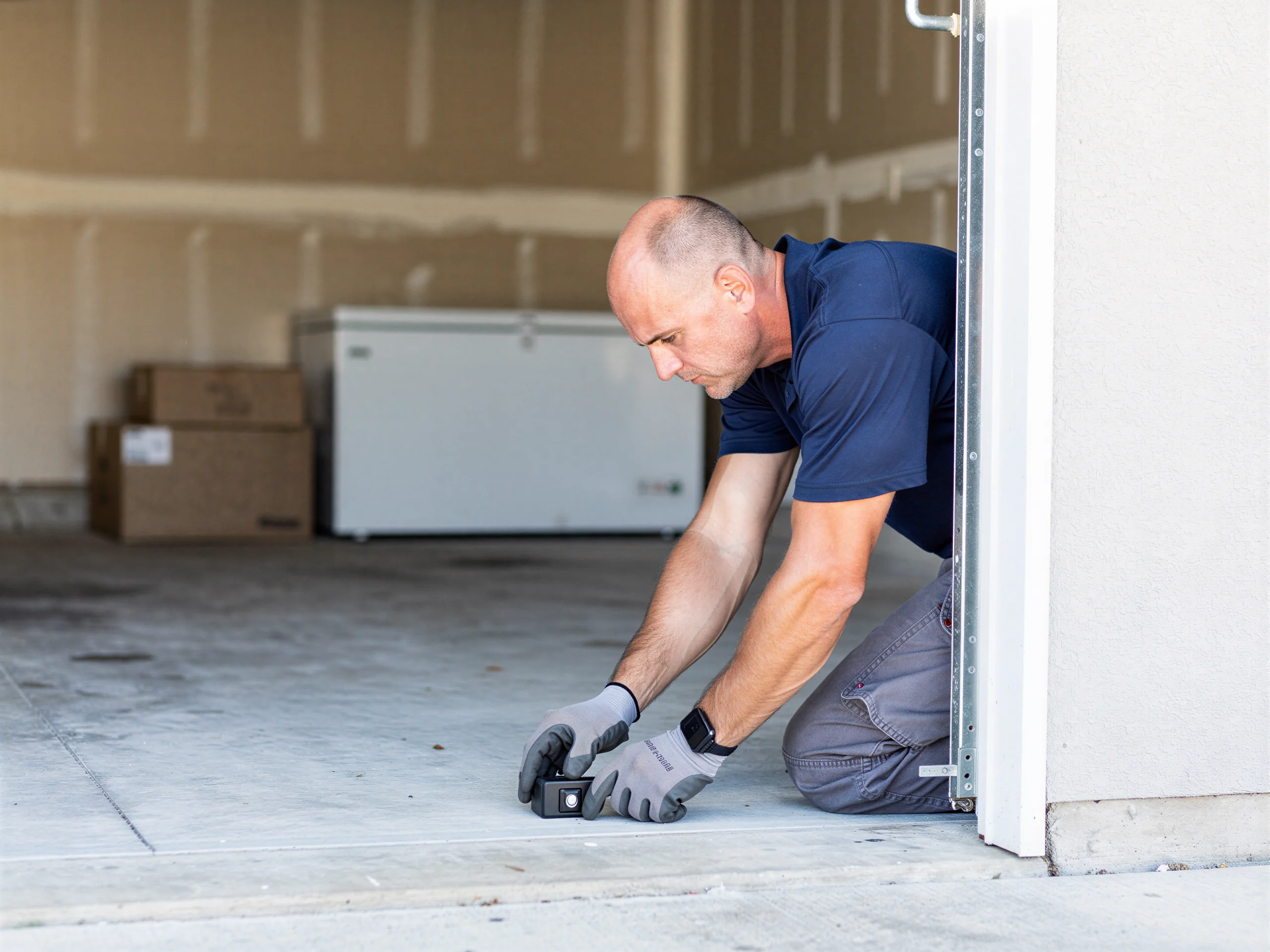
A house built around 1966 was wired for an opener era that assumed a simple chain drive, a wall button, and not much else - no rolling codes, no safety sensors, often no battery backup. If that original unit is still hanging in the garage, or it's been swapped once for a similar mid-grade replacement, the failure points are predictable: a worn drive gear that strips and leaves the chain slack, a capacitor in the motor that gives out from age rather than use, or a logic board that's seen forty-plus years of California heat cycling through an uninsulated garage. Later safety-sensor retrofits on these older setups are also a common trouble spot - the sensors get added on, not designed in, and the wiring run is often an afterthought that comes loose.
How We Fix It
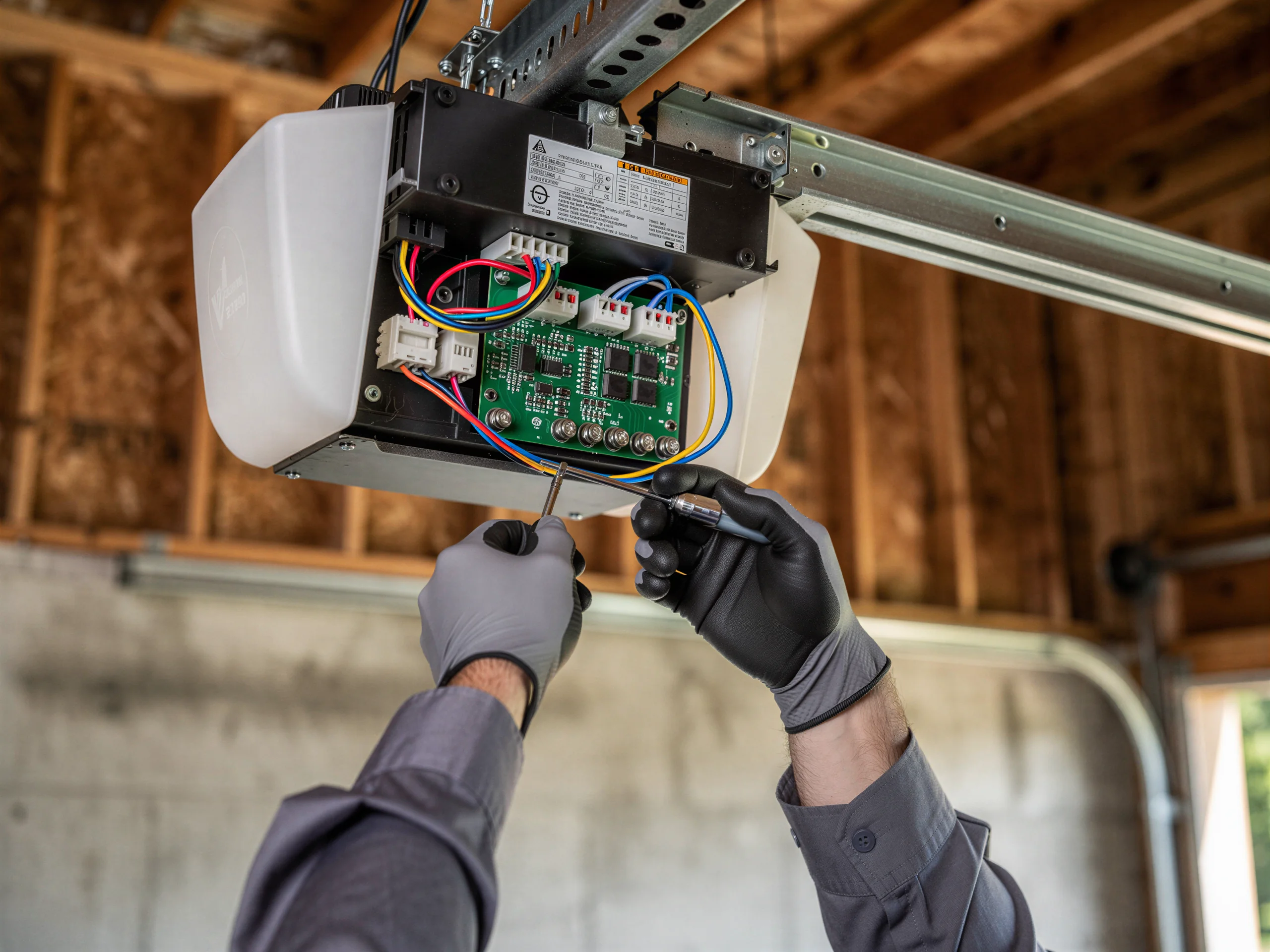
We start at the motor unit, not the door, since more opener calls turn out to be gear, capacitor, or board failures than anything mechanical on the track.
Gear and board swap decisions
If the drive gear's stripped, that's a part swap, not a whole new unit, and usually the cheaper fix. If the circuit board's fried, we check whether a board-only replacement is realistic for that model before we talk about a full opener swap - sometimes the parts for a unit that old just aren't worth sourcing anymore, and that's where we tell you straight that replacement beats repair.
Testing beyond the symptom
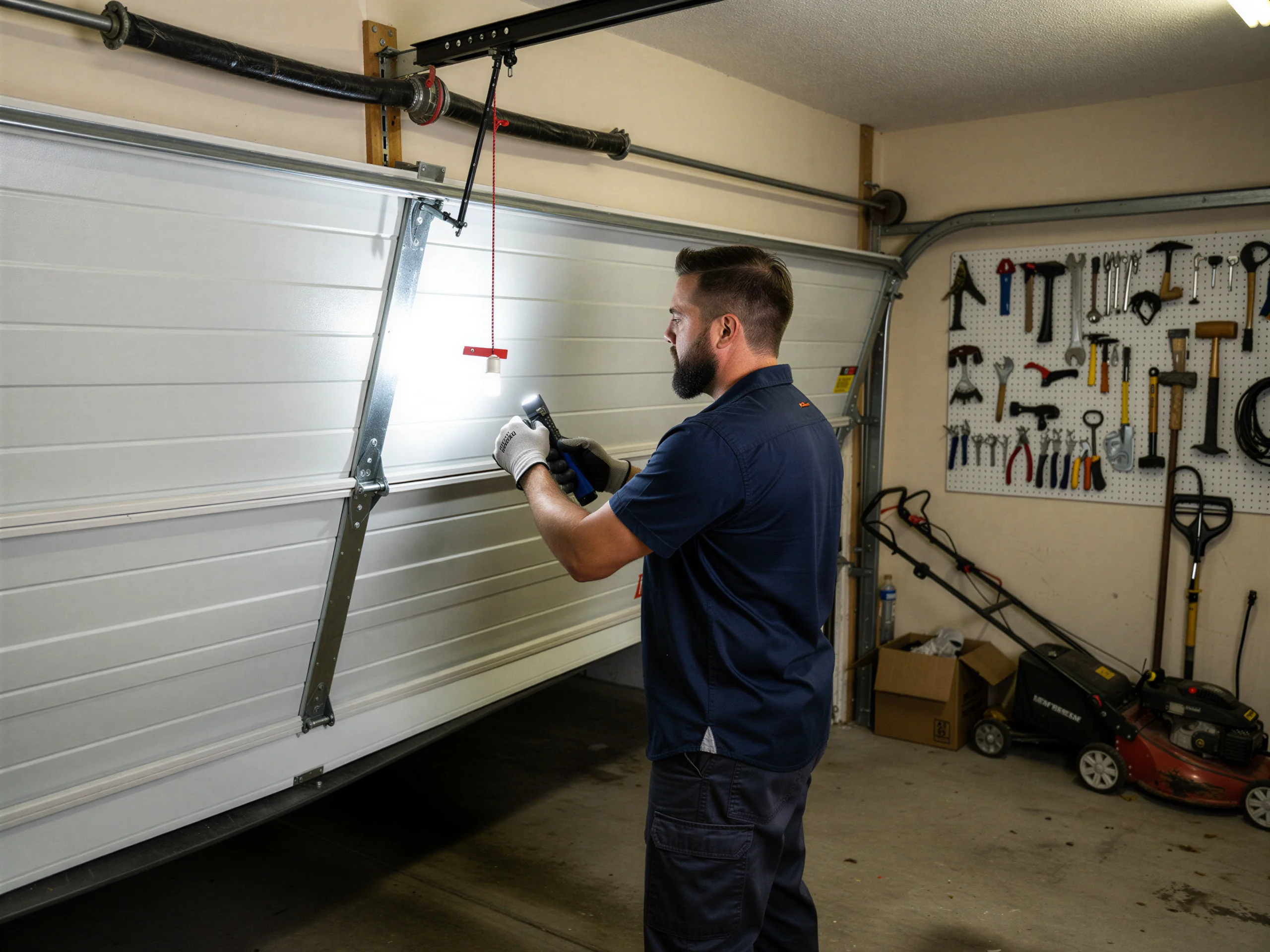
We test the travel limits, force settings, and safety reversal every time, not just the symptom you called about, because on houses this age one failure often signals a second one coming.
Why It Happens Here
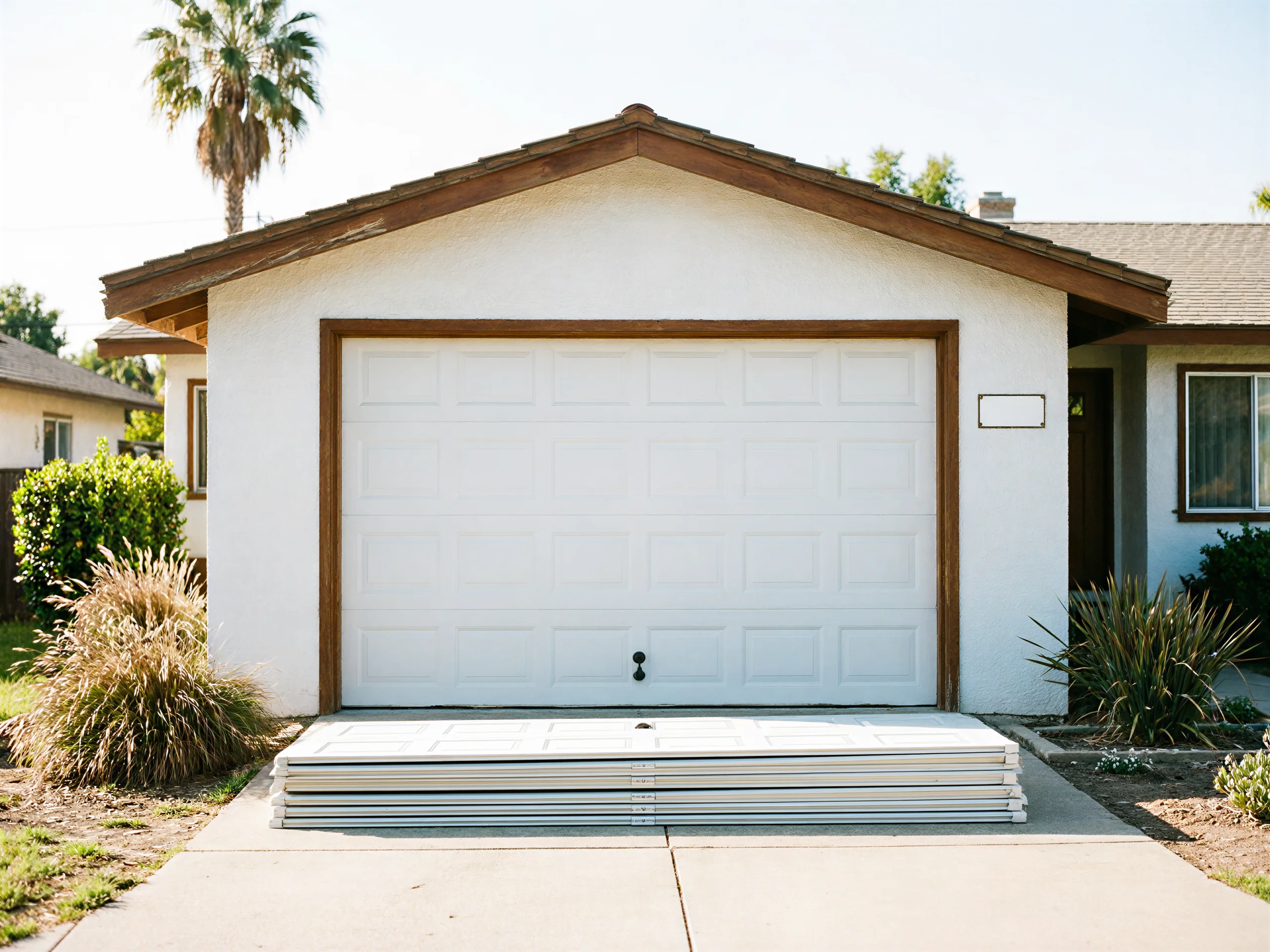
With most Claremont homes dating to around 1966, we're dealing with garages that were built for a lighter door and a lighter-duty opener than what often sits there now. Over the decades, heavier insulated doors have gone on many of these houses without an opener upgrade to match the added weight, and that mismatch is what burns out motors early. The area's moderate heat band doesn't create the dramatic swings some climates do, but steady heat still shortens the life of capacitors and plastic drive gears faster than owners expect, especially in an attached garage with no venting. None of this is damage you'd see from the driveway - it shows up as a motor that's quietly overworking.
The Symptom
The most common call we get from this part of town is an opener that hums but the door doesn't move, or moves a few inches and reverses.
Manual test isolates the unit
That's almost always the drive gear or the capacitor, not the door itself - if the door moves fine by hand, lifted manually with the opener disconnected, the problem lives in the unit, not the track or springs.
Remote and wall button mismatch
A second common one: the remote works but the wall button doesn't, or vice versa, which usually points to a wiring issue at the button rather than the opener logic. We ask about both on the phone because it changes what we bring.
What It Costs
We don't post flat prices here because the fix depends on what's actually failed - a drive gear kit costs a lot less than a logic board, and a logic board costs less than a full opener replacement. What we can tell you honestly: if your opener is original to a 1966-era build and a board's gone, we'll often recommend replacement over a repair, because sourcing parts for a unit that old stops making financial sense past a certain point. We'll give you the real number for your specific opener and failure once we've seen it, not before.
Getting It Booked In
Claremont sits about 6 miles from our San Dimas shop, which means we're not sitting in a depot around the corner waiting on your call. We route a truck out for scheduled opener work rather than parking one in town, so when you call, tell us what the opener is doing (or not doing) and when you're home - that lets us bring the right parts the first trip instead of guessing. Houses in Claremont went up mostly around 1966, and that single fact shapes almost everything else on this page, from the hardware we expect to find to the parts we load before we leave the shop. We'd rather ask a few questions up front and show up with a logic board or a drive gear kit in hand than burn a visit just confirming what's broken.
Talk to a local pro
Garage door service in San Dimas?
Same-day service with honest, upfront quotes.