Why It Happens Here
Temple City's housing runs older than much of the broader service area - the typical home here dates to around 1958, a few years ahead of the 1943-1987 range and 1963 median that covers the wider territory. That matters for cables specifically: houses built in this stretch were far more likely to ship with extension spring systems rather than torsion springs, and a lot of those extension setups, and their original cables, are still in service decades later.
Extension-spring cables take more day-to-day wear than torsion cables because of how they route - over a pulley, under constant flex every time the door cycles. Add in a moderate heat climate that bakes the garage side of these doors for long stretches of the year, and you get UV and heat embrittlement working on the cable jacket and strands slowly, year after year. It's not a dramatic failure. It's a cable that's been quietly losing strands for a decade before it finally lets go.
What Can Go Wrong
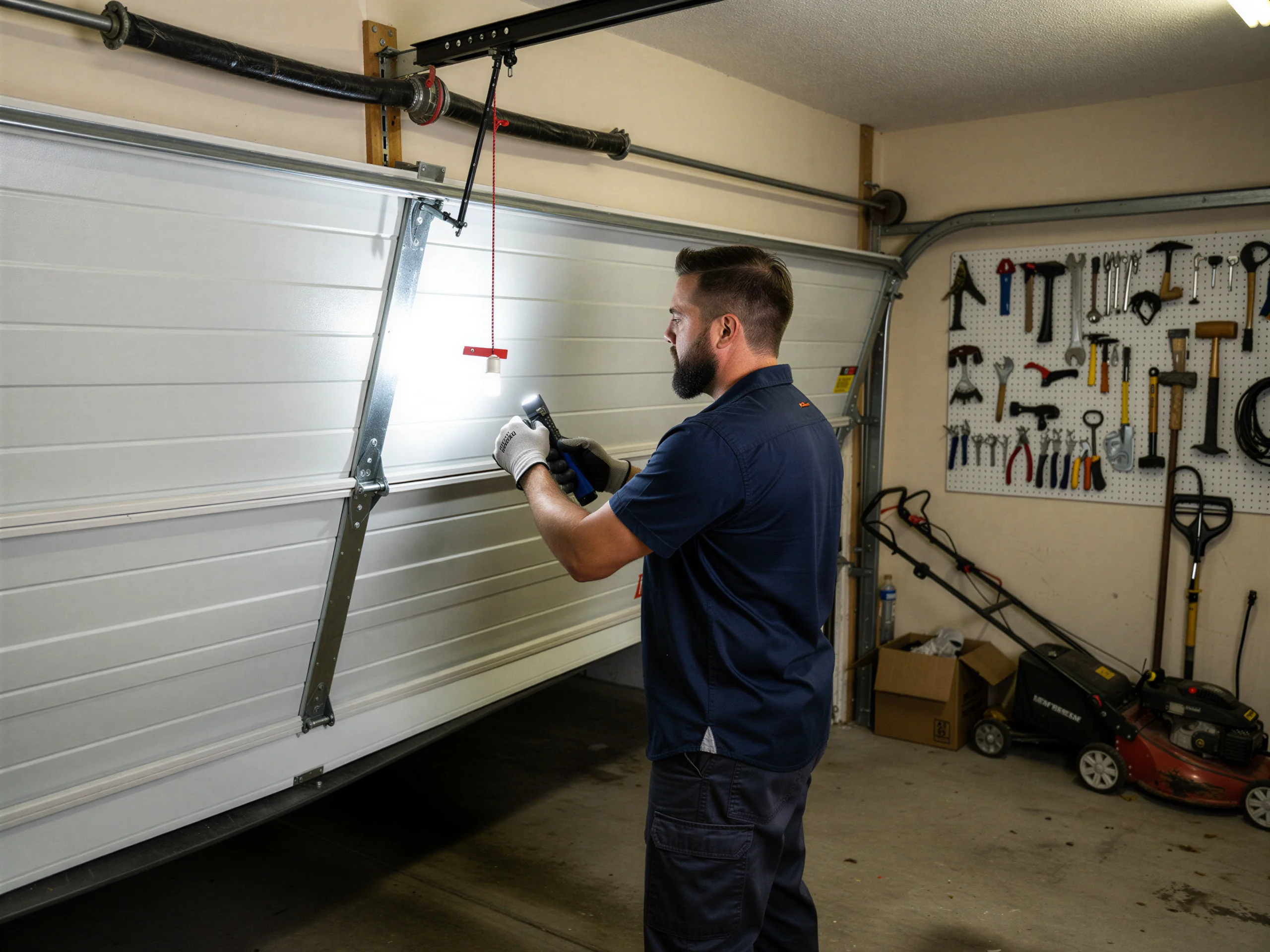
The most common call is a cable that's already snapped - usually on one side, which drops that corner of the door and jams it crooked in the track.
Fraying caught in look-over
Close behind that: a cable that's frayed but intact, found during a routine look-over before it fails outright. On the older extension systems typical of Temple City's 1958-era stock, we also see cables that have jumped the pulley groove, which grinds the wire against the bracket edge every time the door moves until it finally parts.
Original worn pulleys
A secondary problem on houses this age is cable drums or pulleys that are original to the house - worn grooves that chew up a new cable fast if they aren't replaced along with it.
Fresh cable, worn pulley
Putting a fresh cable on a worn pulley is a short-term fix that fails again within months. We'll tell you if that's what's going on rather than just swap the cable and leave.
What Is on the Truck
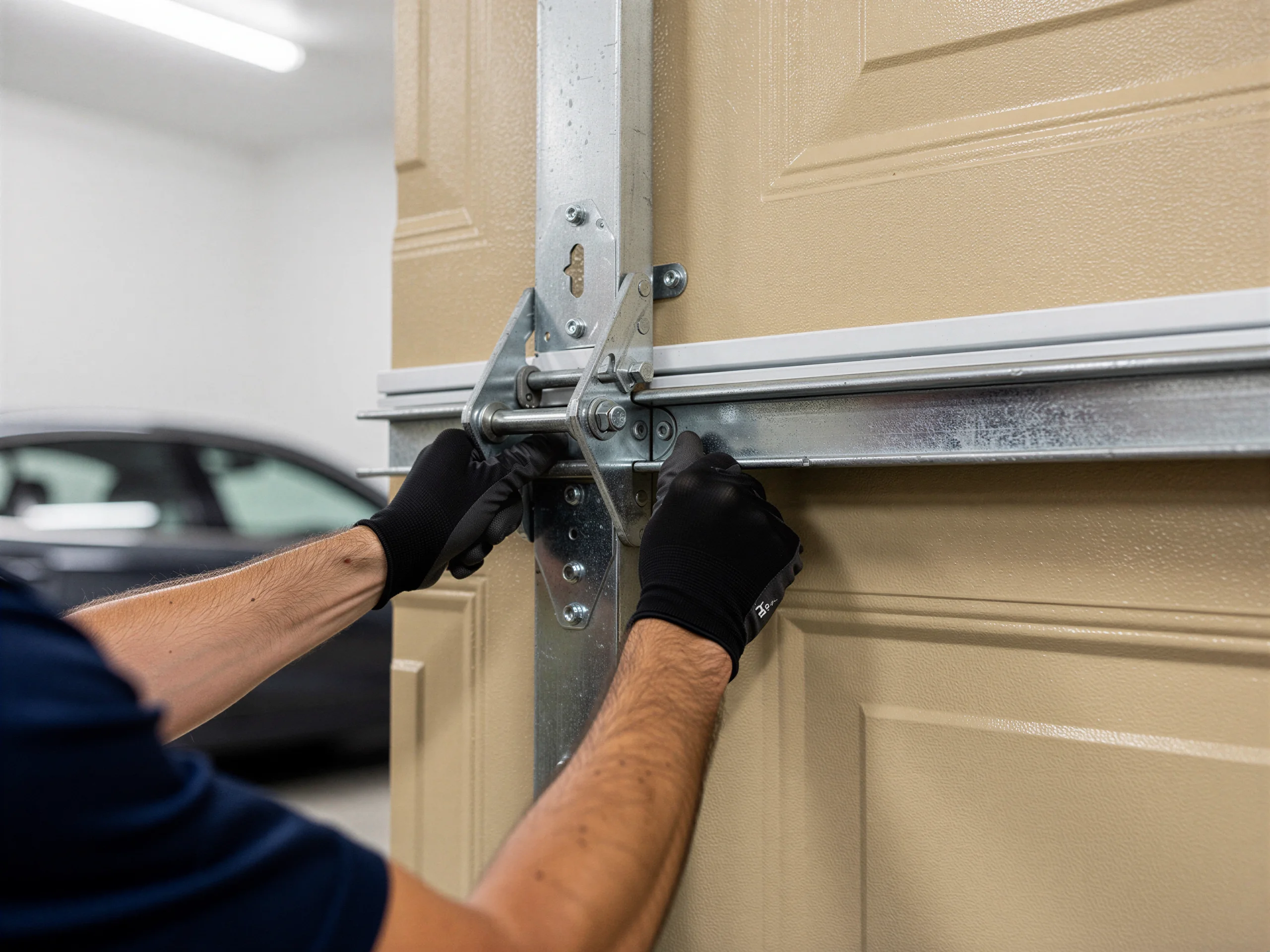
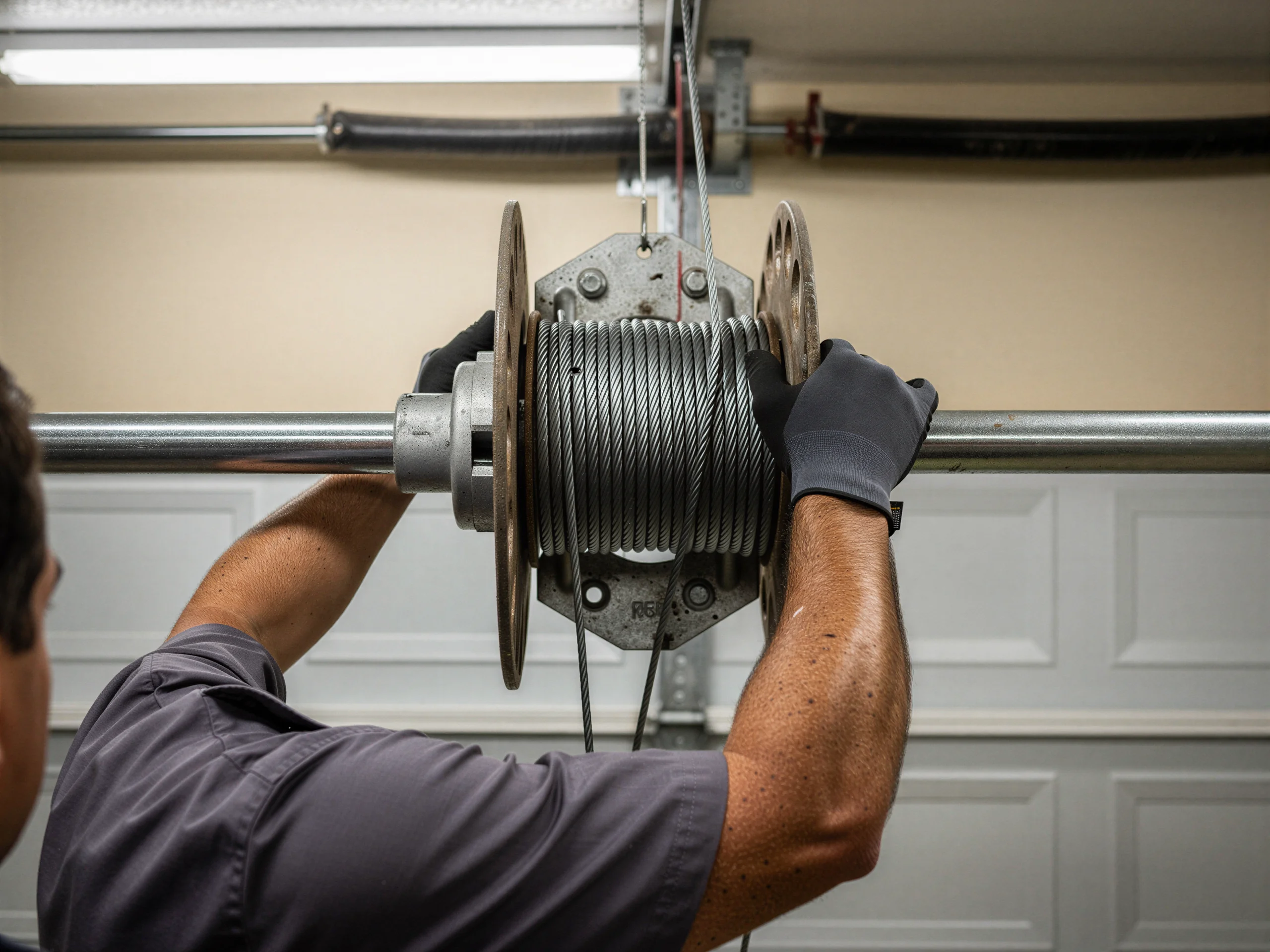
For extension-spring cable jobs, the truck carries cable in the lengths and gauges that match older residential doors, along with replacement pulleys and bottom brackets, since those wear alongside the cable itself. For torsion setups we carry the drum-style cable and the clamps needed to reset tension safely.
One limitation worth saying plainly: if a door needs a less common gauge or a bracket style that isn't standard stock, that part isn't always on the truck the same day, and we'll tell you up front if a return trip is needed rather than force a fix with the wrong hardware. We'd rather order the right part than install something that'll fail again in a year.
Getting It Booked In
Temple City sits about 14 miles out from San Dimas, which is the longest routine drive on this company's map - worth knowing if you're comparing scheduling against closer towns. The crew still comes out for cable jobs here; it just means booking ahead rather than expecting a same-hour swing-by.
When you call, have the door's rough age and whether it's extension or torsion spring (if you know) ready - it helps us load the right cable and hardware before the drive out rather than guessing. If you're not sure which system you have, that's fine too; a quick look at the springs tells us.
What It Costs
We don't have a posted price list for cable repair specific to Temple City, and quoting one without seeing the door and spring type would be a guess dressed up as a fact. What drives the cost is whether it's a straight cable swap, a cable-plus-pulley job, or a cable job that turns up a worn drum or bracket once we're in there - which is more likely on a house with original 1958-era hardware than on a newer door. We'll give you a number before any work starts, not after.
Doing It Yourself
A snapped or frayed cable looks like a five-minute fix on YouTube, and it is not. The cable on a residential door is under real tension even with the door down, because it's tied into a spring system that's trying to lift a few hundred pounds.
Extension cable pulley path
On the extension-spring setups common in houses from this era, the cable runs over a pulley at the bottom bracket and up to the spring at the top of the track. If that cable lets go while you're under the door, or while you're trying to rig a replacement with the spring still loaded, you can get seriously hurt.
Visual cable inspection
What you can safely do: look at the cable without touching it. Frayed strands near the bottom bracket, a cable that's jumped off its pulley, or visible rust bloom on the wire are all signs to stop using the door and make the call.
No hand-walking the door
Don't try to "walk" the door down by hand if a cable has already let go on one side - it will come down crooked and can jump the track. Leave the spring tension and the cable swap to someone who does it daily.
Talk to a local pro
Garage door service in San Dimas?
Same-day service with honest, upfront quotes.