Why It Happens Here
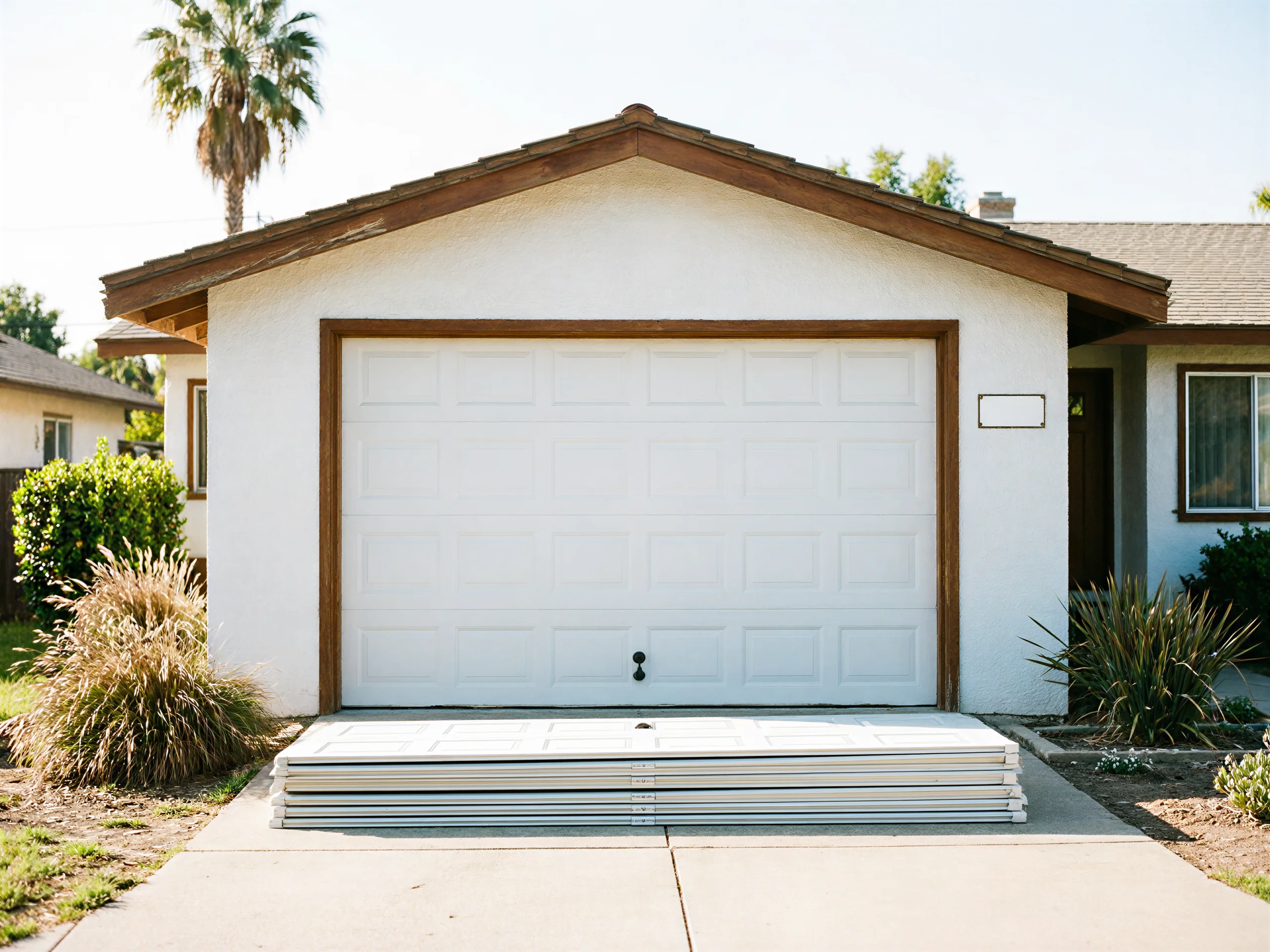
The houses in this part of Temple City mostly went up around 1958, which puts the original garage doors - or the first replacements on them - on hardware that predates the lighter steel and composite doors sold today. A door from that build window is usually heavier per square foot than what's on the shelf now, which means the torsion spring sized for it has to work harder over the decades, and the drums and cables wear faster than people expect.
F3's climate band here is moderate heat, not the extreme swings you get further inland, but moderate heat still means daily cycling - steel expands and contracts enough, day after day, to loosen roller brackets and dry out the grease in original bearings over 60-plus years. It's not dramatic failure, it's slow fatigue. Combine an older, heavier door with decades of thermal cycling on hardware that was never upgraded, and you get the pattern we actually see out here: springs that finally give out, not all at once but after years of extra strain nobody noticed.
What Can Go Wrong
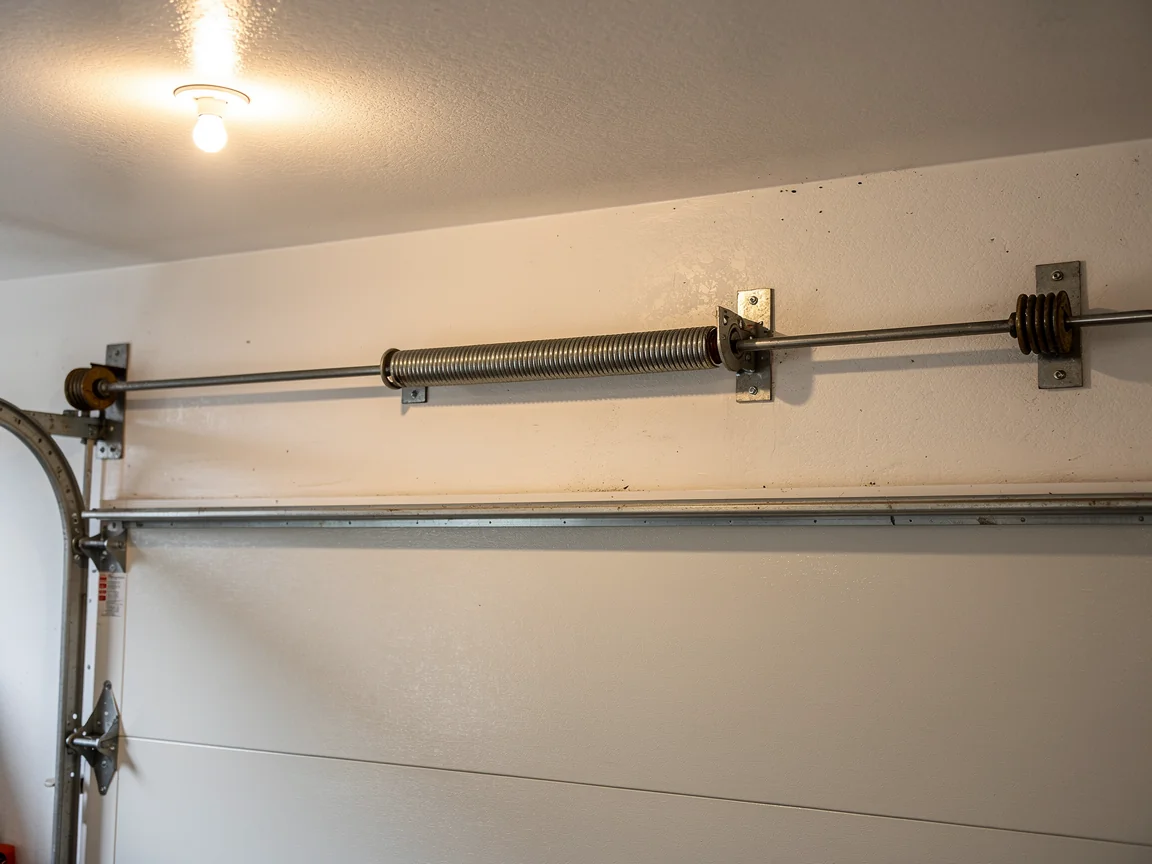
On a door this old, the torsion spring is usually the first thing to go - it's done tens of thousands of open-close cycles since 1958-era construction and metal fatigue doesn't announce itself, it just snaps one morning.
Oval rollers judder
After that, we see worn rollers that have gone from steel or nylon to something closer to an oval, which makes the door judder on the way up and strains the opener motor trying to compensate.
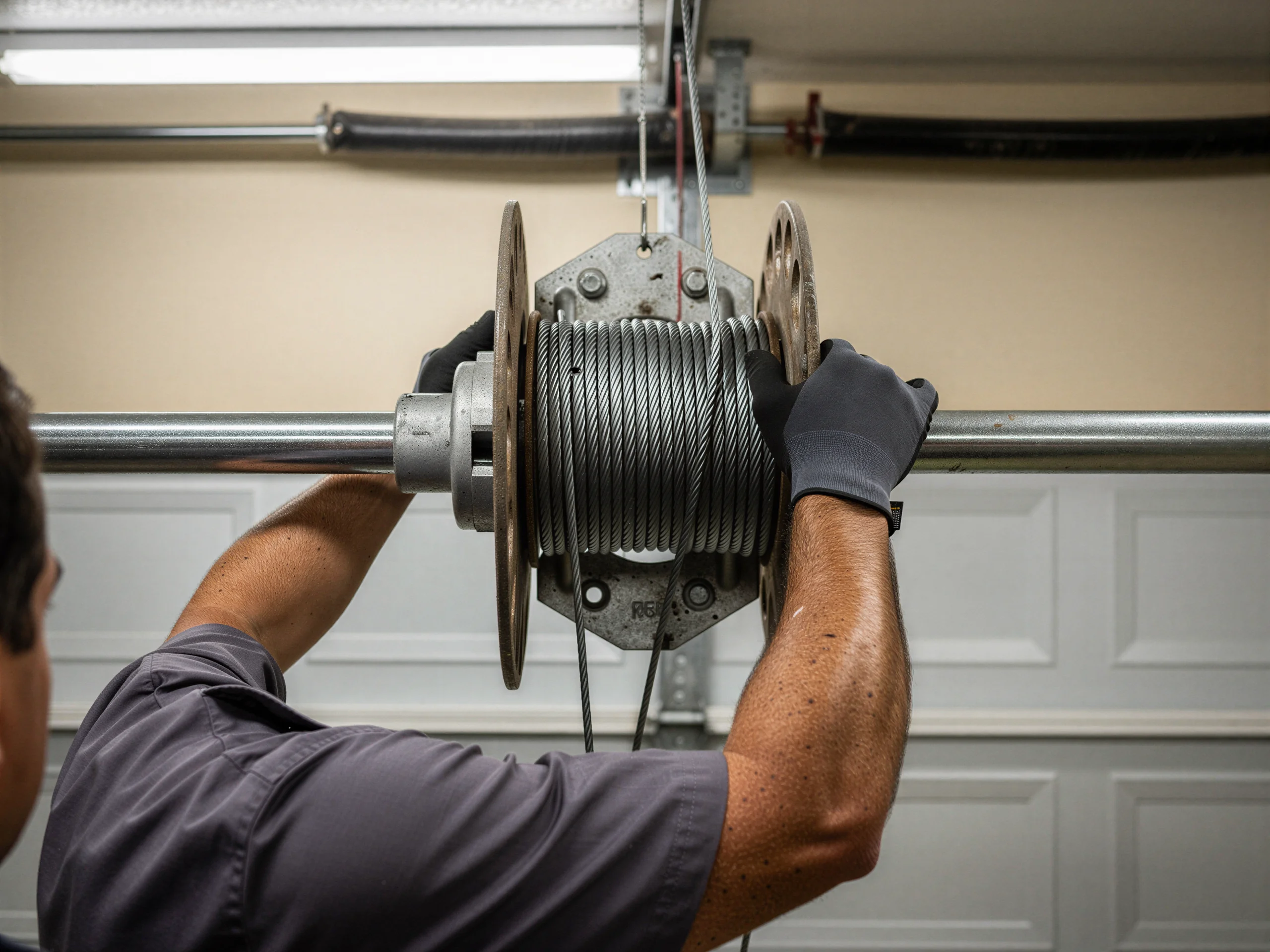
Drum-side cable fray
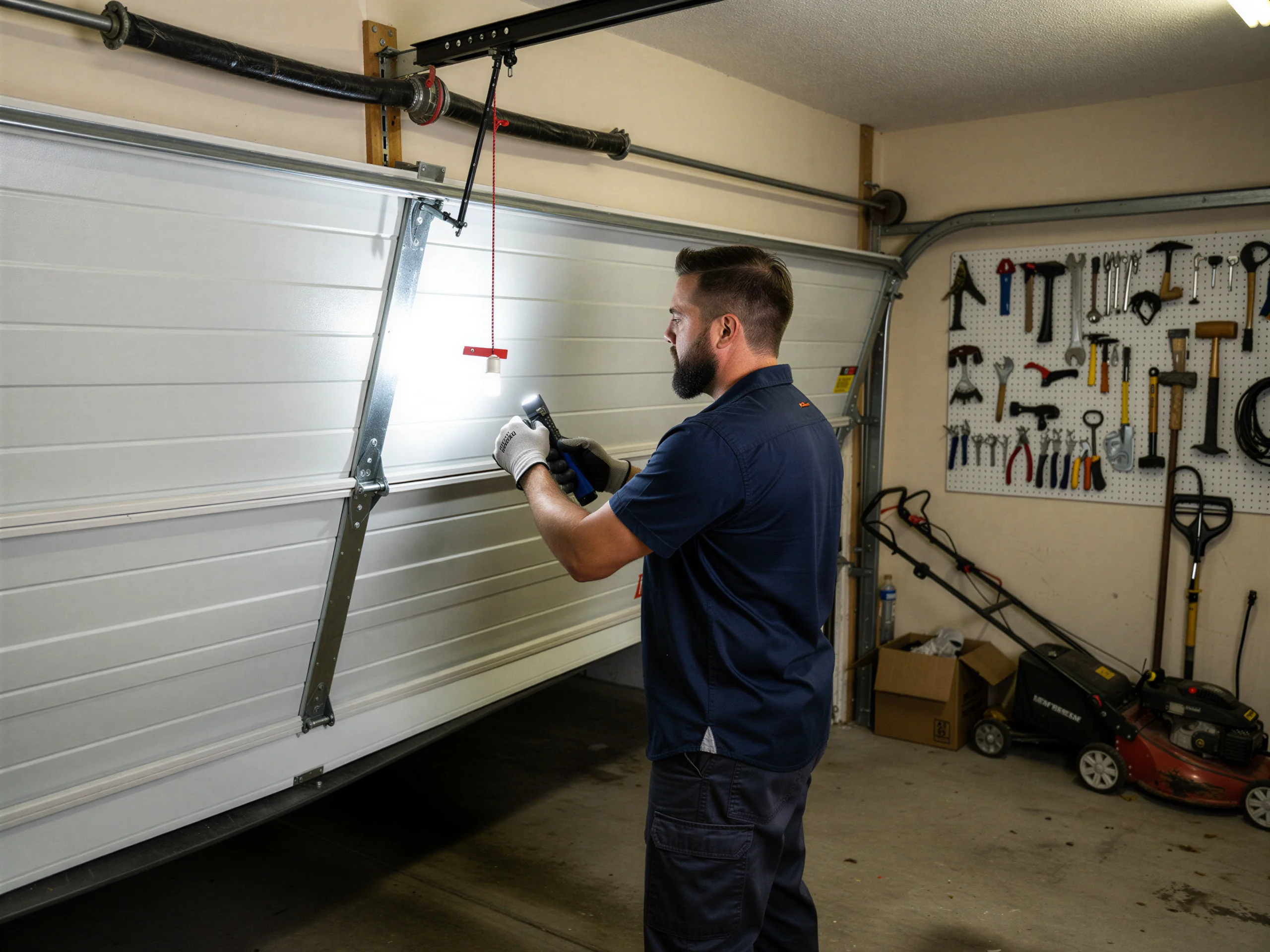
Cables fray where they wrap the drum, usually on one side first, which pulls the door crooked in the frame - if you look at the bottom edge and it's not level, that's your sign. Original tracks, especially on a door that's never been realigned, can be bent just enough to bind without looking obviously wrong.
Opener doing spring work
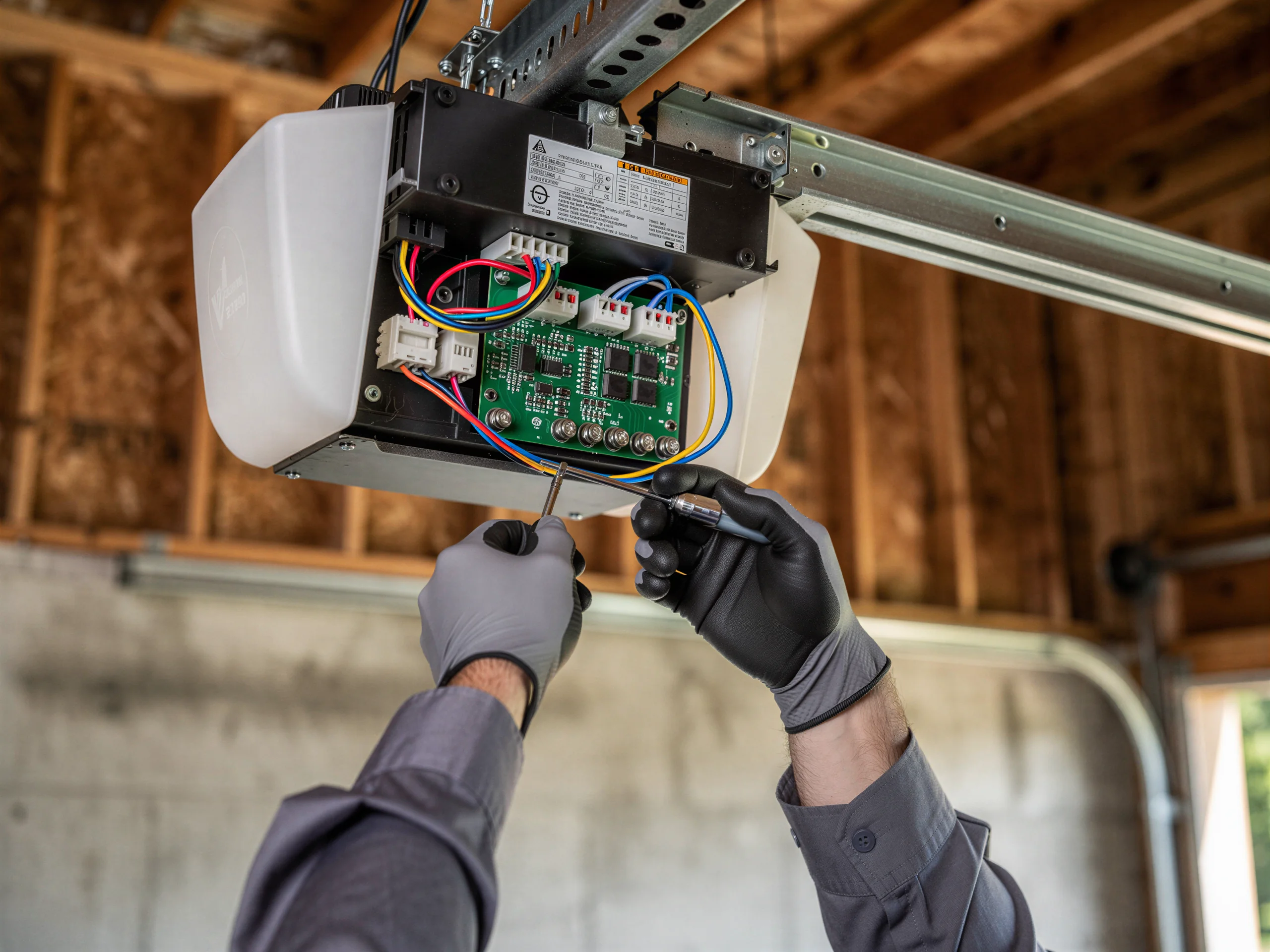
And on houses where the opener was added later rather than original to the build, we often find it's doing work the spring should be doing, which burns out the opener's drive gear years before it should fail.
What Is on the Truck
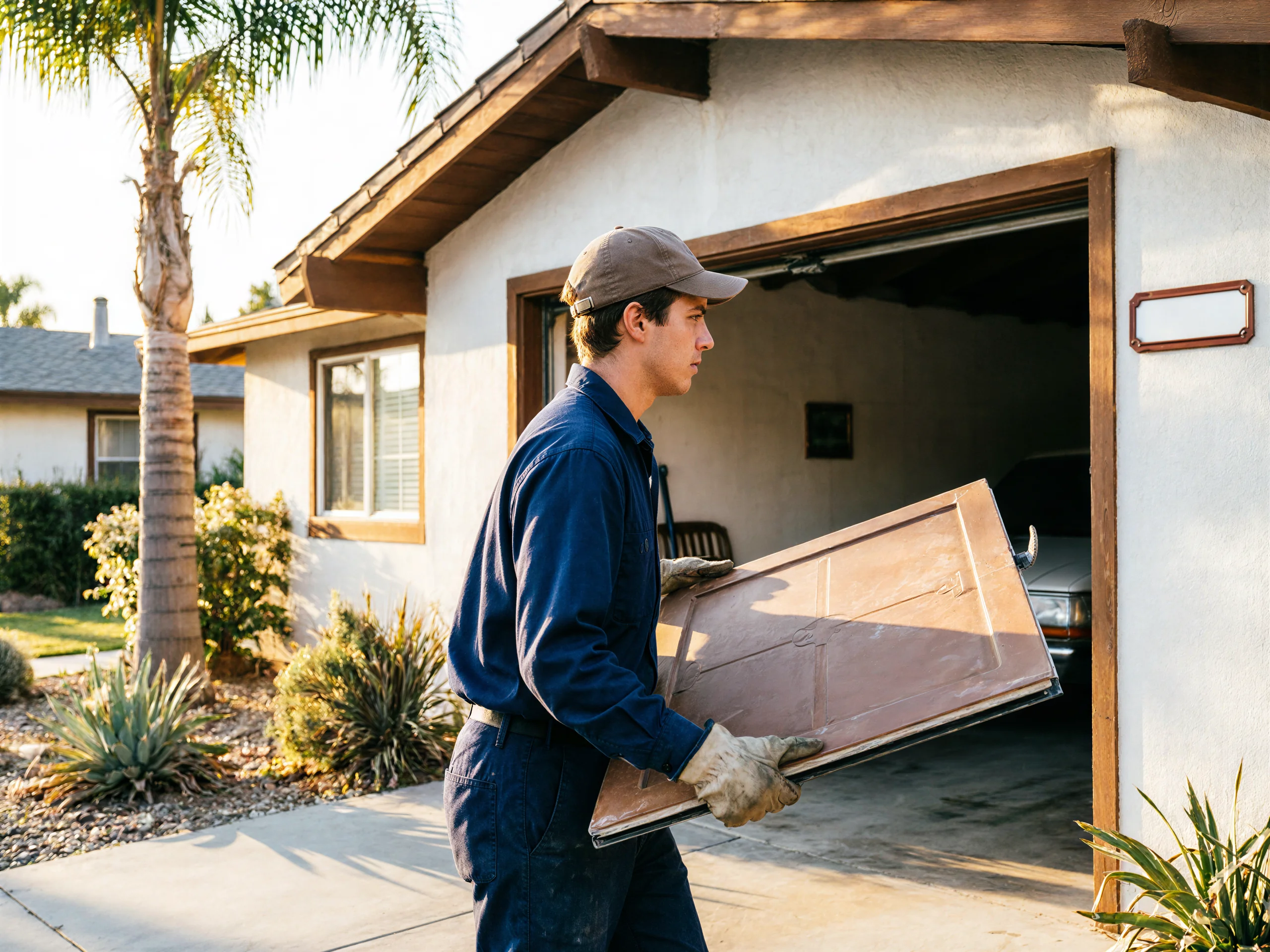
Because so much of what we handle in this stretch of Temple City traces back to 1958-built openings, the truck carries torsion springs across the sizes that fit that era's door heights and weights, plus the extension-spring hardware for the handful of doors that were converted that direction. We stock standard-gauge steel cable, both drum types, and rollers in nylon and steel so we're not guessing at what a 60-year-old track was built around.
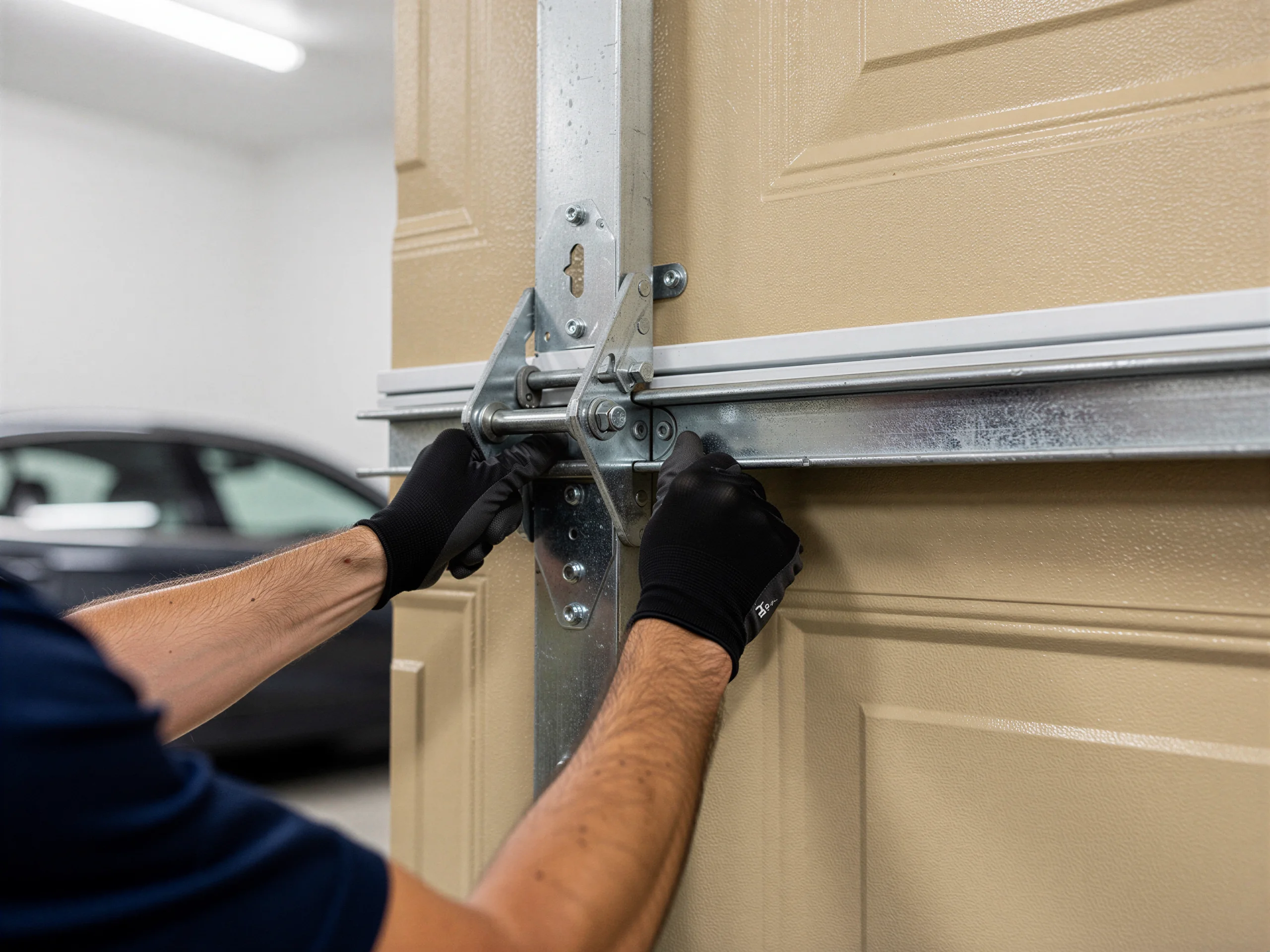
We also carry track sections and roller brackets, since a bent section usually needs replacing rather than re-bending - bending it back just moves the weak point somewhere else. For openers, we carry drive gears and logic boards for the common chain and belt-drive units that get installed as replacements on older doors, though we don't carry every opener model ever sold, so a less common unit might mean a short parts wait rather than a same-visit fix. That's a limit worth saying plainly rather than promising otherwise.
Getting It Booked In
Temple City sits about 14 miles from San Dimas, where the company is based - there's no separate branch or drop-off point here, the truck comes to you.
Describe symptoms on call
Because of that distance, it helps to describe what the door is doing when you call: whether it's stuck open, stuck shut, off-track, or just noisy, since that changes which parts come along on the truck and can save a second trip.
No written response window
We don't give out a fixed response window for this area in writing, since travel time from San Dimas varies with traffic on a given day, but we do ask what the problem is up front so the right spring size and cable length are already loaded before the truck leaves.
Pointing to other pages
You can see the areas we cover from San Dimas on the service area page, and if your issue turns out to be broader than repair - a full door replacement, say - that's covered on the main San Dimas page.
What It Costs
We're not going to list flat prices here, because a torsion spring swap on a 1958-era door and a cable replacement aren't the same job, and quoting one number for both would be misleading.
Priced by actual breakage
What we can tell you is how we price it: by what's actually broken and what it takes to fix it, not a flat call-out fee dressed up as a quote.
Income and repair decision
Temple City's median household income sits at $102,449, and we mention that only because it shapes a decision we see fairly often - whether to repair an aging door one more time or put that money toward replacing it outright.
Repeat repairs costing more
For a door already past 60 years old with worn track, tired springs, and an opener on its second or third drive gear, repair-after-repair can end up costing more over a few years than one replacement. We'll tell you honestly which side of that line your door is on rather than defaulting to the bigger job.
Doing It Yourself
Temple City has 11,453 households, and in a tract that size we see the same handful of DIY attempts over and over: WD-40 sprayed on a torsion spring instead of the shaft bearing, a bent track hammered back into shape, a safety sensor re-aimed with duct tape holding it in place.
Weekend maintenance tasks
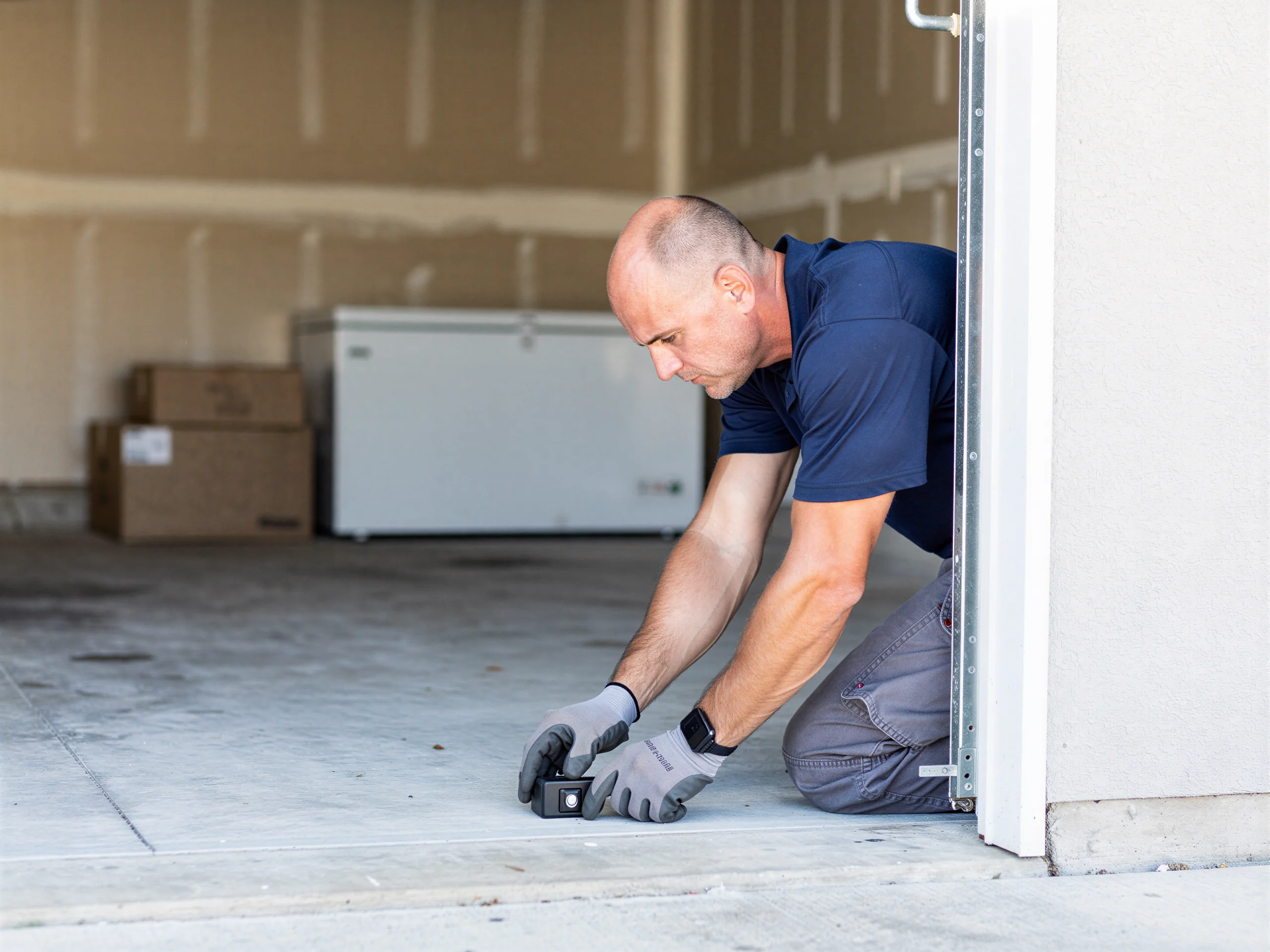
Some of that is fine. Cleaning the tracks, tightening loose hinge bolts, checking that the photo-eye sensors are aligned and lens-clean - all reasonable weekend jobs, and we'd rather you do them than call us for something a rag could fix.
Torsion spring off-limits
What we don't recommend: touching the torsion spring itself. A door built around 1958 and upgraded since will usually carry a single torsion spring under enough tension to break a wrist or worse if the winding cone slips.
Cables fray from inside
We also don't recommend replacing cables yourself - they're under the same load and they fray from the inside, so a cable that looks fine can still let go under your hands. If the door won't budge, or it slams down instead of lowering evenly, stop and call rather than force it. That's the honest line: small stuff, yes; anything holding spring tension, no.
Talk to a local pro
Garage door service in San Dimas?
Same-day service with honest, upfront quotes.