Why It Happens Here
The climate band for this area sits in the moderate-heat range, which doesn't sound dramatic, but repeated heat cycling is exactly what tires a galvanized cable out over years. The cable itself doesn't melt or snap from one hot day. It's the slow stretch and contraction, season after season, that works the strands loose at the fraying point near the bottom bracket, usually right where it bends around the roller bracket.
Housing in the wider service area we work runs 1943 to 1987 with a median around 1963, but Norco's own stock centers closer to 1974, a decade newer. That shift matters for cable work specifically: doors from the earlier end of that range were more likely built with lighter-duty cable and smaller drums, while the 1970s-era doors common here tend to run slightly heavier sectional panels, which means more load per cable and a cable that's sized correctly matters more, not less. A cable swapped in with the wrong diameter on a heavier door won't fail today. It'll fail in a year, at the worst possible time.
What Is on the Truck
For a cable call we carry galvanized aircraft cable in the sizes that cover most of what's out there: the lighter gauge common on single-car doors and the heavier gauge used on double-car sectional doors, which is the more common layout across the newer stock in this part of the area.
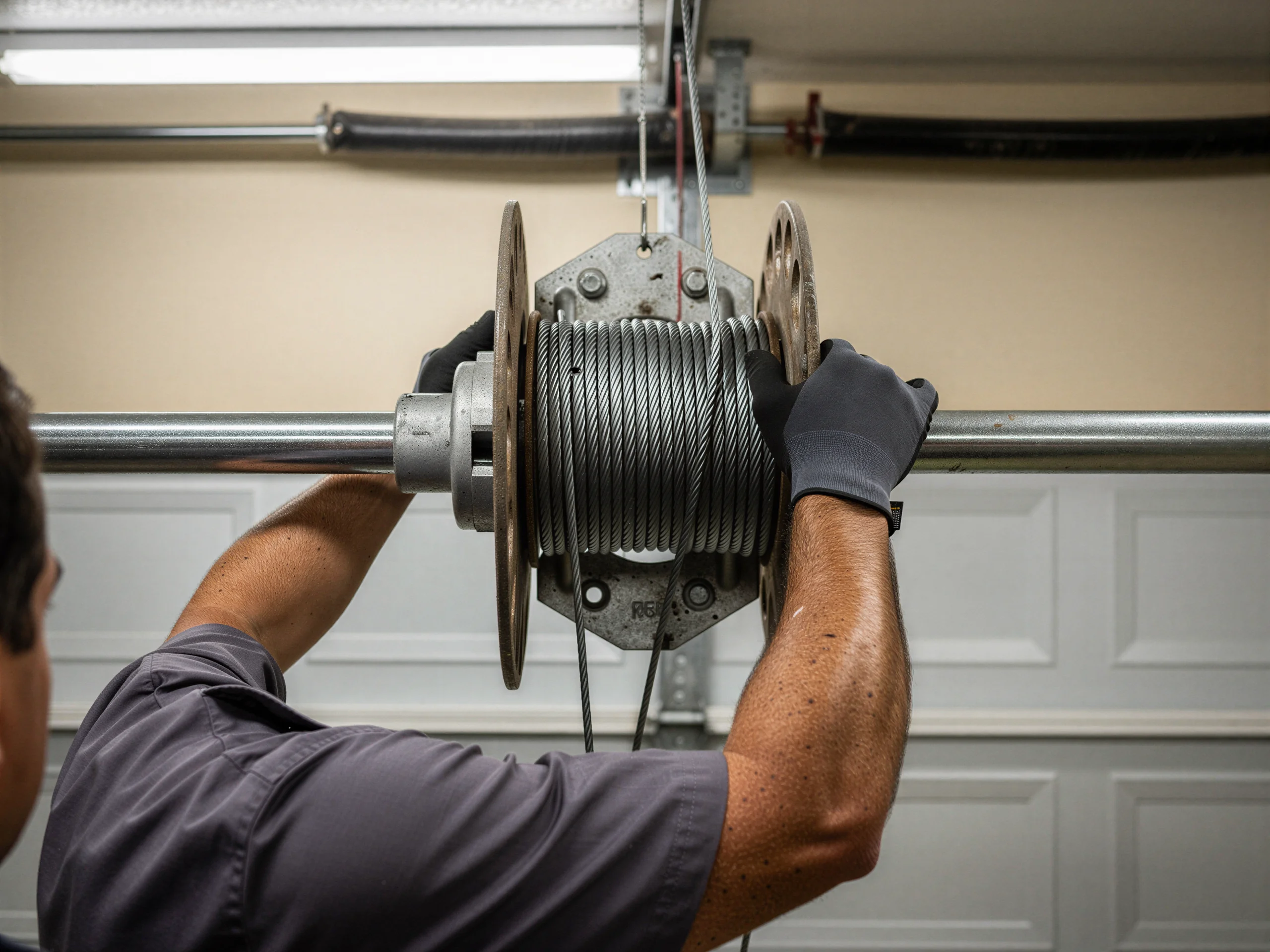
Drums carried with cable
We carry drums and pulleys to match, since a cable that's groove-worn its drum needs both replaced together or the new cable will wear the same way inside a season.
Spring-down tools aboard
We also carry spring-down tools and the clamps needed to hold a door safely while the cable's off, because that's the part of the job that actually matters for doing it safely, more than the cable itself.
Non-standard drum lead time
What we don't carry for every visit is a part for every non-standard door we might find. If Norco's specific door turns out to need a drum size outside the common range, we'll tell you straight that it's a short-lead part rather than pretend we've got it in the van.
What It Costs
We don't have a price list specific to Norco to hand you here, and we're not going to guess at one. What we can tell you is what drives the number up or down: whether it's one cable or a matched pair, whether the drum or pulley got chewed up when the cable let go, and whether the door is a standard double-car sectional, common on homes built around the 1974 median age in this part of town, or something older with narrower track.
Single cable versus crooked
A single snapped cable on a lighter door is a straightforward swap. A cable that's been down long enough to let the door drop crooked and bind the rollers costs more, because now you're fixing the cable and whatever it took down with it.
Higher-income Norco doors
Norco's households run higher income than the rest of the territory we cover from San Dimas, $125,117 against the $104,565 median across the wider service area, and the doors we see out this far tend to be in decent shape for their age.
Mostly single-part breaks
That doesn't change what the cable job itself requires. It just means fewer of these calls come in as "the whole door is falling apart," and more as "one part broke and the rest is fine. We quote once we've seen the door, not before.
How We Fix It
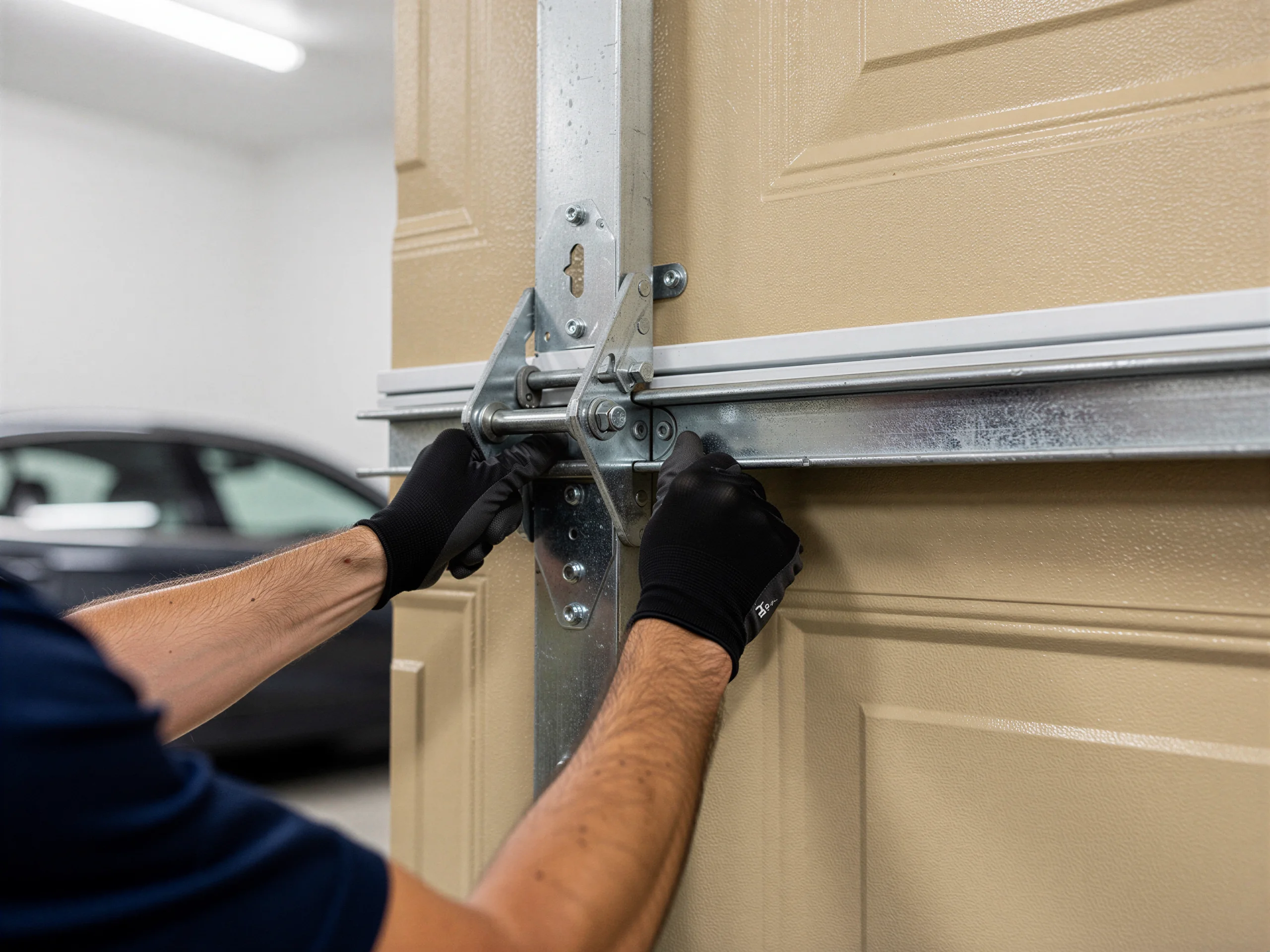
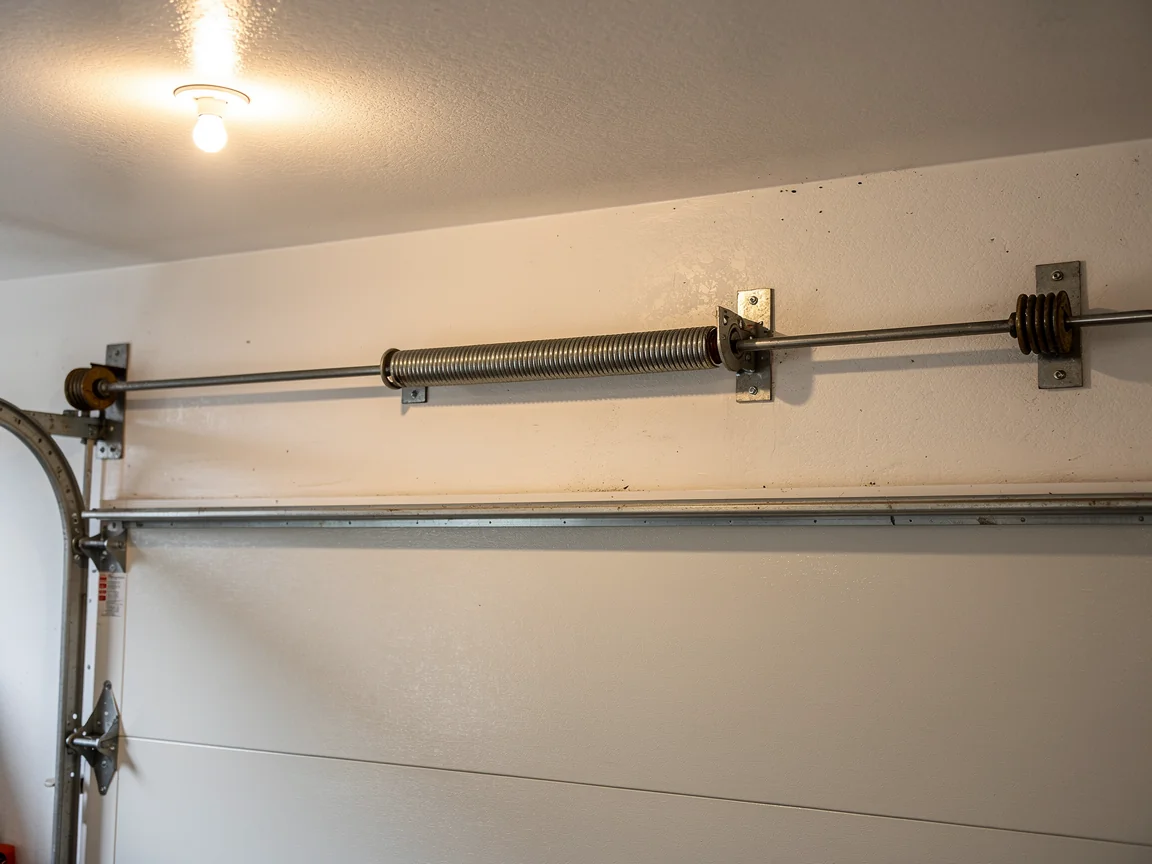
A broken cable is almost never just the cable. We release the tension on the spring first, because a cable can still be under load even after it's parted, and that's the part that hurts people who try this without knowing it.
Pulleys and track checked
Then we pull the old cable off the drum, check the drum and pulleys for grooving where the old cable rode, and check the track and rollers the cable was guiding, since a door that's been running on one cable for even a day will have knocked something out of true.
Drum diameter sizing
We size the replacement to the door, not to whatever was on the truck that's closest. Doors from the 1960s and earlier in this general area often run different drum diameters than the sectional doors more common on the 1974-median housing stock out in Norco, so matching matters more than people think.
Level closing test
Once the new cable is on, we re-tension the spring, run the door through a full open-close cycle a few times, and check that both sides are pulling even. A door that closes level on the first try after a cable repair is the sign the job was done right, not a lucky guess.
Doing It Yourself
Replacing a garage door cable yourself is one of the jobs we'd talk you out of, and we'll say that plainly. The cable is low-tension compared to the spring, but you can't touch the cable without dealing with the spring, and a torsion spring under load has put people in the hospital.
Leave cocked door alone
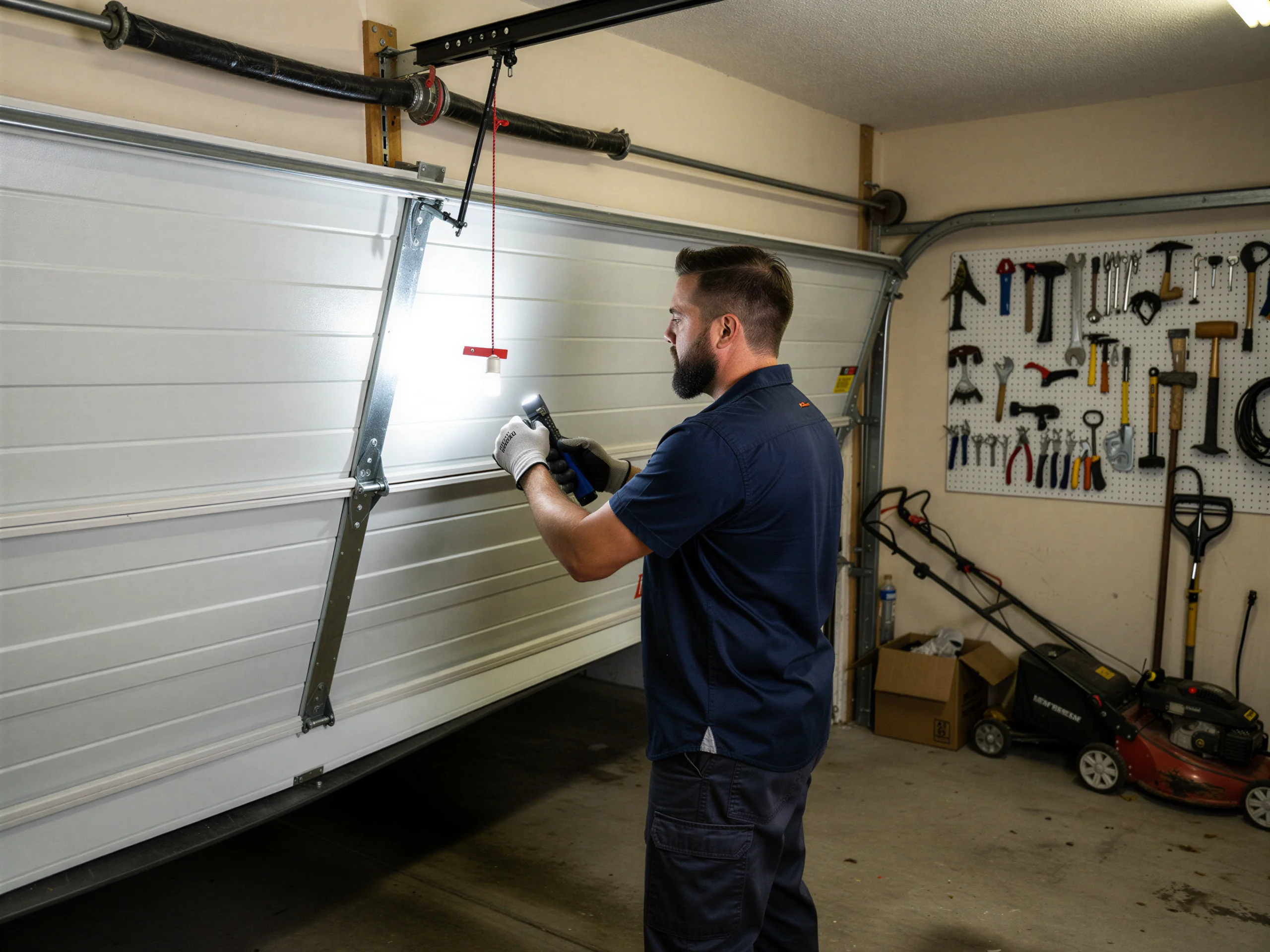
If you've got a broken cable and the door is sitting cocked to one side, leave it. Don't try to force it level, and don't cut the other cable to even things out. What you can safely do: look at the cable without touching it.
Photos before calling
Frayed strands near the bottom bracket, a cable that's jumped off the drum, or visible rust where the cable meets the pulley are all things worth photographing and mentioning when you call. That saves time on-site, which matters more here than it might closer to the shop, since any visit out to Norco is a full round trip from San Dimas.
Unusual width short wait
One honest limit: we don't stock every drum and cable spec for every door era on the truck at all times, so if your door is an unusual width or an older style, there's sometimes a short wait on the exact part.
Talk to a local pro
Garage door service in San Dimas?
Same-day service with honest, upfront quotes.