Why It Happens Here
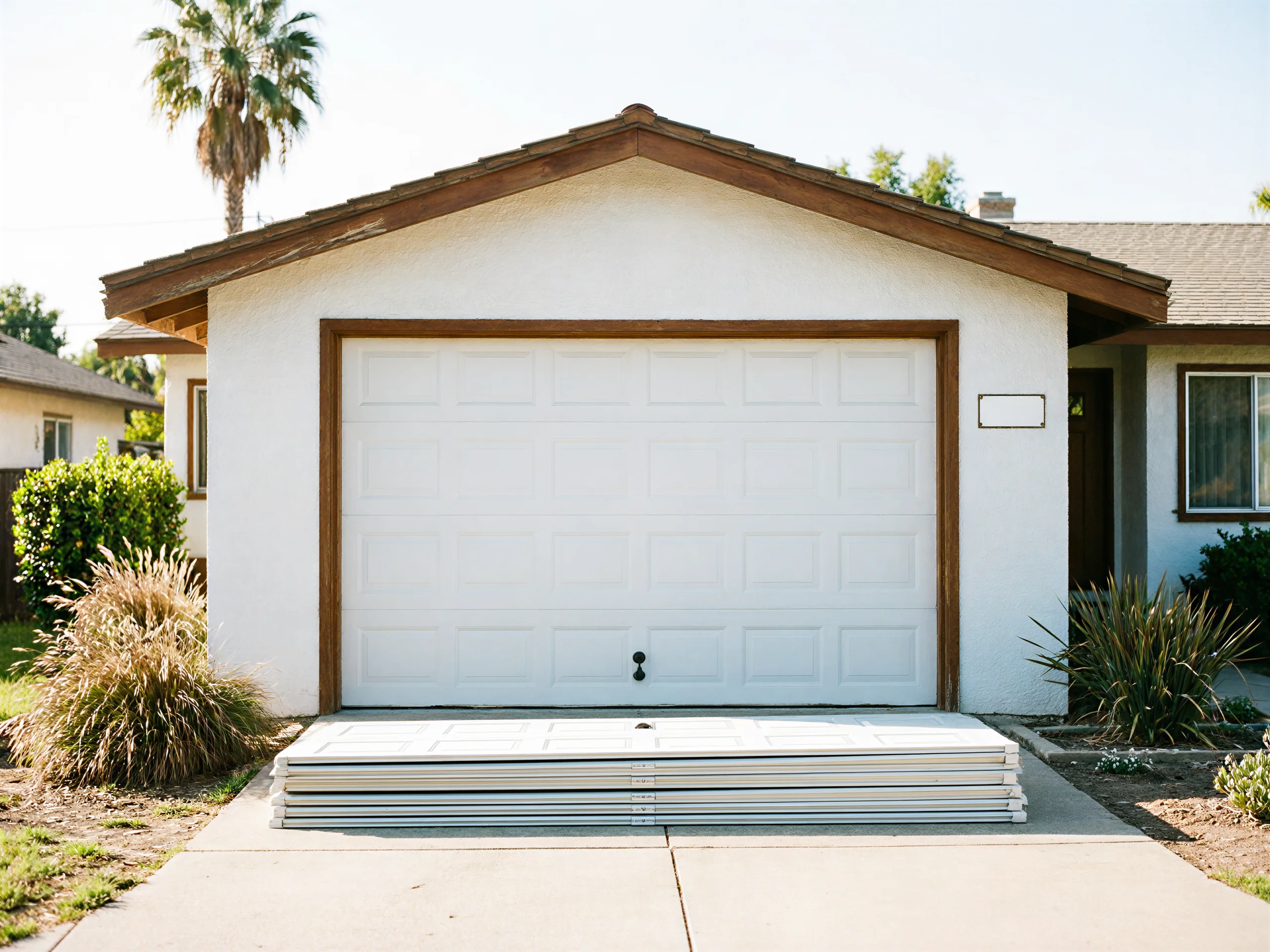
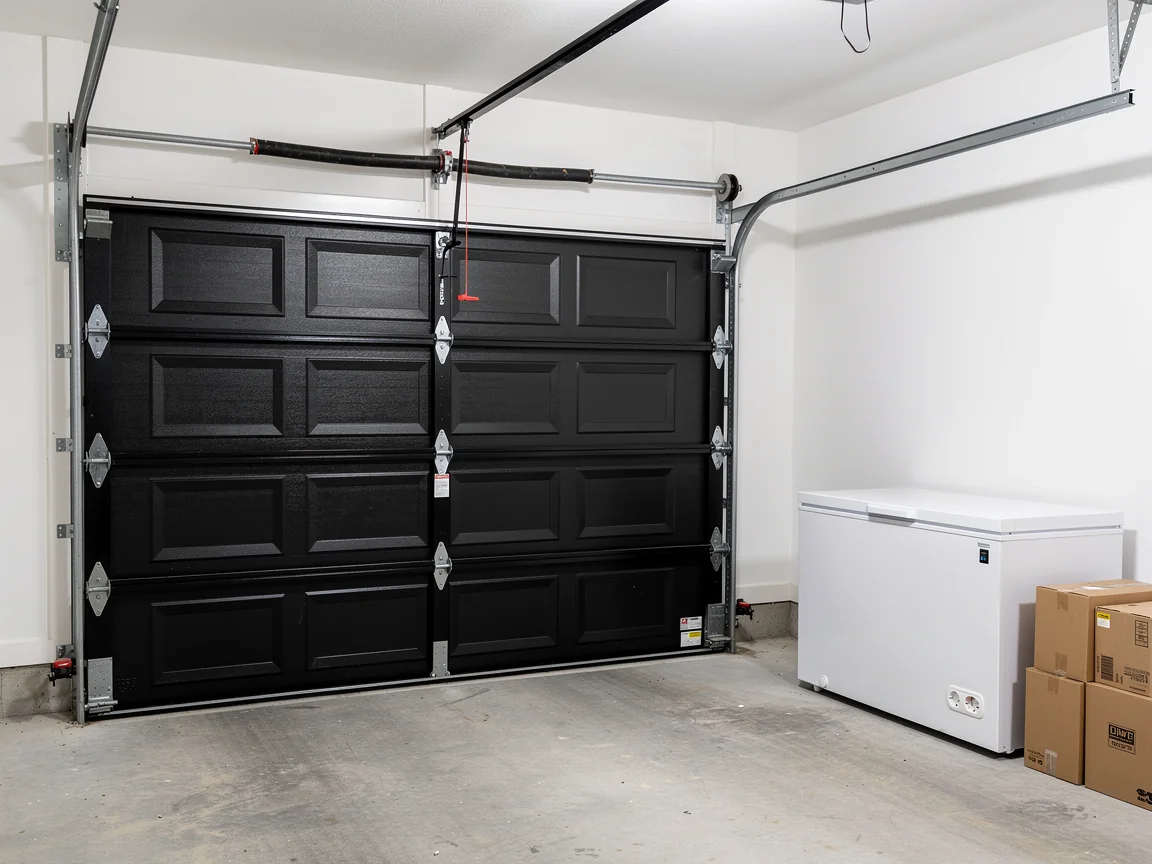
Norco's housing mostly dates to around 1974, which puts the original garage doors and their hardware squarely in the steel-sectional, extension-spring era rather than the older one-piece tilt-up doors or the torsion-spring standard that came later.
Hardware outlasting its design
That hardware is now roughly fifty years into a design life that was never meant to run that long without a spring replacement or two. The region sits in a moderate-heat climate band, and daily swings in a metal garage - especially an attached one with the door facing west or south - put real expansion and contraction stress on galvanized springs and track brackets over decades, which is part of why corrosion and metal fatigue show up here as much as outright breakage.
Replacing aging openers outright
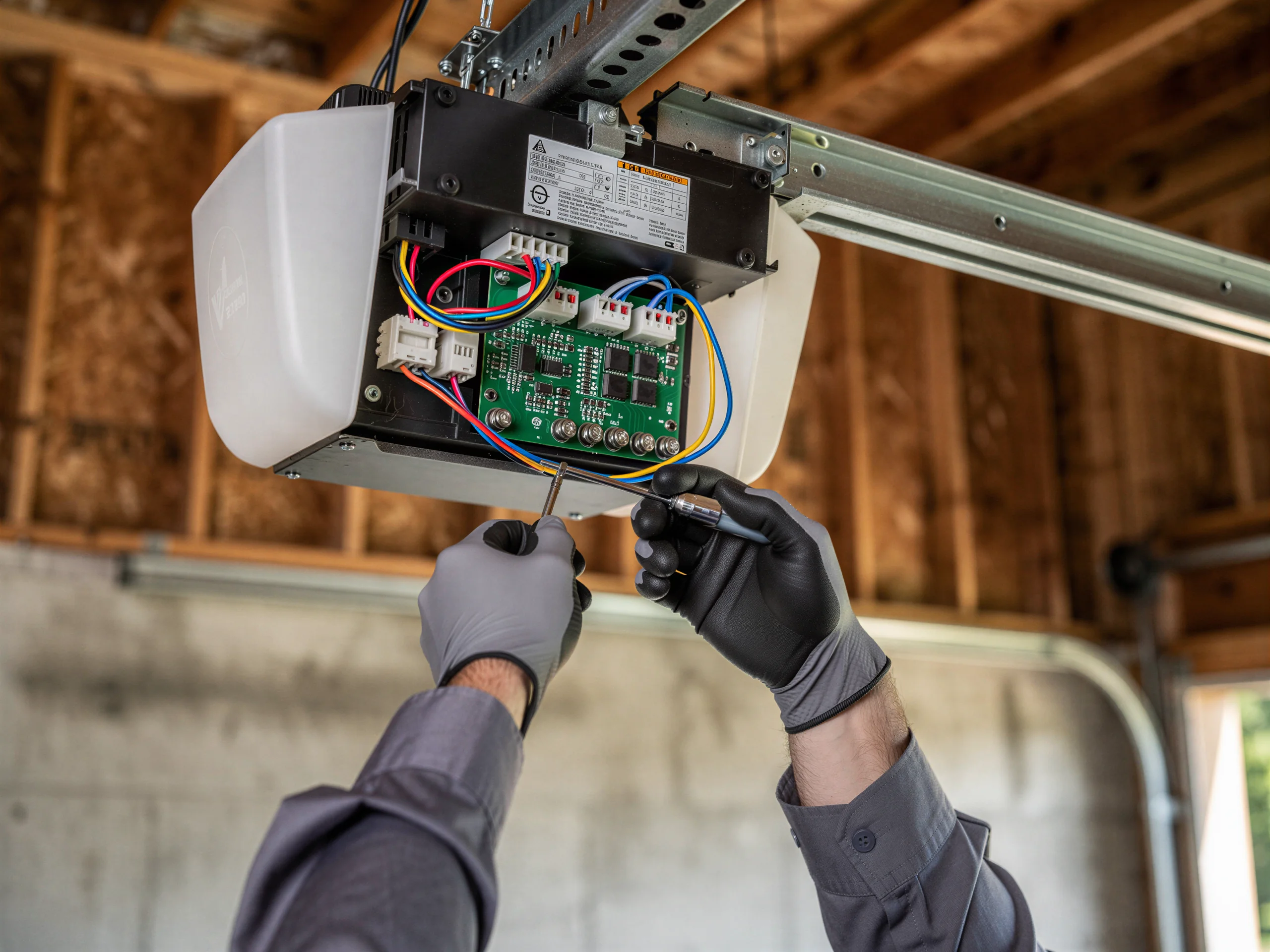
With around 6,776 households in Norco and a median income noticeably higher than the broader San Dimas service area, we also see more owners opting to replace an aging opener outright rather than keep patching the original unit, once a repair call turns into the second or third visit.
What Is on the Truck
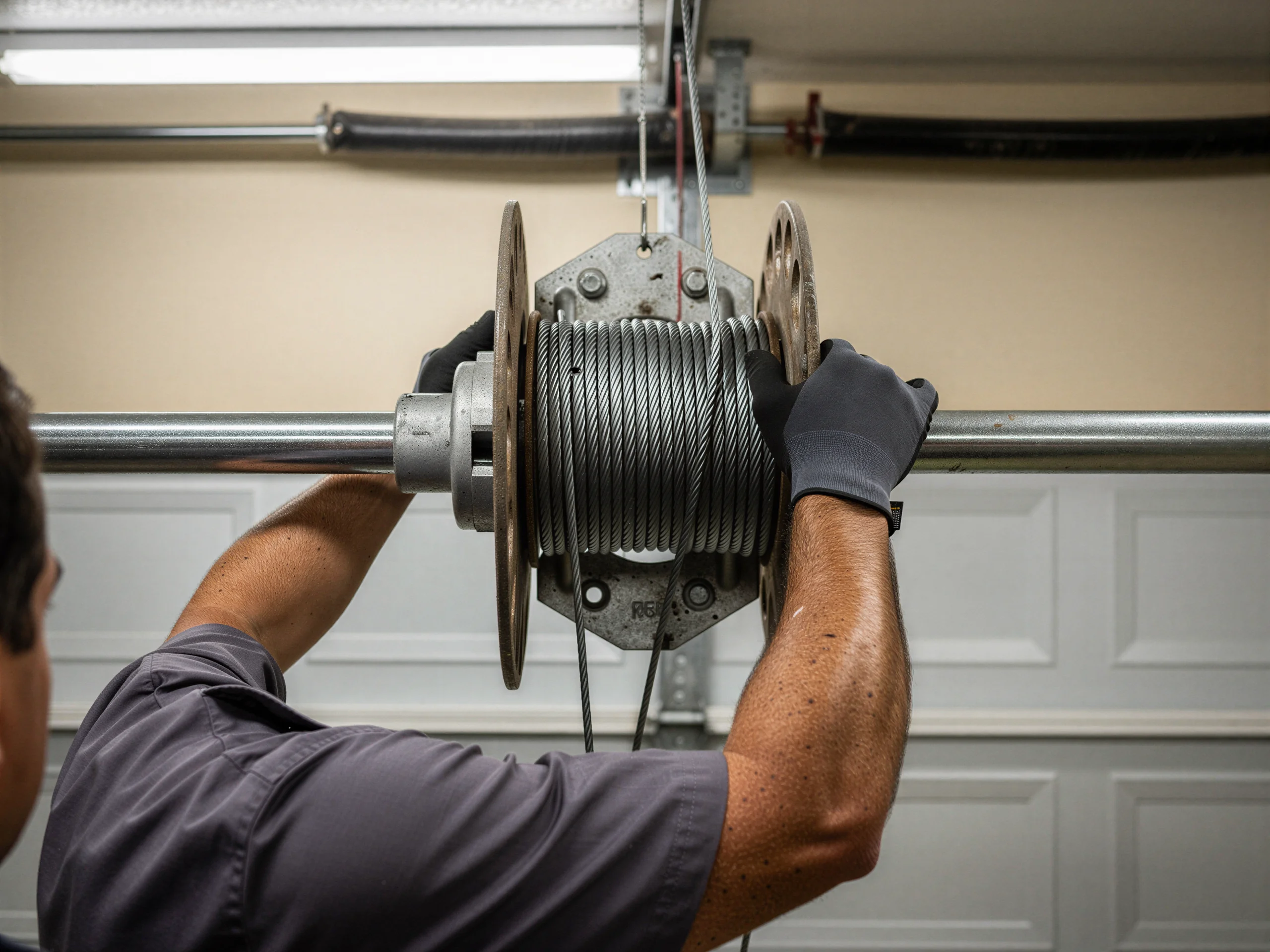
Because Norco skews toward that 1974 extension-spring stock, the truck carries extension spring kits in the common sizes for that era along with safety cables sized to retrofit onto doors that never had them installed originally. We stock steel track sections and the brackets that mount them, since warped track is a more common call-out here than a snapped cable. Roller sets in both nylon and steel come standard, plus the fasteners that tend to strip out of thinner, older jamb wood. Opener parts are more of a mixed bag - circuit boards and belts for common mid-range units ship with us, but if your opener is the original mechanism from when the house was built, that part may need to be ordered, and we'll tell you that up front rather than have you wait on-site for a part that isn't coming that day.
What It Costs
We don't quote a number here without seeing the door, and we're not going to pretend otherwise. What drives the bill in Norco is usually the hardware era: doors that went up around 1974 were built with extension springs on steel sectional panels, not the torsion setups you see on newer construction.
Sourcing older brackets
Extension spring kits and the safety cables that should run through them aren't always interchangeable part-for-part with what's on a newer door, so a tech sometimes has to source an older-style bracket or drum rather than grab a universal one off the shelf.
Predictable opener swaps
That adds a little time, which shows up in the labor line more than the parts line. Opener swaps tend to be more predictable than spring jobs because the boxes themselves are more standardized across eras.
Both sides on double doors
If a cable's frayed on one side of a double door, we'll tell you straight whether it makes sense to replace both cables and both rollers now or just fix what broke - sometimes doing both sides costs less in a second trip than it does to do it twice. We'll give you the actual number before anything gets touched, not an estimate that moves once the door's open.
How We Fix It
Since we're coming from San Dimas, about 19 miles out, we diagnose over the phone first as much as we can - what the door's doing, what year the house was built if you know it, whether it's one door or two.
Arriving with right parts
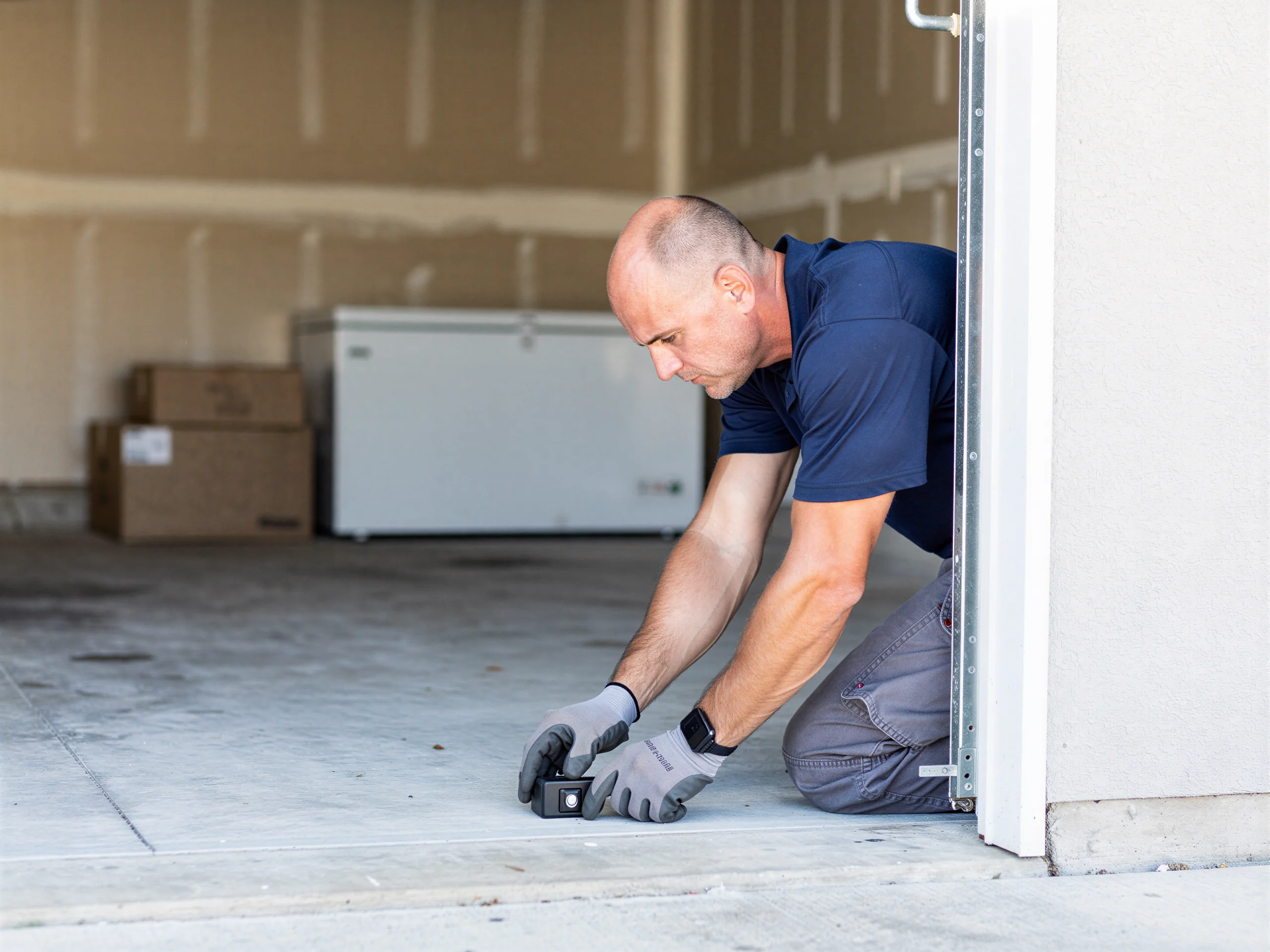
That lets the tech show up with the right spring size and the right bracket style already on the truck instead of guessing. On site, the first thing we check on a 1974-era door is whether the extension springs still have working safety cables, because a lot of original installs from that period didn't require them and never got retrofitted.
Controlled spring replacement
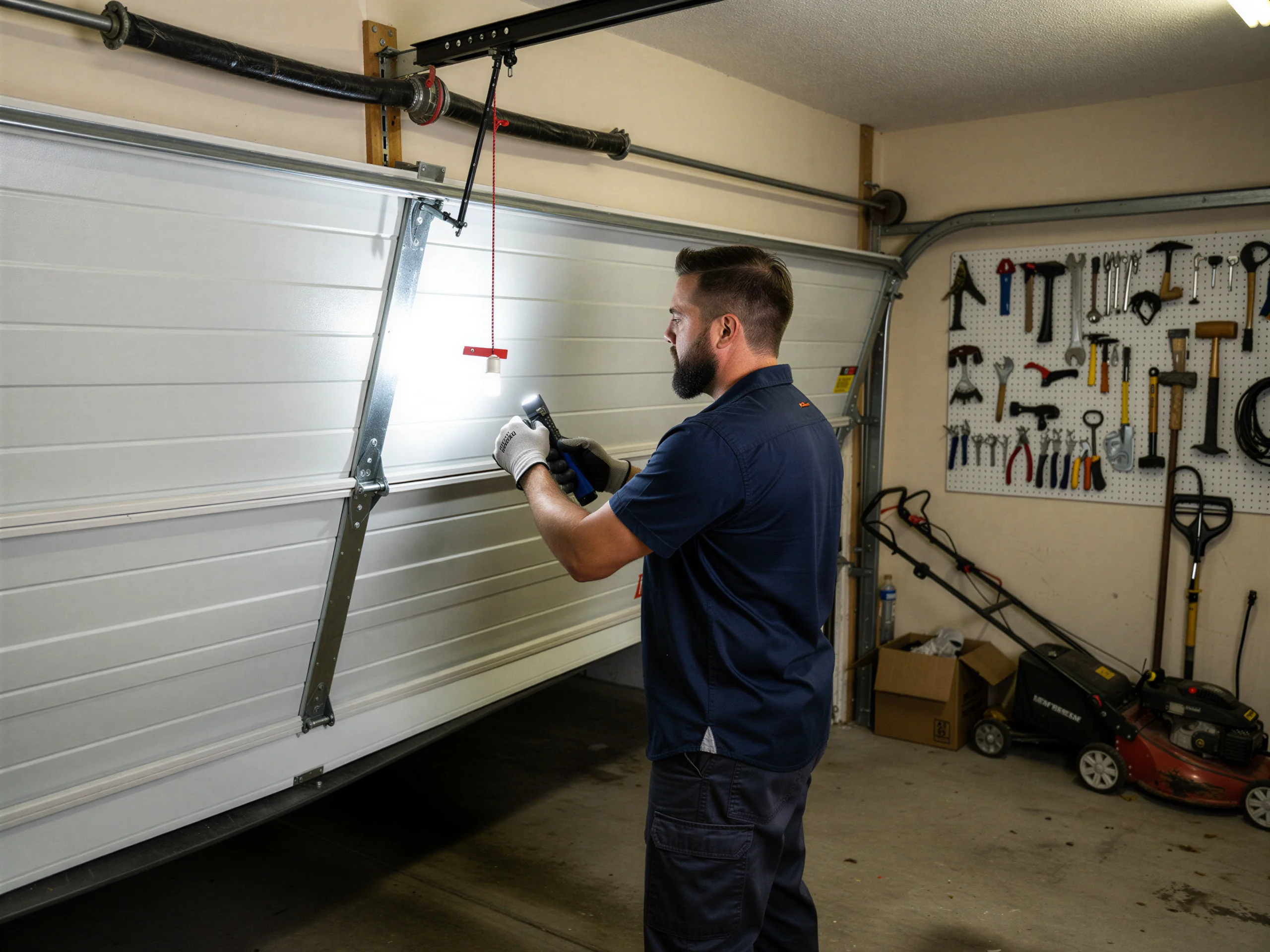
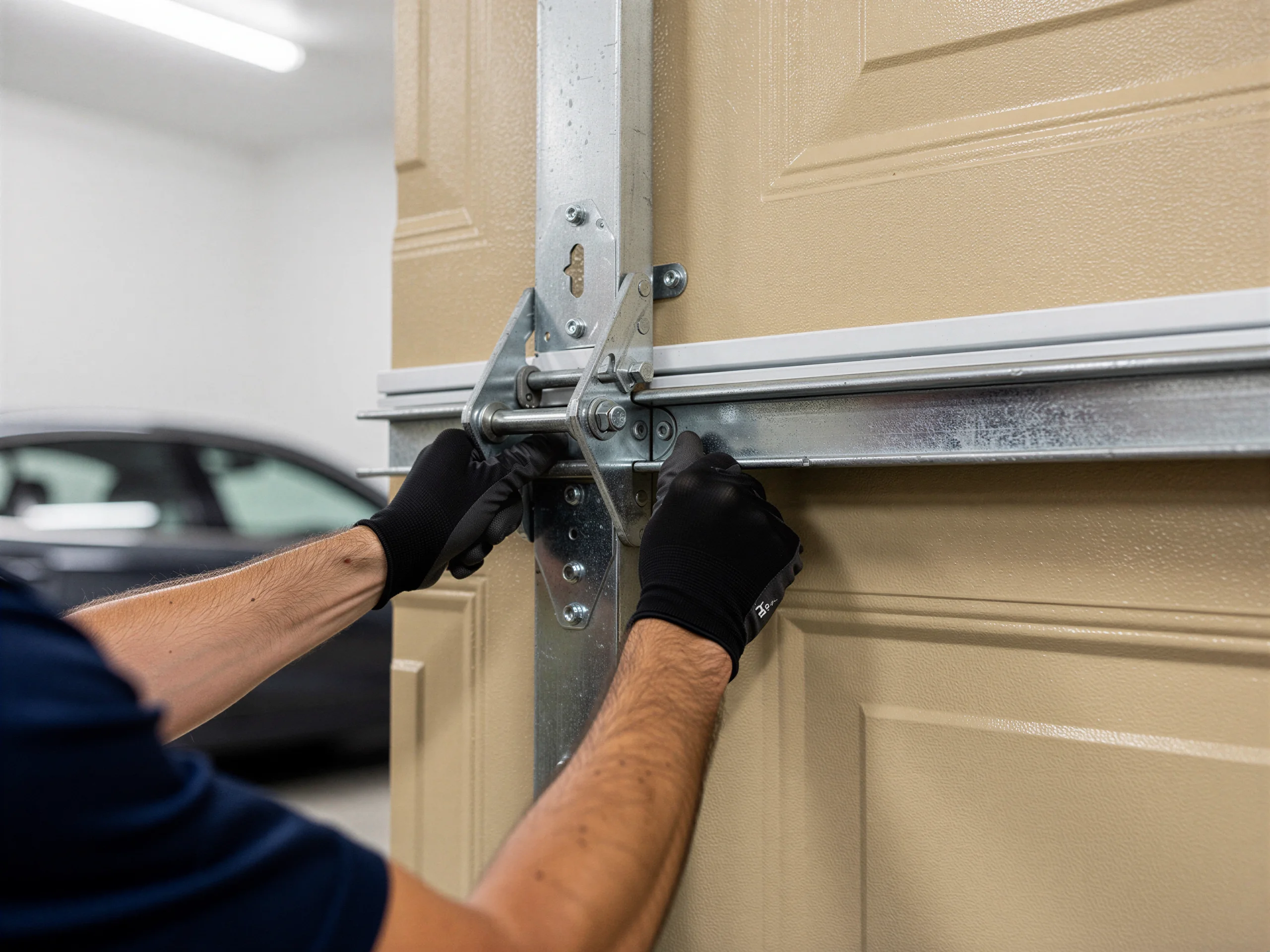
If a spring's broken, we replace it under tension control, not by eyeballing the stretch. Tracks on doors this age are usually still steel, not aluminum, and they warp rather than snap, so a sticking door often comes down to a bent track section instead of a dead opener.
True or swap sections
We true it or swap the section rather than replacing the whole door. For openers, if the chain or belt drive is original, parts for the oldest of these units aren't always stocked anywhere, including by us, and at that point replacement is the honest answer, not another repair.
Doing It Yourself
Tightening a loose hinge screw or clearing debris off the track is fine to do yourself. Anything involving the spring is not - extension springs under tension on a door this age can whip hard enough to break a bone or worse if you don't know how to control the release, and if the safety cable is missing or frozen in place, there's nothing stopping the spring itself from becoming the projectile. We also won't talk someone through a spring swap over the phone; it's not a liability dodge, it's that a wrong setup on a double door throws the whole panel off square and can crack it. Where DIY makes sense is lubrication and visual checks - look at the cables for fraying near the drum, check that the bottom brackets aren't rusted through, and see if the door is noticeably heavier on one side when you lift it manually with the opener disconnected. That last one tells you a spring is losing tension before it breaks outright, which is the best time to call.
Talk to a local pro
Garage door service in San Dimas?
Same-day service with honest, upfront quotes.