Why It Happens Here
The 1974 median build year in Norco matters more than it sounds. Houses from that era were built just as sectional steel doors on extension-spring hardware were becoming the standard replacement for the older one-piece tilt-up doors, so what's actually on the house today is often a mix - original track brackets from the mid-70s build with a door and opener swapped in sometime since. That mismatch is the single most common cause of off-track calls we see in this part of the service area: a newer, heavier door riding on a track and bracket set that was engineered for a lighter original door.
The climate here runs in the moderate-heat band for this region, which isn't the dramatic swing that cracks concrete slabs, but steady heat cycling still works screws and lag bolts loose at the track brackets over years, and a loose bracket is how a track starts to walk out of alignment one degree at a time until the rollers finally jump it. It's a slow failure, not a sudden one, which is why most owners don't catch it until the door is visibly off.
What Is on the Truck
For off-track calls in this area we carry the roller and hinge sizes that match 1970s-era bracket spacing, since that's the hardware base under most of the roofs here even when the door itself has been replaced since.
Track sections and lag bolts
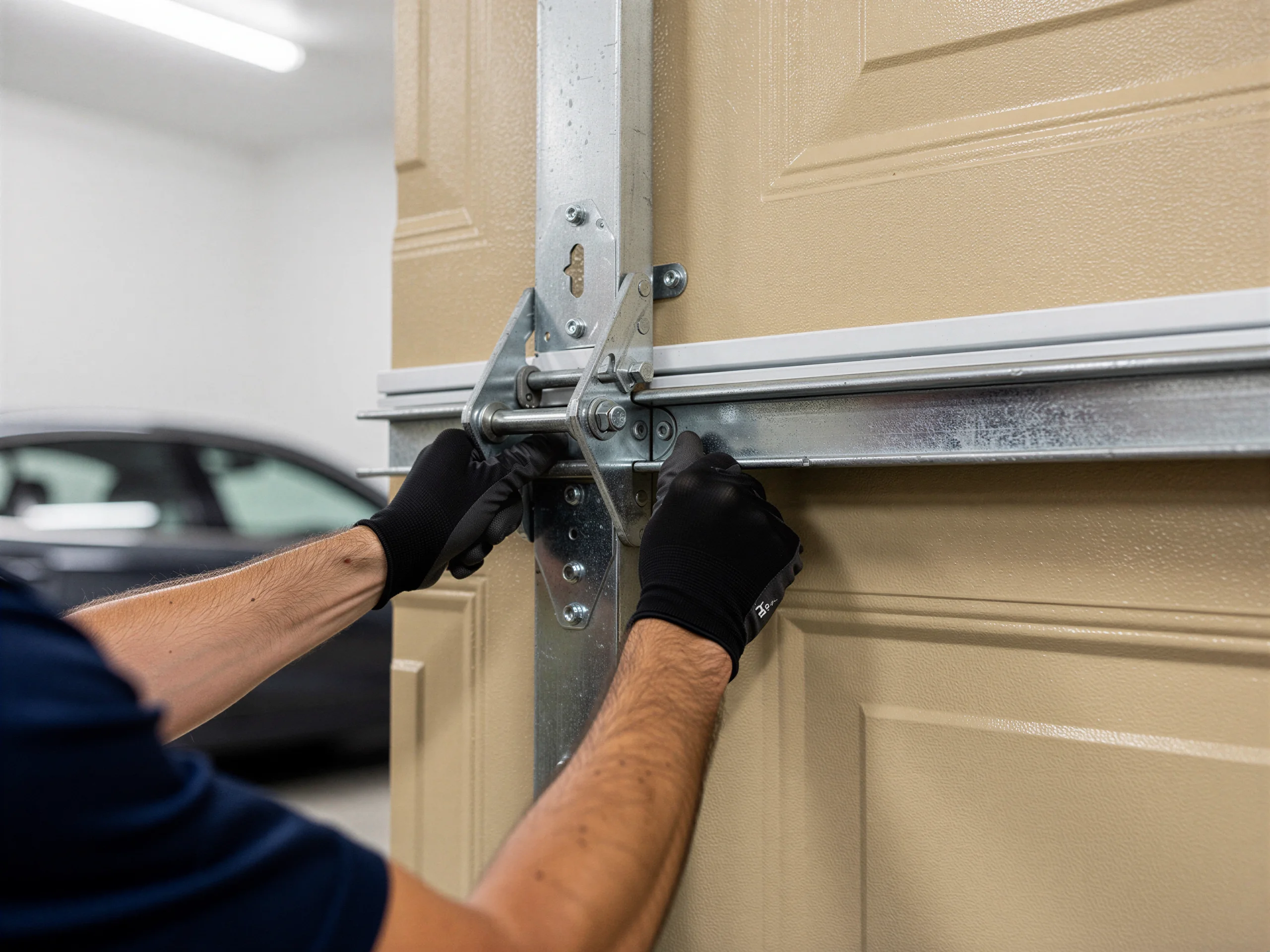
We stock track sections in a couple of common widths so we're not waiting on a supplier run mid-job, along with lag bolts and reinforced brackets for jamb wood that's been loosening for fifty years.
Standard kit, not specialty
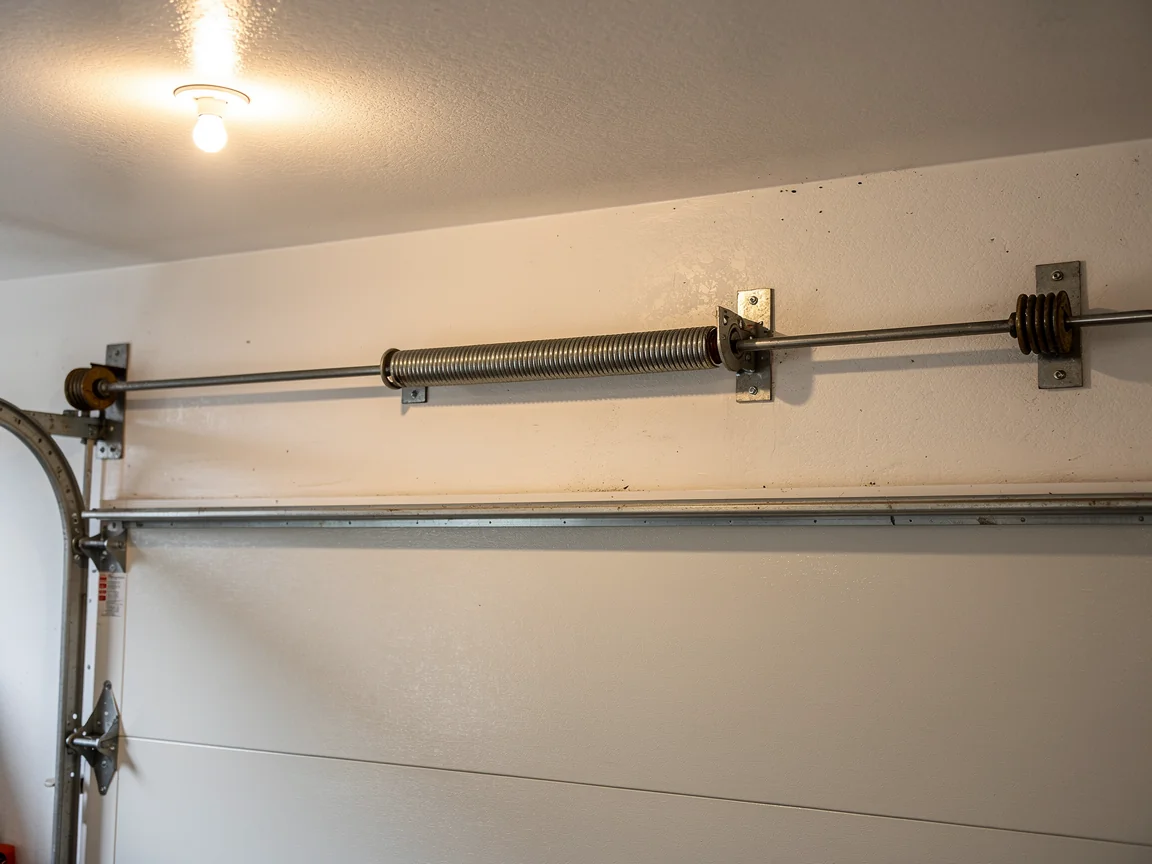
We travel the roughly 19 miles out from San Dimas with a standard repair kit, not a specialty load built for any one house, so a job that turns out to need an unusual part - an older extension-spring pulley, say, or a track profile that's been discontinued - may mean a second trip.
Not every variant carried
That's the one limitation worth saying plainly: we carry what covers the large majority of off-track repairs, not every hardware variant that's gone into a house over fifty years, and we'd rather tell you that up front than pretend otherwise.
What It Costs
We don't quote a number here because off-track jobs aren't one price. A door that's jumped the track on one side because a roller sheared is a different job than a door that's bowed out of both tracks because the bottom bracket tore loose.
1974 track sizing
What we can tell you is what drives the Norco estimate specifically: most houses here were built around 1974, a decade or so newer than the typical house across the rest of our service area, which runs closer to a 1963 median build year.
Rail matched to jambs
That later build year usually means steel tracks and roller hardware sized for a different door weight than the older stock we see elsewhere, and matching replacement rail to what's already mounted on the jambs is part of the labor, not an add-on. We price after we've had a truck out and looked at the bracket, the track gauge, and whether the door itself is still square.
Income-linked repair choices
Anything we tell you before that is a guess, and we'd rather not guess at your expense. What we can say with confidence is that this area's household incomes run well above the service-area median, which in our experience tracks with owners who replace worn hardware before it fails rather than patching it repeatedly. That changes the job mix, but it doesn't change what we charge for a given repair.
How We Fix It
First thing on site is figuring out why the door left the track, not just putting it back. A roller that's cracked or a hinge that's worked loose will put the door right back off the rail within days if we just muscle it into place and call it done.
Track bends and brackets
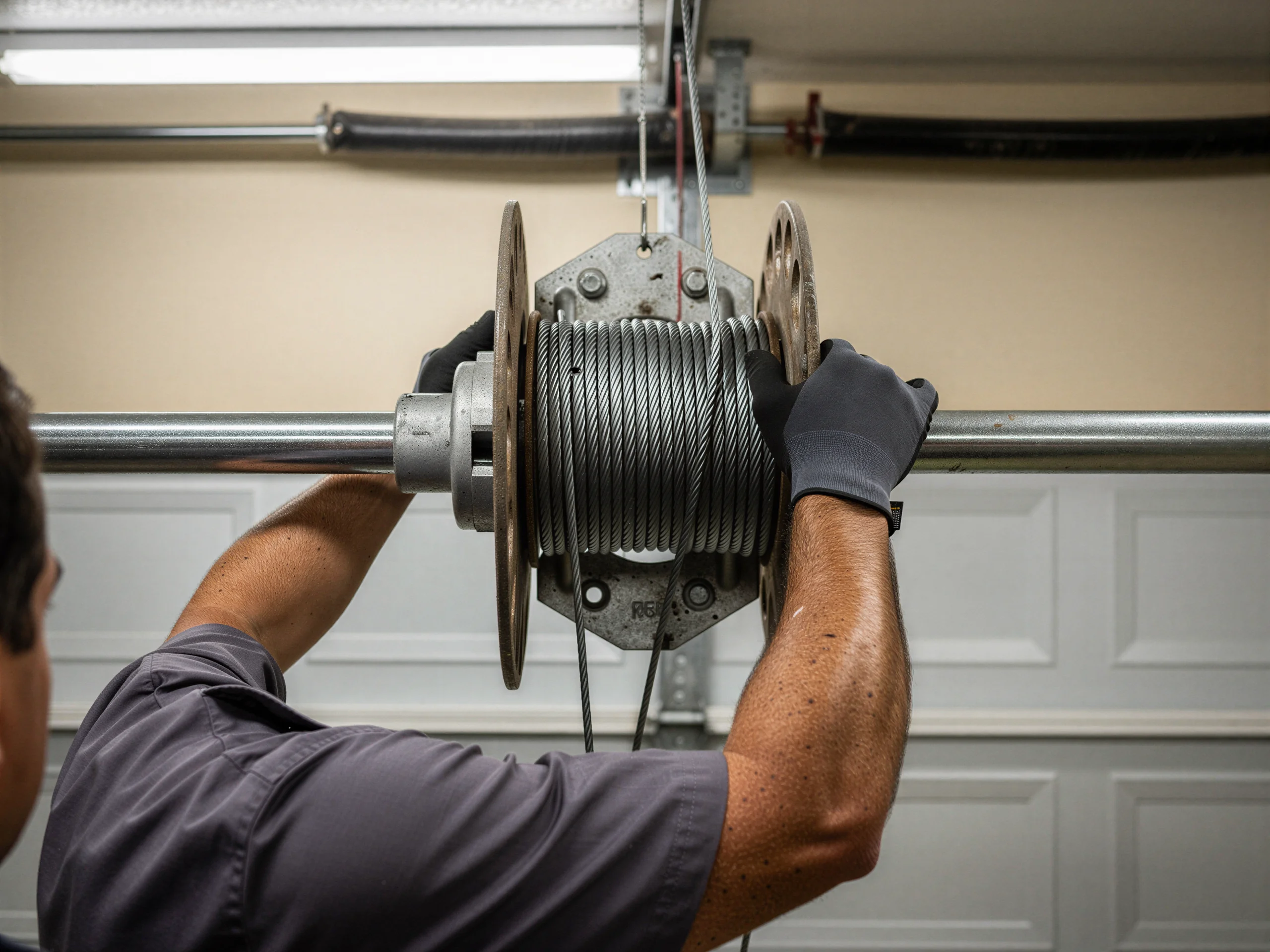
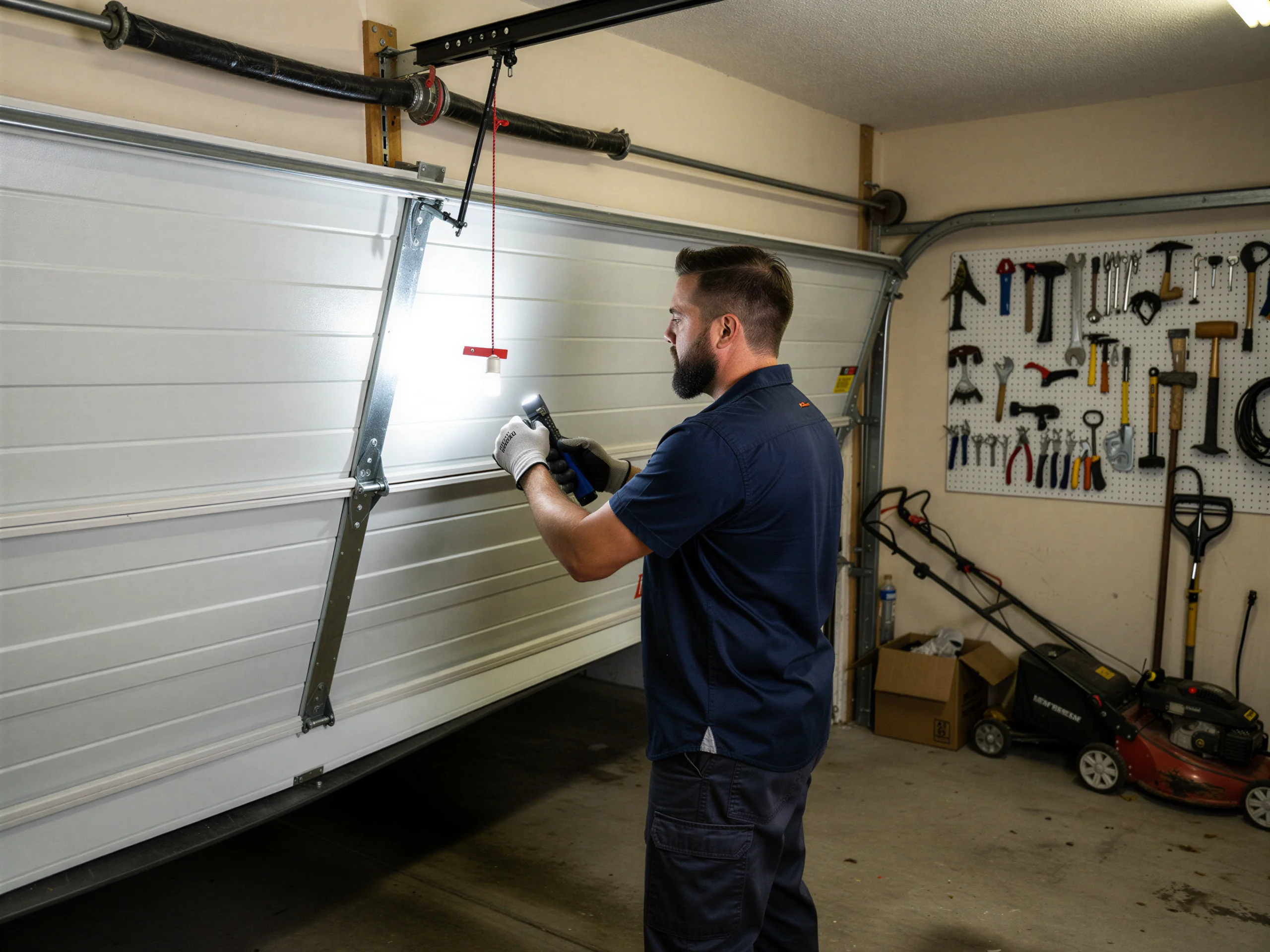
We check the track for bends - a door that's been forced back on by hand usually has a kinked section near where it jumped - and we check the bottom brackets, since those take the stress when a cable snaps or a spring lets go unevenly on a double door.
Realign, reroll, re-square
Once the cause is clear, we realign or replace the track section, swap any cracked rollers or bent hinges, and re-square the door in the opening before we run it on the opener. We test it through a full cycle, both by hand and powered, before we leave.
Upsizing undersized rail
If the track itself is original to a 1970s install and undersized for a heavier insulated door that's since been put in, we'll say so and talk about upsizing the rail rather than just patching the old one.
Doing It Yourself
You can put a light door back on its track yourself if it's only off on one side and the track isn't bent - release the opener, lift by hand, and guide the rollers back in, then check it runs smooth before you trust it. What you should not do is force a door back on when a cable has snapped or a spring is loaded and not holding tension. Torsion springs on a double door store enough force to break fingers or worse, and once a door is off-track because of a broken cable, the other side is usually still under spring load with nothing controlling it. If the door won't slide back in with light hand pressure, or if it's off-track on both sides, stop and call it in rather than keep pushing on it.
Talk to a local pro
Garage door service in San Dimas?
Same-day service with honest, upfront quotes.